

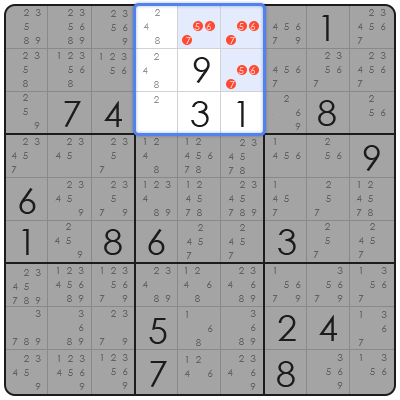
The inquiry into ‘how am I doing in Sudoku’ refers to the analytical process of systematically assessing a player’s current performance, progressive skill acquisition, and strategic efficiency within the intricate framework of a Sudoku puzzle. This goes beyond mere completion, delving into the underlying cognitive processes and tactical approaches employed during gameplay. From a Cognitive Performance Analysis perspective, understanding one’s Sudoku capabilities is crucial not just for personal satisfaction but for targeted skill development. It allows players to objectively identify their strengths, pinpoint specific weaknesses, and optimize their problem-solving strategies, transforming a recreational activity into a valuable cognitive training exercise. The primary problem this structured assessment solves in the current landscape is the pervasive reliance on subjective self-assessment. Many players only gauge their performance by whether they ‘finished’ a puzzle or ‘struggled a lot,’ lacking the objective metrics needed for genuine improvement. By applying analytical rigor, players can move from vague impressions to data-driven insights, fostering more effective learning and greater mastery. This deep-dive article will explore the mechanisms of effective Sudoku performance evaluation, offering a framework for players to understand, measure, and enhance their cognitive prowess in this classic logic puzzle.
Deconstructing Sudoku Performance Metrics
Deconstructing Sudoku performance metrics involves breaking down a player’s game into quantifiable elements to provide an objective assessment of their skill and ongoing progress. Based on structural analysis, this approach moves beyond the simple ‘win or lose’ dichotomy, providing a granular view of decision-making processes and efficiency.
Key components for assessing ‘how am I doing in Sudoku’ fundamentally include the overall time taken to complete a puzzle and the precision of each move. Tracking the total time offers a macro view of efficiency, while analyzing time per move or segment of the puzzle can reveal areas of hesitation or strategic bottlenecks. Equally critical is accuracy, which quantifies mistakes made and the reliance on ‘autofill’ or hint features.
Beyond speed and accuracy, an advanced metric involves the strategic complexity utilized. This assesses whether a player is consistently employing sophisticated deduction techniques like Naked or Hidden Singles, Pointing Pairs/Triples, X-Wing, or Swordfish, versus relying solely on basic candidate elimination. The ability to identify and apply these techniques efficiently is a hallmark of advanced play.
Furthermore, metrics such as the rate of progress (cells filled per unit time), the typical difficulty of puzzles successfully tackled, and consistency across multiple puzzles provide a holistic view. These indicators, when tracked over time, paint a comprehensive picture of a player’s evolving cognitive performance within the Sudoku domain.
Implementing a Personal Sudoku Performance Audit
Implementing a personal Sudoku performance audit provides a structured framework for players to objectively evaluate and incrementally improve their puzzle-solving abilities. In practical application, this audit transforms casual play into a deliberate practice, crucial for accelerating skill acquisition.
The initial steps involve establishing a performance baseline and meticulously logging strategic applications. Firstly, consistently record initial completion times and error counts for puzzles of a consistent, standard difficulty. This provides a measurable starting point. Secondly, actively note down the advanced techniques (e.g., Locked Candidates, Forcing Chains) that were successfully applied or, crucially, those that were overlooked, especially when a puzzle stalled.
Furthering the audit involves identifying error patterns and conducting time-based analysis. Analyze the nature and location of mistakes: were they simple transcription errors, incorrect candidate eliminations, or flawed deductions? Concurrently, segment your solve time: how much time was spent on initial scanning, candidate marking, and dedicated deduction phases? This breakdown reveals where efficiency can be gained.
The audit culminates in difficulty progression and leveraging technological tools. Systematically increase the difficulty of puzzles you attempt, tracking how your established metrics shift. Finally, utilize digital Sudoku applications that often feature built-in analytics, providing automated tracking of time, errors, and even suggesting optimal moves, thereby streamlining the data collection process and offering immediate feedback.
Comparative Analysis: Sudoku Assessment Frameworks
Based on a framework perspective, evaluating your Sudoku performance requires understanding the nuances of various assessment methodologies. The following comparative analysis highlights how a direct, structured approach contrasts with more intuitive or external benchmarks across critical dimensions.
Direct Performance Analysis, which centers on the ‘how am I doing in Sudoku’ inquiry, offers unparalleled granularity. It involves meticulous tracking of specific metrics like solve time, error rate, and the successful application of advanced strategies. This method is highly complex in its data collection but yields the deepest insights, enabling targeted and efficient improvement.
Intuitive Self-Assessment, while immediately accessible, often lacks the precision required for targeted improvement. Players gauge their performance based on subjective feelings of difficulty or satisfaction. Its complexity is low, but its efficiency in driving improvement is minimal due to vague feedback and a shallow depth of insight into specific areas needing attention.
External Solver Comparison, though useful for understanding ideal solutions, may not fully reflect personal learning curves. This approach often involves comparing one’s completed grid or solve time against an optimal solution or an expert solver. Its efficiency for identifying basic errors is moderate, and it offers moderate insight into what ‘could have been’ rather than a player’s actual developmental journey.
The table below provides a concise comparison of these frameworks, emphasizing the trade-offs between effort, utility, and the depth of performance understanding.
| Feature | Direct Performance Analysis | Intuitive Self-Assessment | External Solver Comparison |
| :————————- | :——————————– | :———————— | :————————- |
| **Complexity** | High (Structured data logging) | Low (Subjective feeling) | Medium (Focus on final state) |
| **Efficiency** | High (Targeted improvement) | Low (Vague feedback) | Medium (Highlights discrepancies) |
| **Insight Depth** | Deep (Specific strengths/weaknesses) | Shallow (Generalized feeling) | Moderate (Outcome-focused) |
Common Pitfalls and Professional Solutions in Sudoku Performance
Even experienced Sudoku players can fall into common traps that hinder their progress. Recognizing these pitfalls and implementing professional solutions is key to consistently improving ‘how am I doing in Sudoku’ from a cognitive performance standpoint.
One frequent mistake is an overemphasis on speed without concurrently prioritizing accuracy. Players rush through puzzles, making numerous minor errors that accumulate or require frustrating backtracking. The professional advice here is to first establish a high level of accuracy; aim for error-free solves, even if they take longer. Once accuracy is consistent, then gradually introduce conscious efforts to reduce solve time, focusing on efficient scanning and deduction rather than hasty input.
Another pitfall is stagnating by sticking to basic strategies even when puzzles demand more advanced techniques. Players might find comfort in simple candidate elimination, failing to learn or consistently apply techniques like X-Wings or Chains. The solution involves a structured learning approach: dedicate specific practice sessions to understanding and applying one new advanced technique at a time. Track its successful implementation and integrate it into your regular solving repertoire.
Finally, inconsistent tracking or a complete lack of structured data is a significant barrier to objective self-assessment. Without logging your performance, it’s impossible to see trends, identify specific weaknesses, or measure improvement accurately. Professional advice dictates using dedicated journals, spreadsheets, or the analytical features available in many digital Sudoku applications to log your solve times, error counts, and notes on challenging deductions. Consistency in data collection is paramount for meaningful analysis.
Frequently Asked Questions on Sudoku Performance Assessment
This section addresses common inquiries regarding Sudoku performance, formulated for ‘Position Zero’ eligibility and offering concise, expert insights into ‘how am I doing in Sudoku’ for rapid understanding.
Q: How do I accurately measure my Sudoku progress? A: Accurately measure progress by consistently tracking metrics like completion time, the number of errors, and the complexity of puzzles successfully solved over a defined period. Data consistency is vital.
Q: What are key indicators of improving Sudoku skills? A: Key indicators include significantly faster completion times, a marked reduction in errors, the consistent and confident application of advanced solving techniques, and the ability to effectively solve higher-difficulty puzzles.
Q: Can Sudoku apps help assess my performance? A: Yes, many contemporary Sudoku applications offer integrated analytics features that track solve times, mistakes, and sometimes even highlight areas where hints were used, providing invaluable objective feedback.
Q: Is comparing myself to other players a good metric? A: While external comparisons can offer motivation, the most effective metric for improvement is benchmarking against your past self. Focus on personal growth and identifying your unique areas for development.
Q: How often should I review my Sudoku performance? A: Based on structural analysis, regular review, ideally weekly or after completing a set number of puzzles, allows for the timely identification of emerging patterns and necessary adjustments to your cognitive practice regimen.
In conclusion, the journey to truly understand ‘how am I doing in Sudoku’ transcends simple game completion; it involves a sophisticated application of cognitive performance analysis. By systematically deconstructing gameplay into measurable metrics, implementing structured performance audits, and thoughtfully addressing common pitfalls, players can unlock their full potential. This objective self-assessment fosters not only greater Sudoku mastery but also enhances broader analytical skills and strategic thinking. The long-term strategic value lies in cultivating sustained cognitive enhancement, refined logical deduction, and a data-driven approach to personal development. Looking forward, the principles of structured self-assessment in Sudoku offer a valuable paradigm for evaluating and improving cognitive functions across various intellectual pursuits, signaling a future where personal growth is increasingly powered by precise, analytical insights.