

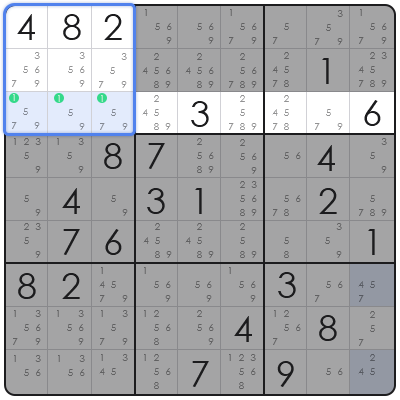
How is Sudoku solved involves a rigorous application of constraint satisfaction principles, transforming a seemingly complex grid of numbers into a solvable puzzle through systematic deduction. At its core, Sudoku presents a 9×9 grid partially filled with digits, where the objective is to fill the remaining empty cells such that each row, each column, and each of the nine 3×3 subgrids contains all of the digits from 1 to 9 exactly once. From a framework perspective, the significance of understanding Sudoku’s resolution lies in its pedagogical value as a model for structured logical reasoning. It trains the mind in pattern recognition, iterative problem-solving, and the meticulous management of multiple, interconnected constraints. This disciplined approach is highly transferable to real-world analytical challenges, where data relationships and limitations dictate optimal solutions. The primary problem that a structured approach to how is sudoku solved addresses is the inherent complexity and potential for combinatorial explosion if one were to rely on random guessing. By providing a clear methodology, it eliminates ambiguity and replaces conjecture with deterministic logic, ensuring that solutions are not only found but are also demonstrably correct based on verifiable steps. This systematic framework is crucial for anyone seeking to master complex problem spaces.
The Foundational Logic of Sudoku Resolution
Solving Sudoku fundamentally relies on the principle of unique placement within a 9×9 grid, where each row, column, and 3×3 block must contain all digits from 1 to 9 exactly once. From a framework perspective, this translates to a complex constraint satisfaction problem (CSP) where variables are the empty cells, and values are the digits 1-9, subject to these specific rules.
Based on structural analysis, the grid is dissected into 81 individual cells, each capable of holding a single digit. The primary mechanics involve identifying ‘naked singles’ where a cell can only logically accommodate one specific digit because all other possibilities are constrained by existing numbers in its row, column, or block. This initial phase leverages direct observation and elimination, providing the bedrock for all subsequent deductions.
Beyond naked singles, the next layer of deduction involves ‘hidden singles.’ These occur when a specific digit can only exist in one particular cell within a given row, column, or block, even if that cell has multiple candidate digits. This technique requires a broader scan of possibilities across a constraint unit, exemplifying how initial simple observations pave the way for more intricate logical leaps in problem resolution.
Systematizing the Solution Process
A systematic approach to solving Sudoku involves an iterative cycle of candidate identification, elimination, and deduction, which mirrors best practices in algorithmic problem-solving. In practical application, players typically begin by filling in all obvious naked singles across the entire grid, establishing a robust baseline of known values and simplifying the remaining puzzle space.
Following this, the process transitions to ‘candidate notation,’ where all possible digits for each empty cell are meticulously recorded. This comprehensive mapping of potential values is critical for visualizing the interplay of constraints. By leveraging this detailed candidate list, ‘hidden singles’ and ‘naked pairs/triples’—where two or three cells in a unit share the exact same two or three candidate digits, thus eliminating those digits from other cells in that unit—become identifiable.
From a framework perspective, the iterative application of these techniques systematically reduces the search space. Each deduction, whether it’s a simple naked single or a more complex hidden pair, provides new information that further constrains other cells. This methodical reduction of possibilities continues until either the puzzle is solved or a deadlock occurs, signaling the need for more advanced strategies or a review of previous steps.
Advanced Deductive Strategies and Their Comparative Utility
Beyond fundamental techniques, advanced Sudoku strategies address scenarios where basic elimination methods no longer yield immediate progress, demanding more sophisticated pattern recognition and inferential logic. Based on structural analysis, methods like ‘X-Wing’ and ‘Swordfish’ identify specific digit patterns across multiple rows and columns that allow for significant eliminations of candidates, thereby breaking complex deadlocks.
The ‘X-Wing’ strategy, for instance, focuses on a single candidate digit appearing in only two cells within two different rows (or columns), aligned such that they also fall within two common columns (or rows). This configuration logically dictates that the candidate must reside in these specific positions, enabling its elimination from all other cells in those two common columns (or rows). Similarly, the ‘XY-Wing’ identifies a pivot cell and two ‘pincer’ cells forming a chain of implications that can eliminate candidates from shared cells, revealing opportunities for further deductions.
Comparing these methods reveals distinct profiles in their utility for strategic problem-solving. Basic elimination techniques, while high in frequency and low in deductive complexity, offer moderate solution efficiency. Advanced methods like X-Wing significantly increase deductive complexity but yield higher solution efficiency by breaking deadlocks more rapidly. From a learning curve perspective, basic techniques are easily accessible, whereas advanced ones require significant practice and pattern recognition. The application scope for basic methods is broad, applying to almost all puzzles, while advanced techniques are reserved for more challenging configurations, solving problems that simpler methods cannot. This stratified approach ensures optimal resource allocation for problem resolution.
Navigating Common Pitfalls in Sudoku Resolution
In practical application, one of the most frequent mistakes in solving Sudoku is the premature adoption of ‘guessing,’ especially when facing apparent deadlocks. This approach, while seemingly a shortcut, often introduces errors that propagate throughout the grid, making the puzzle impossible to solve without backtracking extensively. Based on structural analysis, guessing violates the core principle of logical deduction, replacing certainty with probabilistic conjecture, which is antithetical to robust problem-solving.
Another significant pitfall involves ‘overlooking candidates’ or ‘incomplete candidate notation.’ When not all potential numbers for an empty cell are meticulously recorded, or if these lists aren’t consistently updated, critical deductions can be missed. From a framework perspective, this represents a failure in data integrity, preventing the identification of hidden singles or pairs that rely on a complete and accurate understanding of available options within a unit, thus stalling progress.
A third common error is ‘grid transcription mistakes’ or ‘careless digit placement.’ Simple human errors, such as miswriting a number or failing to erase a candidate after a deduction, can quickly render the entire solution invalid. Professional advice emphasizes a systematic, double-checking approach: always re-verify placed digits and updated candidate lists. Implementing a consistent scanning pattern (e.g., row by row, then column by column, then block by block) for each type of deduction minimizes the chance of oversight, ensuring analytical rigor throughout the resolution process.
Frequently Asked Questions on Sudoku Solution Methodologies
Q: What is the very first step in how is sudoku solved? A: The initial step is to scan the grid for ‘naked singles,’ placing any digit that is the only possibility for a cell due to existing numbers in its row, column, and 3×3 block. This establishes a foundational set of solved cells. Q: How do you identify ‘hidden singles’? A: A hidden single is found when a specific digit can only be placed in one particular cell within a given row, column, or block, even if that cell initially has other candidate digits. It requires checking each digit 1-9 for its unique placement within a unit. Q: Is guessing ever an acceptable strategy? A: No, in formal Sudoku solving, guessing is generally avoided. It introduces uncertainty and often leads to errors. Professional strategies focus solely on deterministic logical deductions to ensure a valid solution. Q: What makes a Sudoku puzzle ‘hard’? A: Puzzle difficulty often stems from requiring advanced deductive strategies (like X-Wings or XY-Wings) rather than just basic single-candidate eliminations. Fewer initial clues also tend to increase complexity. Q: How often should I re-evaluate candidates? A: Candidates should be re-evaluated and updated constantly. Every time a new digit is placed, it potentially eliminates candidates from other cells in its row, column, and block, necessitating a fresh scan for new deductions.
Q: What makes a Sudoku puzzle ‘hard’? A: Puzzle difficulty often stems from requiring advanced deductive strategies (like X-Wings or XY-Wings) rather than just basic single-candidate eliminations. Fewer initial clues also tend to increase complexity.
Q: How often should I re-evaluate candidates? A: Candidates should be re-evaluated and updated constantly. Every time a new digit is placed, it potentially eliminates candidates from other cells in its row, column, and block, necessitating a fresh scan for new deductions.
In conclusion, how is sudoku solved is far more than a simple pastime; it serves as a robust pedagogical tool for developing systematic logical deduction, constraint satisfaction modeling, and iterative problem-solving skills. The principles underpinning its resolution, from basic elimination to advanced pattern recognition, are directly transferable to complex analytical tasks in diverse professional fields. Emphasizing rigor, patience, and a methodical approach, the mastery of Sudoku provides invaluable insights into structuring intricate problems and deriving elegant, verifiable solutions, affirming its long-term strategic value in cognitive development and applied logic.