

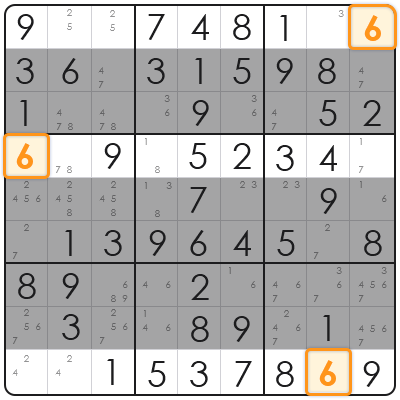
Solving mini Sudoku is the process of completing a 4×4 or 6×6 grid where each row, column, and designated sub-grid (usually 2×2 or 2×3) must contain every digit from 1 to 4 or 1 to 6 respectively, without repetition. This puzzle serves as a fundamental exercise in logical deduction and pattern recognition, offering a scaled-down yet equally challenging analytical experience compared to its larger 9×9 counterpart. Its significance lies in its accessibility as a tool for rapid cognitive training, enabling individuals to sharpen their critical thinking skills and systematic problem-solving approaches in a manageable timeframe. From a framework perspective, the primary problem mini Sudoku addresses is the cultivation of structured thinking and mental agility, particularly valuable in an era demanding quick, accurate decisions. Unlike brute-force methods, effective mini Sudoku resolution necessitates the application of specific logical rules, thereby training the brain to identify constraints, hypothesize solutions, and validate outcomes efficiently. This foundational skill set is highly transferable across various professional and personal domains where analytical prowess is key. Based on structural analysis, mini Sudoku provides an excellent entry point into complex problem-solving methodologies, simplifying the core mechanics of constraint satisfaction. It acts as a microcosm for larger computational or logistical challenges, allowing users to internalize principles like elimination, singleton identification, and candidate tracking. For individuals looking to enhance their problem-solving toolkit without committing to lengthy, intricate puzzles, mini Sudoku offers an immediate and impactful solution for mental workout.
The Underlying Logic and Mechanics of Mini Sudoku Resolution
The underlying logic of mini Sudoku resolution is rooted in the principle of ‘unique placement’ within predefined boundaries. This means that for any given row, column, or sub-grid (often called ‘blocks’ or ‘boxes’), each number from the permitted set (e.g., 1-4 for a 4×4 grid) must appear exactly once. From a mechanics perspective, players utilize deduction to identify cells where only one number can logically fit, given the existing numbers in its corresponding row, column, and block.
Based on structural analysis, the primary components involved are the grid itself, the pre-filled ‘givens’ (fixed numbers), and the empty ‘candidates’ cells. Solving revolves around systematically reducing the possible candidates for each empty cell until a single, unique number remains. This often involves cross-referencing values present in intersecting rows, columns, and blocks to eliminate potential numbers from a cell’s candidate list. The smaller grid size of mini Sudoku makes this process more transparent and quicker to master.
In practical application, the core mechanics rely on two main strategies: ‘single candidate’ and ‘single position’. A single candidate strategy is when, for a particular empty cell, only one number from the allowed set can possibly be placed there after considering all constraints. A single position strategy, conversely, is when for a particular number (e.g., ‘3’), there is only one empty cell within a specific row, column, or block where that number can be placed. Mastering these foundational techniques is crucial for efficient resolution.
Step-by-Step Implementation: How to Effectively Solve a Mini Sudoku Grid
Effectively solving a mini Sudoku grid involves a systematic, iterative process that leverages logical deduction and elimination.
1. **Scan for Obvious Placements (Single Candidates):** Begin by looking for cells that are almost complete. Identify any empty cell where, by observing its row, column, and block, only one possible number can be placed. For instance, if a 4×4 row has 1, 2, and 4, the empty cell must be 3. Fill these in first.
2. **Scan for Single Positions within Rows/Columns/Blocks:** Next, focus on individual numbers (e.g., ‘1’). Look at a row, column, or block and determine if there’s only one possible empty cell where that specific number can go. For example, if ‘1’ is already in two cells of a block, and only one other empty cell in that block allows for a ‘1’ (not blocked by its row/column), then ‘1’ goes there.
3. **Cross-Reference and Eliminate Candidates:** For more challenging cells, consider the candidate numbers for each empty cell. For every empty cell, list the numbers (e.g., 1-4) that are NOT present in its row, column, and block. As you fill in numbers, continuously update these candidate lists. This elimination process often reveals new single candidates or single positions.
4. **Iterate and Verify:** Repeat steps 1-3 until the grid is complete. After placing each number, immediately check if it unlocks new obvious placements. Regularly verify that each row, column, and block contains all numbers without repetition. This iterative refinement is the essence of effective Sudoku solving, building a solution piece by piece with logical certainty.
Comparative Analysis: Mini Sudoku vs. Related Logical Puzzles
Comparing mini Sudoku to related logical puzzles highlights its unique balance of accessibility and analytical depth within the realm of Cognitive Development & Problem-Solving. Below is a structural analysis:
| Feature | Mini Sudoku (4×4/6×6) | Classic Sudoku (9×9) | KenKen (4×4/6×6) | Hitori (Variable) |
|:———–|:—————————|:—————————|:————————–|:—————————|
| **Complexity** | Low to Moderate (2×2/2×3 blocks) | Moderate to High (3×3 blocks) | Moderate (arithmetic ops) | Moderate to High (shading logic)|
| **Efficiency** | High (quick resolution) | Moderate (longer resolution) | Moderate (calc + logic) | Moderate (iterative deduction)|
| **Core Logic** | Pure Deduction (uniqueness) | Pure Deduction (uniqueness) | Deduction + Arithmetic | Deduction + Visual Pattern |
| **Transferability**| Foundational logic, pattern rec. | Advanced logic, strategic planning | Math skills, logical deduction | Spatial reasoning, complex elimination |
From a framework perspective, mini Sudoku’s reduced grid size makes it significantly more efficient for rapid cognitive exercise compared to the classic 9×9 Sudoku, which demands longer engagement and more extensive candidate tracking. While both rely on the core principle of uniqueness, the complexity of candidate sets and the intersectional constraints are far greater in the larger grid. This makes mini Sudoku an ideal ‘warm-up’ or quick brain break.
In contrast to KenKen, which introduces arithmetic operations as an additional layer of constraint beyond uniqueness, mini Sudoku remains purely deductive. This singular focus on number placement rules makes it simpler to grasp initially but still profound in its logical requirements. Hitori, another grid-based puzzle, focuses on shading numbers based on specific non-repetition and connectivity rules, offering a different type of visual-spatial and elimination challenge that often has a higher learning curve. Based on structural analysis, mini Sudoku stands out for its straightforward rules that yield surprisingly rich logical problems, making it a highly effective tool for developing fundamental problem-solving faculties.
Common Pitfalls in Mini Sudoku and Professional Solutions
Even with its simplified structure, mini Sudoku presents common pitfalls that can hinder efficient resolution. One frequent mistake is **rushing through the grid without systematic candidate elimination**. Many beginners attempt to ‘see’ the solution without explicitly listing or mentally tracking possibilities, leading to errors or dead ends. The professional solution is to adopt a rigorous, step-by-step approach: mentally or physically note the candidate numbers for each empty cell, and cross them out as numbers are placed. This structured thinking prevents oversights and builds confidence.
Another pitfall is **failing to re-evaluate the entire grid after placing a new number**. In practical application, placing one number has ripple effects across its row, column, and block, often revealing new single candidates or single positions. A common error is to just move on to the next empty cell without leveraging these new constraints. The professional advice is to treat each number placement as a trigger for a mini-re-scan of the affected areas. Always check if a new number makes another cell’s solution obvious, thereby creating a chain reaction of deductions.
Finally, **incorrectly identifying ‘givens’ or misreading the grid constraints** can derail an entire solve. Especially in a 4×4 or 6×6 grid, a single misinterpretation of an existing number or a block boundary can lead to an unsolvable state. Based on structural analysis, the solution involves meticulous double-checking of the initial setup. Before beginning, quickly confirm that all pre-filled numbers adhere to the basic Sudoku rules and that the block boundaries are clearly understood. This foundational verification minimizes errors stemming from input and ensures a valid starting point for logical deduction.
Frequently Asked Questions About Solving Mini Sudoku
**What is the smallest mini Sudoku?** The smallest common mini Sudoku is a 4×4 grid with 2×2 blocks, using numbers 1-4. It’s an excellent starting point for beginners.
**How do mini Sudoku puzzles benefit cognitive function?** Mini Sudoku enhances logical reasoning, pattern recognition, and systematic problem-solving, improving mental agility and concentration.
**Are there different types of mini Sudoku?** Yes, besides the 4×4, there are 6×6 mini Sudoku grids (often with 2×3 or 3×2 blocks) that use numbers 1-6, offering slightly increased complexity.
**Can mini Sudoku improve my math skills?** While not directly arithmetic, it strengthens logical deduction and number sense, which are foundational to mathematical problem-solving.
**Is mini Sudoku suitable for all ages?** Yes, its simplified rules and quick solve times make it highly suitable for children and adults alike, serving as a fun brain exercise.
In conclusion, mastering how to solve mini Sudoku represents more than just conquering a simple puzzle; it is a highly effective, accessible pathway to enhancing critical cognitive skills. Based on structural analysis, its concise yet comprehensive logical framework provides an ideal training ground for deductive reasoning, systematic elimination, and rapid pattern recognition. For professionals and enthusiasts in the Cognitive Development & Problem-Solving field, understanding and applying mini Sudoku methodologies offers tangible benefits in mental agility and problem articulation. The long-term strategic value of engaging with such puzzles lies in the continuous refinement of one’s analytical toolkit, fostering a mindset capable of dissecting complex problems into manageable, solvable components. As the demand for quick and accurate decision-making continues to grow, the foundational logic imparted by mini Sudoku will remain an invaluable asset.