

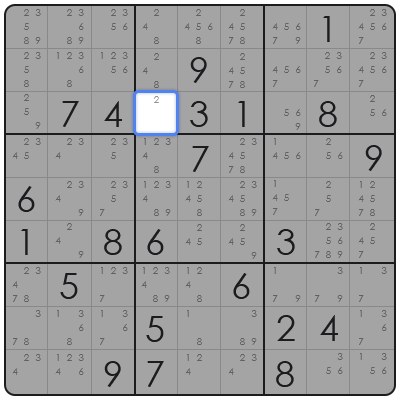
The number of ‘givens’ in a Sudoku puzzle refers to the pre-filled cells at the beginning of the game, serving as the foundational constraints for solvers. This seemingly simple aspect is, in fact, the most critical design parameter, directly dictating a puzzle’s difficulty, its solvability, and, most importantly, the uniqueness of its solution. For any seasoned puzzle designer or enthusiast, understanding the intricate relationship between the count and placement of these initial numbers is paramount to appreciating the elegance and complexity inherent in Sudoku. From a game design perspective, the careful calibration of these givens is what prevents a puzzle from being either trivially easy or frustratingly ambiguous. It addresses the primary challenge in puzzle generation: how to provide enough clues to guide the solver while withholding enough information to ensure a stimulating intellectual exercise. Without a precise approach to initial grid population, Sudoku risks losing its appeal as a globally cherished logic challenge, descending into either arbitrary number placement or a simple arithmetic exercise. Based on structural analysis, the selection and distribution of initial numbers are not random; they are the output of sophisticated algorithms and meticulous human design. This article delves into the foundational principles governing how many numbers are given in Sudoku, exploring the technical mechanics, practical applications, and common pitfalls associated with this core puzzle design element. By dissecting this crucial aspect, we aim to provide a definitive understanding for professionals in logic puzzles and game design. The strategic placement of these givens creates the initial landscape for deduction, influencing every subsequent step a solver takes. It is the silent architect of difficulty, the hidden hand that ensures a singular path to completion, and the very essence of what makes a Sudoku puzzle compelling and uniquely solvable. Mastering this element is key to crafting exceptional Sudoku experiences.
The Core Mechanics of Sudoku Givens and Their Impact on Solvability
The core mechanics of Sudoku givens revolve around the principles of solvability and uniqueness, which are intrinsically linked to the quantity and spatial distribution of the pre-filled cells. Each given number acts as a fixed point, reducing the degrees of freedom within its respective row, column, and 3×3 block. From a framework perspective, these initial conditions propagate constraints across the entire 9×9 grid, shaping the logical pathways available to a solver and ultimately determining if a puzzle can be solved and if its solution is singular.
The minimum number of givens required for a Sudoku puzzle to possess a unique solution is a heavily researched topic in combinatorial mathematics. While the theoretical minimum is widely accepted to be 17 givens, constructing such puzzles is exceptionally complex and rare. In practical application, most commercially generated or human-designed Sudoku puzzles feature a higher count, typically ranging from 20 to 35 givens, to ensure both uniqueness and a reasonable level of human solvability. Fewer givens often lead to multiple valid solutions, rendering the puzzle ill-defined.
Beyond the sheer count, the pattern and symmetry of the givens are also critical. Symmetrical arrangements are common in published puzzles, not necessarily for functional reasons related to solvability, but for aesthetic appeal. However, a strategically placed asymmetrical set of givens can sometimes create a more challenging puzzle by forcing specific, less obvious deduction techniques. The interaction between individual givens, rather than just their sum, is what truly defines the logical complexity of the puzzle board.
Determining the Optimal Number of Givens: A Step-by-Step Approach for Puzzle Designers
Determining the optimal number of givens for a Sudoku puzzle involves a methodical process of generation, validation, and iterative difficulty assessment, ensuring a balanced and engaging challenge. This process moves beyond mere random selection to a deliberate strategy for creating high-quality, solvable puzzles with unique solutions. It is a critical aspect for any professional involved in logic game development or content creation.
In practical application, puzzle designers follow a structured sequence to achieve this balance. First, a complete, valid 9×9 Sudoku grid is generated using back-tracking algorithms or other computational methods. This complete grid represents a solved state. Second, numbers are strategically removed one by one, or in small groups, from this complete grid. Each removal is followed by a crucial validation step: checking if the resulting partial grid still possesses a unique solution. Automated Sudoku solvers are essential tools at this stage, capable of rapidly determining uniqueness and often providing a difficulty rating based on the logical techniques required.
This iterative removal and validation continues until a desired difficulty level is achieved or until removing another number results in multiple solutions or an unsolvable puzzle. From a framework perspective, the goal is to find the ‘sweet spot’ where the number of givens is minimized while maintaining uniqueness and a target difficulty. Expertise in this area often involves understanding various Sudoku solving techniques (e.g., Naked/Hidden Singles, Locked Candidates, X-Wing) and how the absence or presence of specific givens necessitates their use, thereby defining the puzzle’s challenge. This systematic approach ensures that the initial grid population aligns with design objectives.
Comparative Analysis: Sudoku Givens vs. Related Puzzle Paradigms
Comparing Sudoku givens with related puzzle paradigms highlights distinct approaches to puzzle construction and player engagement, emphasizing how initial conditions shape the core experience of logic games. While many grid-based logic puzzles rely on pre-set conditions, the nature of these conditions and their impact vary significantly. Based on structural analysis, understanding these differences provides valuable insight for cross-genre design and player experience optimization.
In Kakuro, for instance, instead of pre-filled cells, the ‘givens’ are sums provided for contiguous runs of empty cells, both horizontally and vertically. The player’s task is to fill these cells with unique digits (1-9) such that they sum up to the given totals. Similarly, KenKen puzzles provide arithmetic operations (+, -, *, /) and target results for specific ‘cages’ or groups of cells. The ‘givens’ here are these operations and targets, alongside unique digit constraints within rows and columns, akin to Sudoku. These approaches offer different vectors for logical deduction.
The table below delineates key dimensions for comparing how initial conditions operate across these popular logic puzzles, focusing on their functional role in game mechanics.
From a framework perspective, Sudoku’s direct numerical givens offer a clear starting point for spatial deduction, while Kakuro and KenKen introduce an additional layer of arithmetic logic combined with placement. This distinction influences both the cognitive skills required from the solver and the complexity of the puzzle generation algorithms.
Navigating Common Pitfalls in Sudoku Grid Design and Initial Given Placement
Navigating common pitfalls in Sudoku grid design is essential for creating robust, engaging, and fair puzzles that resonate with players. A frequent mistake, particularly for novice designers, is generating a puzzle with too few givens. While aiming for the theoretical minimum of 17 might seem appealing, it often results in a grid with multiple valid solutions. In practical application, an indeterminate puzzle frustrates solvers who may arrive at a logically sound solution that is not the ‘intended’ unique answer, diminishing the integrity of the puzzle. The professional advice here is to always validate unique solvability using automated solvers during the design phase, even for puzzles with more than 20 givens, ensuring a singular path exists.
Another significant pitfall is the converse: providing too many givens, which typically results in an overly simplistic puzzle lacking challenge. From a framework perspective, a puzzle with an abundance of pre-filled cells might quickly become a mere filling-in exercise rather than a true logical deduction challenge. While easier puzzles have their place, over-simplification leads to low player engagement for those seeking intellectual stimulation. Solutions involve iterative reduction of givens, carefully assessing the impact on difficulty using established metrics or human testing. Aim for a balance where every given contributes meaningfully to the deduction chain.
Finally, designers sometimes fall into the trap of poor given placement, even with an appropriate count. A grid might have a sufficient number of givens, but if they are clustered or do not interact effectively across rows, columns, and blocks, certain sections of the grid might become isolated or excessively difficult. This can create an uneven solving experience. Based on structural analysis, a more dispersed and interconnected distribution of givens generally leads to a more balanced and engaging puzzle, forcing solvers to utilize a broader range of techniques. Intentional design choices regarding symmetry and pattern, even if for aesthetic reasons, should always be secondary to ensuring logical coherence and solvability across the entire grid.
Frequently Asked Questions on Sudoku Initial Conditions
Frequently asked questions regarding Sudoku initial conditions address common inquiries about the puzzle’s foundational elements and design principles, offering quick insights into their mechanics. These questions often highlight the key factors that contribute to a puzzle’s difficulty and solvability.
**Q1: What is the minimum number of givens for a Sudoku puzzle to have a unique solution?**
A1: The widely accepted theoretical minimum is 17 givens. However, these puzzles are extremely rare and complex to construct. Most human-solvable puzzles designed for unique solutions typically start with 20 or more givens.
**Q2: Does the number of givens directly determine a Sudoku puzzle’s difficulty?**
A2: While there’s a general correlation (fewer givens often mean harder puzzles), the number alone is not the sole determinant. The specific placement and logical interaction of the givens are equally, if not more, critical in defining difficulty.
**Q3: Can a Sudoku puzzle with many givens still be considered challenging?**
A3: Yes, absolutely. If the many givens are placed in such a way that the remaining empty cells require complex logical deductions (like X-Wings, Swordfish, or chains) rather than simple singles, the puzzle can still be quite hard.
**Q4: Are there standard given counts for different difficulty levels?**
A4: There are no universal standards, but general ranges exist. Easy puzzles might have 28-35+ givens, medium 24-28, hard 20-24, and very hard 17-20. These are guidelines, highly dependent on placement and solving techniques.
**Q5: Why is checking for a unique solution important during Sudoku generation?**
A5: A unique solution is fundamental to the integrity of a Sudoku puzzle. Without it, a solver might find a valid solution different from the intended one, leading to confusion and dissatisfaction. Automated uniqueness checks are crucial for quality control in puzzle design.
In conclusion, the question of ‘how many numbers are given in Sudoku’ transcends a simple numerical answer; it delves into the very essence of puzzle design, solvability, and player engagement. The precise count and strategic placement of initial givens are the linchpin upon which the entire Sudoku experience rests, dictating its difficulty, ensuring a unique solution, and ultimately defining its challenge. Based on structural analysis, understanding these dynamics is not just academic but forms the bedrock of creating compelling logic puzzles. From a framework perspective, future advancements in AI-driven puzzle generation will likely further refine these principles, enabling adaptive difficulty and personalized solving experiences, cementing the strategic value of meticulously crafted initial conditions in the evolving landscape of logic game design.