

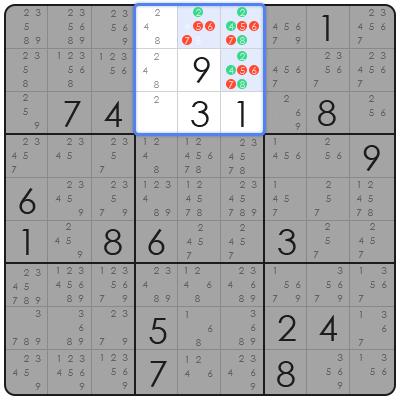
Solving Sudoku Level 3 represents a crucial intermediate challenge for enthusiasts navigating the spectrum of logic puzzles. This difficulty tier moves beyond the most basic deduction techniques, demanding a more nuanced understanding of grid patterns and candidate elimination. From a cognitive puzzle solving perspective, Level 3 Sudoku serves as an essential bridge, refining foundational skills while introducing complexities that prepare solvers for advanced strategies. The significance of mastering this level lies in its ability to solidify core deductive reasoning. It’s where players transition from merely identifying obvious placements to actively seeking out less apparent connections within the 9×9 grid. The primary problem it solves in the current landscape of logic game progression is establishing a robust methodology for identifying and utilizing ‘hidden’ information, thereby preventing plateaus in skill development and fostering a deeper appreciation for strategic thinking. In practical application, successfully tackling Level 3 Sudoku not only boosts problem-solving acumen but also enhances patience and systematic analysis. This article delves into the specific techniques and structural insights required to consistently conquer this intermediate difficulty, providing a clear pathway for dedicated solvers.
The Core Principles of Sudoku Level 3 Difficulty
Sudoku Level 3 difficulty is primarily characterized by the reduced prevalence of ‘naked singles’ and ‘hidden singles’ in the initial grid, requiring solvers to employ more intricate deduction techniques. The underlying logic shifts from direct observation to systematic candidate elimination and the identification of ‘pairs’ or ‘triples’ within rows, columns, or 3×3 blocks. Based on structural analysis, these puzzles are designed to have fewer immediate solutions, forcing the player to analyze the implications of potential numbers.
From a framework perspective, mastering Level 3 involves understanding how numbers constrain each other across different grid elements. This includes scanning for ‘naked pairs’ (two cells in a row, column, or block that can only contain the same two numbers) and ‘hidden pairs’ (two numbers that can only exist in two specific cells within a row, column, or block). Recognizing these patterns is fundamental; they allow for the elimination of those two numbers as candidates from other cells within the same row, column, or block, thereby simplifying the puzzle.
Furthermore, ‘locked candidates’ play a significant role at this level. This technique involves identifying a number that, although it could exist in multiple cells within a 3×3 block, is confined to a single row or column within that block. This confinement allows for the elimination of that number as a candidate from other cells in that same row or column outside the block, proving invaluable for reducing candidate counts and uncovering solutions. This systematic process of elimination is the bedrock for navigating the intermediate complexity.
Step-by-Step Methodology for Level 3 Sudoku
1. **Initial Scan and Obvious Placements**: Begin by performing a thorough scan of the entire grid to identify all ‘naked singles’ — cells where only one number is possible. This involves checking each cell’s row, column, and 3×3 block for existing numbers. Repeat this process until no more direct placements can be made. This foundational step is critical for setting up subsequent, more complex deductions.
2. **Candidate Marking (Pencil Marks)**: Systematically mark all possible candidates for each empty cell. This visual aid is indispensable for Level 3 puzzles, as it makes ‘hidden singles,’ ‘naked pairs,’ and ‘locked candidates’ visible. In practical application, maintaining an organized and accurate set of pencil marks is paramount; errors here will propagate throughout the entire solution process and are difficult to correct later.
3. **Identify Hidden/Naked Pairs and Triples**: Once candidates are marked, actively search for cells that share identical candidate pairs or triples within a row, column, or block. For example, if two cells in a row both have ‘2’ and ‘5’ as their only candidates, then ‘2’ and ‘5’ must occupy those two cells, and can be eliminated from all other cells in that row. Similarly, look for two numbers that only appear in two specific cells within a unit (hidden pair). This is where the systematic analysis truly begins to yield results.
4. **Apply Locked Candidate Strategy**: After identifying pairs and triples, check for locked candidates. If a number is a candidate in only one row or column within a specific 3×3 block, then that number cannot be a candidate in other cells of that same row or column outside the block. Eliminate these candidates. This step significantly reduces the candidate pool and often reveals new singles.
5. **Iterate and Refine**: The process of identifying singles, pairs, triples, and locked candidates is iterative. Each successful deduction will simplify the grid, potentially revealing new opportunities for earlier, simpler techniques. Continuously re-scan the grid for new singles after each elimination or placement. Persistence and meticulous checking are key to progression through Level 3 difficulty.
Strategic Comparison: Level 3 vs. Simpler & Harder Sudoku
When comparing Sudoku Level 3 to simpler puzzles (Level 1/Easy), the primary distinction lies in the density of pre-filled numbers and the immediate visibility of solutions. Easy Sudoku often allows for a high percentage of cells to be filled using only direct scanning and ‘naked single’ identification. The efficiency of solving is high, and the cognitive load is minimal, focusing on pattern recognition rather than deep deduction. This contrasts sharply with Level 3, where direct observation quickly exhausts its utility.
Conversely, Level 3 Sudoku stands apart from harder puzzles (Level 4/Expert and beyond) by typically not requiring advanced ‘chaining’ techniques or ‘XY-Wings’ for its resolution. The complexity of Level 3 is primarily contained within ‘naked/hidden pairs/triples’ and ‘locked candidates.’ Expert-level puzzles, based on structural analysis, frequently necessitate speculative moves, ‘X-Wing’ formations, or ‘Swordfish’ patterns, dramatically increasing the logical depth and potential for error. The cost in terms of time and mental effort escalates significantly at higher levels.
From a framework perspective, Level 3 represents a sweet spot where systematic application of intermediate strategies is sufficient, without demanding the exhaustive candidate tracking or hypothetical scenario testing required for the most difficult grids. The frequency with which a solver encounters these specific intermediate patterns defines Level 3; they are consistently present and crucial for resolution, unlike easier puzzles where they might be scarce or harder puzzles where they are mere stepping stones to more obscure logic.
Common Pitfalls and Expert Solutions in Level 3 Sudoku
A frequent mistake in Level 3 Sudoku solving is premature guessing or making assumptions without solid logical backing. This often occurs when solvers exhaust obvious deductions and become impatient, leading to arbitrary placements. Based on structural analysis, a single incorrect guess can invalidate the entire puzzle, forcing a complete restart or extensive backtracking. The professional advice is to strictly adhere to logical deduction; if you cannot definitively place a number or eliminate a candidate, do not proceed speculatively. Re-check all units for overlooked patterns.
Another common pitfall is inconsistent or inaccurate candidate marking (pencil marks). In practical application, a missing candidate or an incorrectly marked one can obscure crucial patterns like naked or hidden pairs, leading to dead ends. From a framework perspective, the integrity of your candidate set is paramount for intermediate strategies. The solution is rigorous double-checking of pencil marks for every cell, especially after making new placements. Many digital Sudoku apps offer automatic candidate marking, which can be a valuable tool for ensuring accuracy.
Finally, solvers often fail to iterate effectively, meaning they don’t re-scan the entire grid for new opportunities after a deduction. This leads to tunnel vision, where they might focus on one area while new singles or pairs have emerged elsewhere. Expert solution: After every confirmed number placement or significant candidate elimination, perform a quick re-scan of the affected rows, columns, and blocks, and then a broader scan of the entire grid. This iterative approach ensures that no new, simpler deductions are missed, providing momentum for solving the remaining complex sections of the puzzle.
Frequently Asked Questions on Intermediate Sudoku
**What makes Sudoku Level 3 different from Level 2?** Level 3 Sudoku typically requires the consistent application of ‘naked/hidden pairs’ and ‘locked candidates,’ whereas Level 2 can often be solved primarily with ‘naked/hidden singles’ and basic scanning. This indicates a higher degree of hidden logic.
**How long should it take to solve a Level 3 Sudoku?** For an experienced solver, a Level 3 Sudoku might take anywhere from 10 to 30 minutes, depending on the specific grid. Beginners at this level might take longer, emphasizing patience and systematic application of techniques.
**Are there specific patterns to look for first in Level 3?** Yes, after initial singles, prioritize looking for ‘naked pairs’ or ‘hidden pairs’ within rows, columns, and 3×3 blocks. These patterns are often the key to unlocking the puzzle’s next layers of complexity, leading to subsequent deductions.
**Can Level 3 Sudoku be solved without pencil marks?** While possible for some experienced solvers, it is highly inefficient and error-prone. Pencil marks are critical for visualizing candidates and identifying the subtle patterns required for Level 3 deductions, making them a strategic necessity for consistency.
**Does Level 3 Sudoku involve guessing?** No, true Sudoku, including Level 3, is always solvable through pure logical deduction. If you find yourself needing to guess, it indicates an overlooked pattern or a mistake in candidate marking. Re-evaluate your previous steps thoroughly.
Mastering how to solve Sudoku Level 3 is a pivotal achievement in cognitive puzzle solving. It signifies a transition from rudimentary pattern recognition to a more sophisticated engagement with logical deduction, involving strategic candidate elimination and pattern identification. Based on structural analysis, the consistent application of techniques such as naked/hidden pairs and locked candidates not only resolves these puzzles but also sharpens critical thinking skills. This level, therefore, represents not just a numerical challenge, but a vital training ground for developing systematic problem-solving abilities, yielding long-term strategic value in enhancing mental acuity and analytical prowess for any complex task.