

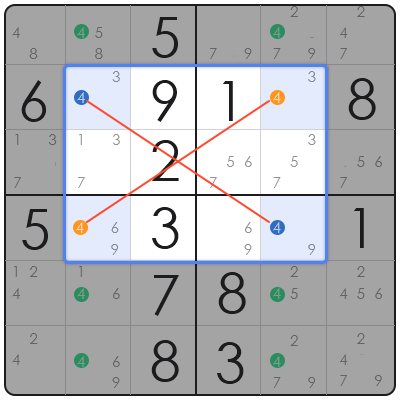
The best way to solve 9 squares sudoku involves a disciplined, systematic application of logical deduction techniques combined with pattern recognition. This approach transcends mere trial-and-error, transforming the popular number puzzle into an exercise in cognitive problem-solving that sharpens analytical skills and patience. From a framework perspective, 9 squares sudoku, commonly known as the standard 9×9 Sudoku, presents a foundational challenge in constraint satisfaction problems. Its significance lies not only in its widespread appeal as a leisure activity but also in its ability to model complex logical processes applicable across various analytical domains, from data validation to resource allocation. The primary problem this structured approach solves is the inefficient and often frustrating experience of tackling Sudoku puzzles without a clear methodology. Instead of random guessing, the best method provides a reliable pathway to solution, minimizing errors and maximizing the solver’s success rate, aligning with principles of systematic process optimization.
Foundational Principles of 9×9 Sudoku Analysis
The best way to solve 9 squares sudoku begins with a thorough understanding of its fundamental rules and constraints, which form the bedrock of any successful solving strategy. At its core, every 9×9 Sudoku grid consists of nine rows, nine columns, and nine 3×3 subgrids (often called ‘blocks’ or ‘regions’), all of which must contain the numbers 1 through 9 exactly once.
Based on structural analysis, the interplay of these three constraints creates the logical landscape for deductions. A number placed in any cell simultaneously impacts its row, its column, and its 3×3 block. This interconnectedness is the primary mechanism through which potential candidate numbers for empty cells can be systematically eliminated.
In practical application, initial scanning for given numbers is crucial. Identifying numbers that are already present in a row, column, or block immediately reduces the possibilities for the remaining empty cells within those respective units. This initial reconnaissance phase establishes the foundational data set for subsequent, more complex deductions, laying the groundwork for an efficient solving process.
Core Deduction Techniques for Efficient Solving
Effective solving hinges on mastering core deduction techniques that systematically eliminate possibilities, streamlining the path to a solution. The most fundamental of these is ‘Single Candidate’ identification, where a cell can only logically contain one specific number because all other numbers (1-9) are already present in its row, column, or 3×3 block.
Another vital technique is ‘Hidden Single’, which involves identifying a number that, while not a ‘single candidate’ for a specific cell, is the *only* possible location for that number within a given row, column, or 3×3 block. This often requires a more thorough scan, checking which cells within a unit can accommodate a particular digit.
Beyond singles, ‘Naked Pairs’ and ‘Hidden Pairs’ represent the next tier of efficiency. A Naked Pair occurs when two cells in the same row, column, or block can only contain two specific numbers (e.g., 2 and 5). If these two cells share *only* these two candidates, then 2 and 5 can be eliminated as candidates from all other cells in that same unit. Hidden Pairs function similarly but are harder to spot, where two numbers are *only* possible in two specific cells within a unit, despite those cells having other candidates. These techniques dramatically reduce the candidate pool and accelerate progress.
Advanced Strategies for Complex Grid Resolution
Beyond basic deductions, advanced strategies are crucial for navigating more challenging 9 squares sudoku puzzles, enabling resolution where simpler techniques falter. X-Wing is one such powerful method, identifying situations where a candidate number appears in exactly two cells in two different rows, and these cells also align in the same two columns. This creates a rectangular pattern that allows the elimination of that candidate from other cells in those two columns.
Another sophisticated technique is the ‘Swordfish’, an extension of the X-Wing logic, involving three rows and three columns. If a candidate number is confined to exactly two or three cells in three different rows, and these cells are also aligned in the same three columns, then that candidate can be eliminated from all other cells in those three columns. These patterns leverage symmetrical constraints across larger sections of the grid.
From a framework perspective, advanced strategies like ‘Jellyfish’, ‘Skyscraper’, and ‘XY-Wing’ further exemplify how interconnected logical dependencies can be exploited. These methods require a deeper candidate tracking, often involving ‘what if’ scenarios and chains of deductions to pinpoint eliminations. Mastering these tools elevates a solver from proficient to expert, particularly for puzzles designed to resist simpler attacks, showcasing the analytical depth required for complex problem resolution. It’s important to note that the difficulty of a Sudoku often corresponds directly to the complexity of the advanced techniques required to solve it, underscoring the value of a comprehensive strategy.
Comparative Analysis of Sudoku Solving Methodologies
Different approaches to solving 9 squares sudoku offer varying levels of efficiency and complexity, highlighting the advantages of a structured, logical method over brute force. When comparing the ‘Systematic Deduction’ approach (the focus of this article) against ‘Brute Force/Guessing’ and ‘Software Solvers’, distinct performance metrics emerge. Below is a comparative overview:
| Methodology | Complexity | Efficiency | Cost | Frequency of Use (Manual) |
|———————|—————|—————-|————|—————————|
| Systematic Deduction| Medium-High | High | Zero | Very High |
| Brute Force/Guessing| Low | Very Low | Zero | Low (Often Leads to Errors)|
| Software Solvers | Low (for user)| Very High | Varies | Low (Automated) |
Based on this analysis, the systematic deduction method, encompassing singles, pairs, and advanced techniques, offers the optimal balance for manual solving. While it demands a higher initial investment in learning and application, its efficiency and reliability far surpass random guessing, which often leads to irrecoverable errors and frustration. Software solvers, while supremely efficient, bypass the cognitive benefits of manual engagement, reducing the puzzle to a computational task rather than a logical challenge. Therefore, for human solvers, understanding and applying structured deduction is unequivocally the superior path.
Avoiding Common Solving Pitfalls
Successfully solving 9 squares sudoku often involves recognizing and circumventing prevalent errors in logic and application. One frequent mistake is ‘premature guessing’, where a solver, facing a seemingly intractable situation, resorts to placing a number without definitive proof. This often leads to cascading errors that are difficult to backtrack and correct, ultimately forcing a restart or abandoning the puzzle.
Professional advice to avoid this includes consistently checking all three constraints (row, column, block) for every candidate number. If there is any ambiguity or another possible location for a number within a unit, do not place it. Instead, meticulously track all possible candidates for each empty cell using pencil marks, which serves as a visual ledger of deductions.
Another common pitfall is ‘tunnel vision’, focusing too intently on one small area of the grid and overlooking crucial deductions available elsewhere. This can lead to stagnation. To counter this, adopt a holistic scanning approach. After making a deduction, scan the entire affected row, column, and block for new opportunities. Periodically step back and review the entire grid, looking for patterns or candidates that might have become apparent due to recent placements. This broader perspective often reveals hidden singles or pairs that were obscured by narrow focus, ensuring a continuous flow of progress.
Frequently Asked Questions about 9 Squares Sudoku
Common queries regarding 9 squares sudoku solving often center on initial setup, specific techniques, and overall strategy. These FAQs aim to provide quick, actionable insights for immediate application in solving puzzles.
**Q: What’s the very first step in solving a Sudoku?** A: The best first step is to scan the grid for ‘obvious’ numbers. Look for rows, columns, or 3×3 blocks with many pre-filled cells, as these are likely to yield ‘single candidates’ quickly. This provides initial traction.
**Q: How do I know if I’m stuck, or if it’s just a hard puzzle?** A: If you’ve meticulously checked for all single candidates, hidden singles, naked pairs, and hidden pairs in every unit and found no new placements, you might need an advanced technique. Or, you may have made an earlier error, requiring careful backtracking.
**Q: Should I use pencil marks?** A: Absolutely. Using small pencil marks (candidate numbers) in each empty cell is a critical organizational tool. It allows you to track all possibilities and easily identify singles or pairs as the puzzle progresses, forming the basis of all advanced techniques.
**Q: Is guessing ever acceptable?** A: From an expert perspective, pure guessing is highly discouraged. It introduces uncertainty and often leads to errors. Instead, if faced with a choice, use ‘what-if’ scenarios by temporarily placing a number to see if it leads to contradictions; if not, you’ve found a logical path. This is a controlled deduction, not random guessing.
In conclusion, the best way to solve 9 squares sudoku is not a single trick but a sophisticated methodology built upon a deep understanding of its logical constraints and the systematic application of deduction techniques. This approach, ranging from foundational scanning to advanced pattern recognition, offers long-term strategic value in developing critical thinking, problem-solving acumen, and patience. As the landscape of logical challenges evolves, the principles learned from mastering Sudoku remain highly relevant, emphasizing that structured, analytical frameworks are the most effective tools for navigating complexity and achieving consistent success.