

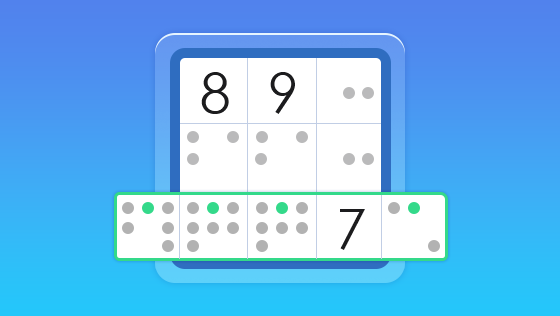
Medium level Sudoku represents a pivotal stage in the development of logical reasoning and pattern recognition, serving as a critical bridge between foundational puzzle-solving and more complex analytical challenges. This strategic game, rooted in numerical placement logic, demands a blend of observation, deduction, and systematic application of rules within its 9×9 grid. The significance of mastering how to play medium level Sudoku extends beyond mere entertainment; it cultivates enhanced cognitive flexibility, improves concentration, and refines the ability to identify intricate relationships within structured data. It acts as a mental gymnasium, strengthening neural pathways responsible for critical thinking and sequential processing. The primary problem medium Sudoku addresses in the current landscape of problem-solving is the tendency for individuals to either oversimplify complex issues or become overwhelmed by intricate details. By requiring players to meticulously work through a grid using a finite set of rules and a growing pool of inferred data, it builds resilience against analytical stagnation and promotes a methodical approach to achieving solutions.
The Core Principles of Medium Sudoku Logic
Based on structural analysis, how to play medium level Sudoku hinges on the fundamental rule that each row, column, and 3×3 subgrid must contain all digits from 1 to 9 exactly once. Unlike easy puzzles that offer numerous direct single-cell solutions, medium Sudoku introduces scenarios where immediate deductions are fewer, necessitating the use of candidate elimination and pattern recognition to progress.
The mechanics involve systematically identifying potential numbers for each empty cell, often referred to as ‘candidates.’ This initial phase is crucial, as it lays the groundwork for more advanced deductions. Understanding the interplay between rows, columns, and blocks is paramount; a number placed in one impacts the possibilities in all intersecting lines and squares.
Key components include the grid’s inherent constraints and the solver’s deductive reasoning. Each digit’s placement is determined by its unique position within its row, column, and 3×3 block, preventing repetition. The challenge at the medium level arises from the reduced number of initially provided digits, forcing the solver to construct a more intricate web of possibilities and certainties.
Fundamental Techniques for Navigating Medium Sudoku Puzzles
From a framework perspective, mastering how to play medium level Sudoku involves employing several foundational techniques beyond simple direct placement. Cross-hatching is an essential strategy where you scan a digit (e.g., ‘1’) across rows and down columns to identify the only possible cell for that digit within a specific 3×3 block.
Candidate notation, or ‘pencil marking,’ is another indispensable technique. This involves writing down all possible numbers for each empty cell in miniature. This detailed accounting allows for the identification of ‘naked singles’ (a cell with only one candidate), ‘hidden singles’ (a digit that can only fit in one specific cell within a row, column, or block, despite other candidates being present in that cell), and ‘locked candidates’ (where a candidate is confined to a specific row or column within a 3×3 block, thereby eliminating it from other cells in that row/column outside the block).
Identifying ‘naked pairs’ or ‘hidden pairs’ significantly elevates efficiency. A naked pair occurs when two cells in a row, column, or block share the exact same two candidates, and no other candidates are possible for those two cells. These two numbers can then be removed as candidates from all other cells in that row, column, or block. Similarly, a hidden pair involves two numbers that are only possible in two specific cells within a unit, even if those cells have other candidates.
Step-by-Step Implementation: A Practical Approach to Solving Medium Sudoku
In practical application, begin your medium Sudoku puzzle by performing an initial scan for obvious numbers. Look for rows, columns, or 3×3 blocks where a digit appears frequently, allowing for quick cross-referencing and immediate placement of ‘naked singles’ based on direct elimination. This rapid sweep can reveal several starting points.
Next, systematically apply pencil marking to every empty cell. For each cell, write down all possible digits (1-9) that do not already exist in its corresponding row, column, or 3×3 block. This comprehensive candidate list is the bedrock for all subsequent, more complex deductions and ensures no possibility is overlooked.
Once candidates are marked, actively search for ‘hidden singles.’ Within each row, column, and 3×3 block, identify if a specific candidate number appears only once in the pencil marks of its empty cells. If so, that candidate must be the solution for that cell, and you can eliminate all other candidates from that cell and that number from other cells in its unit.
Proceed to identify ‘locked candidates.’ If a specific candidate number (e.g., ‘5’) in a 3×3 block is confined to only one row or column within that block, then ‘5’ can be eliminated as a candidate from all other cells in that particular row or column outside of that block. This technique helps narrow down possibilities in adjacent units.
Finally, seek out ‘naked pairs’ and ‘hidden pairs.’ When two cells within a unit (row, column, or block) have the identical two candidates and no others, those two numbers can be removed from all other cells in that unit. Hidden pairs are similar but involve two numbers that *only* appear as candidates in two specific cells within a unit. Continuously iterate through these steps, as each new placement or elimination can unlock further deductions until the puzzle is complete.
Comparative Analysis of Sudoku Difficulty Levels
Analyzing different Sudoku difficulty levels reveals a clear progression in the required problem-solving techniques and cognitive load. Medium Sudoku sits at a strategic point, demanding more than simple observation but less than the highly abstract reasoning of expert puzzles.
| Dimension | Easy Sudoku | Medium Sudoku | Hard Sudoku |
|—|—|—|—|
| **Complexity** | Low; primarily direct singles. | Moderate; requires candidate marking & basic patterns. | High; advanced strategies like X-Wing, Swordfish. |
| **Efficiency of Solving** | Very high; quick progress. | Moderate; systematic process needed, some dead ends. | Low; requires significant time & trial-and-error. |
| **Frequency of Advanced Techniques** | Very low; almost none. | Moderate; hidden singles, naked/hidden pairs. | Very high; multiple layers of complex patterns. |
This structural analysis highlights that how to play medium level Sudoku introduces the essential patterns and candidate-based thinking that form the foundation for tackling more formidable logical challenges. It’s the training ground where deductive muscle memory is truly built, emphasizing methodical progression over brute-force attempts.
Common Pitfalls and Strategic Solutions in Medium Sudoku
A frequent mistake in how to play medium level Sudoku is rushing entries without verifying all three constraints (row, column, block), leading to errors that propagate throughout the puzzle. The professional advice is to pause after each entry and double-check its validity against all rules. If an error is detected early, it saves significant time and frustration.
Another common pitfall is neglecting to use systematic pencil marking or failing to update candidates after each new number placement. This oversight can lead to missed opportunities for deductions, making the puzzle seem harder than it is. The solution involves diligent maintenance of candidate lists; erase a number as a candidate from affected cells every time a digit is confirmed in its row, column, or block.
Lastly, solvers often become fixated on one area of the grid, overlooking opportunities elsewhere. When progress stalls, a strategic solution is to scan the entire grid for ‘lonely’ candidates—numbers that appear in only one cell’s pencil marks within a particular row, column, or 3×3 block. This fresh perspective often uncovers previously unnoticed single candidates or simple pairs.
Frequently Asked Questions About Medium Sudoku
**Q: What defines a medium Sudoku puzzle?** A: Medium Sudoku puzzles typically have fewer starting numbers than easy ones, requiring the use of candidate elimination, hidden singles, and basic pair/triple identification beyond simple direct placement to solve them.
**Q: How do I know if I’m ready for medium Sudoku?** A: You’re ready if you can consistently solve easy Sudoku puzzles without much effort and are comfortable with the basic rules of row, column, and block uniqueness. The next step is embracing systematic candidate tracking.
**Q: What’s the most important tip for medium Sudoku?** A: The most important tip is consistent and accurate pencil marking. This systematic notation of all possible candidates for each empty cell is crucial for identifying less obvious deductions and avoiding errors.
**Q: Does medium Sudoku help cognitive function?** A: Yes, engaging with how to play medium level Sudoku demonstrably improves logical reasoning, pattern recognition, attention to detail, and working memory, offering significant cognitive benefits for individuals of all ages.
The strategic value of how to play medium level Sudoku extends beyond mere leisure, serving as a robust training ground for developing crucial analytical and systematic problem-solving skills. By demanding careful observation, methodical candidate management, and an iterative approach to deduction, it fortifies cognitive capabilities essential in various professional and personal domains. From a forward-looking industry perspective, the ability to dissect complex problems into manageable logical steps, as cultivated by medium Sudoku, remains an invaluable asset in an increasingly data-driven world.