

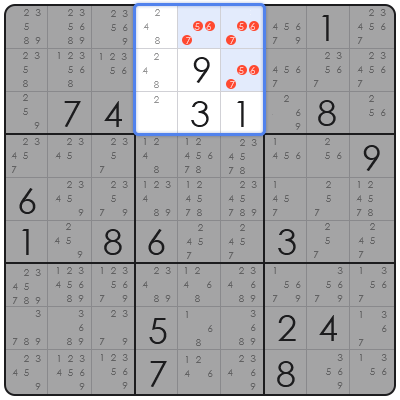
For individuals seeking to enhance their cognitive abilities and engage in stimulating mental exercises, understanding “how can I play Sudoku” is a fundamental first step into a world of logical deduction and strategic thinking. Sudoku, a number-placement puzzle, transcends mere entertainment to become a powerful tool for developing focus, patience, and systematic problem-solving skills. Its universal appeal lies in its simple rules yet profound depth, offering a rewarding challenge for beginners and seasoned puzzle enthusiasts alike. From a framework perspective, Sudoku presents a clear and defined problem space: filling a 9×9 grid with digits so that each column, each row, and each of the nine 3×3 subgrids contains all of the digits from 1 to 9. The primary challenge it solves is the initial disorientation many face when confronted with an empty or partially filled grid, providing a structured methodology for deciphering complex numerical relationships. This article aims to demystify the process, providing a comprehensive guide to its underlying mechanics and effective play strategies. In practical application, mastering how to play Sudoku is not merely about numerical literacy, but about pattern recognition, logical inference, and the disciplined application of rules. It fosters a methodical approach to challenges, emphasizing the importance of observation and deduction over guesswork. This deep-dive will equip you with the essential knowledge and techniques to confidently tackle any Sudoku puzzle, transforming a seemingly intricate problem into an accessible and enjoyable brain workout.
Deconstructing the Sudoku Grid: Fundamental Mechanics
Understanding how can I play Sudoku begins with a thorough grasp of its fundamental structure. The Sudoku puzzle is invariably presented as a 9×9 grid, which totals 81 individual cells. These cells are organized into three distinct but interdependent units: nine horizontal rows, nine vertical columns, and nine 3×3 subgrids, often delineated by thicker lines. Each of these units must adhere to the core principle of containing every digit from 1 through 9 exactly once, without any repetition.
Based on structural analysis, the 9×9 grid is subdivided into larger 3×3 ‘blocks’ or ‘regions,’ which are critical for applying many of the game’s logical deduction techniques. A number placed in any cell simultaneously impacts its respective row, column, and 3×3 block. This interconnectedness is the very essence of Sudoku’s complexity and its solvability; a single digit’s placement provides crucial information that propagates across the entire grid, narrowing possibilities for other cells.
The initial state of a Sudoku puzzle includes several pre-filled numbers, acting as fixed points of data. These ‘givens’ are immutable and form the starting conditions from which all subsequent deductions are made. The distribution and quantity of these initial numbers determine the difficulty of the puzzle, guiding players on how to strategically approach the empty cells. Recognizing these foundational elements is paramount before attempting any numerical placement.
Core Principles of Sudoku Play: The Foundational Ruleset
The most critical aspect of how can I play Sudoku revolves around its three foundational rules, which must be strictly adhered to at all times. First, each of the nine rows must contain all digits from 1 to 9. This means no digit can be repeated within any single row. For instance, if a ‘5’ already exists in a row, no other cell in that same row can be a ‘5’.
Secondly, mirroring the row rule, each of the nine columns must also contain all digits from 1 to 9. Just as with rows, repetition of any digit within a column is strictly forbidden. This dual constraint means that a potential number for a cell must not only be absent from its row but also from its column, immediately reducing the set of possible candidates for that specific cell.
Finally, and equally important, each of the nine 3×3 blocks must contain all digits from 1 to 9. This rule adds a third dimension to the elimination process. A number cannot be placed in a cell if it already exists within that cell’s 3×3 block. The interplay of these three rules—row, column, and block—forms the logical basis for every deduction in Sudoku, making careful cross-referencing an indispensable part of the solving process.
Initial Setup and Information Gathering: Starting Your First Puzzle
To effectively begin how can I play Sudoku, the initial phase involves a systematic scan of the provided grid to gather information. Upon encountering a new puzzle, the first step is to identify and absorb the locations of the given numbers. Pay particular attention to digits that appear frequently or are clustered in specific rows, columns, or 3×3 blocks, as these often provide immediate opportunities for deduction.
In practical application, a highly effective starting technique is to focus on a single number (e.g., all the ‘1’s) and trace its presence across the grid. By observing where a ‘1’ already exists in rows, columns, and blocks, you can quickly eliminate potential cells for other ‘1’s. Repeat this process for each digit from 1 to 9, looking for cells where only one position remains for a particular number within a given unit (row, column, or block).
This initial information-gathering phase also involves marking ‘candidate’ numbers. While not strictly part of the basic rules, using a pencil to lightly jot down all possible numbers for an empty cell is a highly recommended strategy. This visual aid helps in tracking possibilities and preventing oversights as the puzzle progresses, especially for cells with multiple potential digits. Over time, as more numbers are placed, these candidate lists will shrink, leading to definite solutions.
Step-by-Step Strategies: Mastering Basic Techniques
Mastering how can I play Sudoku involves a progression through various strategies, beginning with the most fundamental. The ‘Single Candidate’ method is the cornerstone: if a cell can only hold one specific number based on the existing digits in its row, column, and 3×3 block, then that number is a definitive placement. This involves looking for ‘Naked Singles’ (where only one number remains on a cell’s candidate list) or ‘Hidden Singles’ (where a number can only go in one specific cell within a row, column, or block).
Another essential technique is ‘Elimination and Intersection’. This strategy leverages the interaction between the three units of the grid. If a number, say ‘4’, is already present in a specific 3×3 block, it means no other cell within that block can contain a ‘4’. Furthermore, if that ‘4’ also occupies a cell that is part of a particular row or column, then the ‘4’ cannot appear in the other cells of that row or column within that block. This ‘pointing’ or ‘claiming’ technique helps to eliminate candidates efficiently.
Candidate Marking, or ‘Penciling in Possibilities’, is a crucial tactical application. For every empty cell, carefully list all numbers that *could* possibly fit, based on the current state of its row, column, and block. As you place more numbers, continuously update these candidate lists by erasing possibilities. This systematic approach not only reduces errors but often reveals ‘single candidate’ opportunities that were not immediately obvious without the visual aid of marked possibilities.
Advanced Tactics for Complex Sudokus: Beyond the Basics
Once comfortable with the basics of how can I play Sudoku, advanced techniques become necessary for higher difficulty puzzles. ‘Naked Pairs’ or ‘Naked Triples’ occur when two (or three) cells within the same row, column, or block share the exact same two (or three) candidates, and no other candidates are possible for those cells. If you identify a pair of cells that can *only* be ‘3’ and ‘7’ (and nothing else), then ‘3’ and ‘7’ must occupy those two cells, even if their specific order isn’t known yet. This allows you to eliminate ‘3’ and ‘7’ as candidates from all other cells in that unit.
Similarly, ‘Hidden Pairs’ or ‘Hidden Triples’ involve identifying two (or three) numbers that can *only* appear in two (or three) specific cells within a single unit, even if those cells have other candidates. For example, if ‘2’ and ‘8’ are only possible in cells A and B within a row, then cells A and B must contain ‘2’ and ‘8’. All other candidates in cells A and B can then be eliminated, and ‘2’ and ‘8’ can be removed as candidates from all other cells in that row.
These advanced strategies, while more intricate, are extensions of the core principles of elimination and uniqueness. They require a more refined observation of candidate lists and the ability to spot patterns across multiple cells rather than focusing solely on individual cell constraints. Developing proficiency in these tactics significantly expands one’s ability to solve even the most challenging Sudoku variations, solidifying a deep understanding of logical deduction.
Comparative Analysis: Sudoku in the Landscape of Logic Puzzles
From a framework perspective, comparing how can I play Sudoku with other logic puzzles highlights its unique blend of simplicity and depth. While Crosswords rely heavily on vocabulary and general knowledge, and KenKen introduces arithmetic operations, Sudoku is purely about logical deduction and number placement, making it universally accessible regardless of language or mathematical prowess beyond basic number recognition.
| Feature | Sudoku | Crosswords | KenKen |
|———————|———————————-|———————————-|———————————-|
| **Complexity** | Rules are simple; difficulty varies by givens. | Varies by vocabulary/clue complexity. | Basic arithmetic + logic; often complex. |
| **Mental Skill Focus** | Logical deduction, pattern recognition, patience. | Vocabulary, general knowledge, lateral thinking. | Arithmetic calculation, logical deduction. |
| **Time Investment** | 5 minutes to several hours, depending on difficulty. | 15 minutes to several hours, depending on size/difficulty. | 10 minutes to over an hour, often quicker. |
This comparative analysis underscores Sudoku’s distinct position as a pure logic puzzle. Its reliance on spatial reasoning and numerical uniqueness, free from external knowledge requirements, makes it a timeless and universally appealing mental exercise. The absence of language barriers also contributes to its global popularity, fostering a common ground for cognitive engagement across diverse cultures.
Common Pitfalls and Strategic Solutions for Sudoku Players
When learning how can I play Sudoku, several common pitfalls can hinder progress. One frequent mistake is ‘rushing or guessing’ numbers, especially when encountering a difficult section. This often leads to errors that propagate through the puzzle, making it impossible to solve later without backtracking. The professional advice here is to cultivate patience; if a number isn’t immediately obvious, move to another area of the grid or try a different deduction technique rather than making an unverified placement.
Another common pitfall is ‘not thoroughly checking potential number placements’. Players might incorrectly assume a number fits based on one or two constraints (e.g., just the row and column) without verifying the 3×3 block, or vice-versa. The solution involves developing a systematic checking routine: for every candidate number, mentally (or physically) verify its absence in its respective row, column, AND 3×3 block before making a final placement. This diligent cross-referencing minimizes errors significantly.
Finally, ‘tunnel vision’—focusing exclusively on one small section of the grid—can be detrimental. While it’s good to deeply analyze an area, neglecting other parts can lead to missed opportunities. A strategic solution is to periodically ‘reset’ your gaze and scan the entire grid, looking for high-frequency numbers, nearly complete rows/columns/blocks, or areas with very few remaining candidates. Shifting perspective can often reveal hidden singles or pairs that were overlooked during localized analysis.
Frequently Asked Questions (FAQ) on How to Play Sudoku
**Q: What is the main goal of Sudoku?**
**A:** The main goal of Sudoku is to fill a 9×9 grid with digits from 1 to 9 so that each row, column, and 3×3 block contains all nine digits without repetition. It’s a pure logic puzzle.
**Q: Can I guess numbers in Sudoku?**
**A:** Guessing numbers is not recommended in Sudoku, as it often leads to errors that are difficult to trace. The game is designed to be solvable through pure logic and deduction without arbitrary choices.
**Q: What is the easiest way to start a Sudoku puzzle?**
**A:** Begin by scanning the grid for numbers that appear frequently. Focus on areas where many cells are already filled, as these often have fewer empty slots and yield quick deductions using basic elimination.
**Q: Are there different difficulty levels for Sudoku?**
**A:** Yes, Sudoku puzzles come in various difficulty levels (easy, medium, hard, expert). The difficulty is determined by the number and distribution of the initial ‘givens’, requiring more complex strategies for harder puzzles.
**Q: Does playing Sudoku improve brain function?**
**A:** Based on structural analysis, regular Sudoku play can enhance logical reasoning, critical thinking, memory, and concentration. It provides a valuable cognitive workout, promoting mental agility and problem-solving skills.
In conclusion, mastering how can I play Sudoku is a journey into the methodical application of logic and pattern recognition. This deep-dive into its structural mechanics, foundational rules, and strategic techniques underscores its value beyond a mere pastime; it serves as a powerful exercise in cognitive strategy. By understanding the interplay of rows, columns, and 3×3 blocks, employing systematic candidate elimination, and navigating common pitfalls with patience, players can unlock the full intellectual rewards the puzzle offers. The long-term strategic value of Sudoku lies not just in solving individual puzzles, but in cultivating an analytical mindset applicable to complex problems across various domains, cementing its status as a timeless and beneficial mental endeavor in the landscape of logic puzzles.