

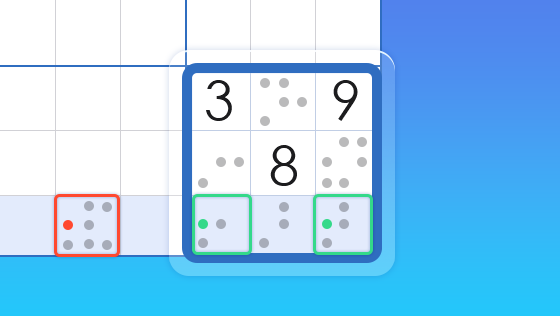
Learning to play Sudoku fundamentally involves grasping a logic puzzle that has captivated millions globally, demanding keen observation and systematic deduction. At its core, Sudoku is a grid-based puzzle where the objective is to fill a 9×9 grid with digits so that each column, each row, and each of the nine 3×3 subgrids contains all of the digits from 1 to 9. This seemingly simple premise underpins a sophisticated exercise in combinatorial logic, offering a structured challenge that enhances cognitive function. The primary problem Sudoku solves in the contemporary landscape is the pervasive need for accessible mental stimulation that fosters logical reasoning, pattern recognition, and sustained concentration. In an era dominated by rapid information flow and fragmented attention, engaging with Sudoku provides a focused, screen-free, or screen-based activity that compels the mind to slow down, analyze, and apply sequential thought processes. It serves as a potent tool for sharpening intellect and maintaining mental agility. This deep-dive analysis will deconstruct the foundational principles of Sudoku, offering a systematic pathway for beginners to intermediate players. We will explore key techniques, compare Sudoku’s structure to other logic puzzles, address common pitfalls, and provide strategic insights for mastery. From a framework perspective, understanding the inherent structure of the Sudoku grid is the first step toward unlocking its logical intricacies and enjoying its profound cognitive benefits.
Deconstructing Sudoku: The Foundational Principles
Learning to play Sudoku fundamentally involves understanding its core rules and the logical constraints that govern number placement within its grid architecture. The game operates on a 9×9 grid, subdivided into nine 3×3 smaller boxes. The central tenet is that every digit from 1 to 9 must appear exactly once in each row, each column, and each 3×3 box. This seemingly straightforward set of rules forms the basis of all Sudoku puzzles, irrespective of difficulty.
Based on structural analysis, the ‘givens’ – the numbers initially provided in the grid – are the anchor points from which all deductions are made. These fixed digits constrain the possibilities for empty cells, acting as critical clues. Players must leverage these givens to eliminate potential numbers for other cells, progressively narrowing down the options until a unique solution emerges. The absence of arithmetic operations distinguishes Sudoku as a pure logic puzzle, relying solely on placement rules.
In practical application, the initial phase of learning involves scanning. This foundational technique requires players to visually inspect rows, columns, and 3×3 boxes to identify numbers that are already present. By cross-referencing these existing numbers, one can deduce where certain digits *cannot* be placed, thereby revealing where they *must* be placed. This methodical scanning is the gateway to identifying ‘single candidates’ – cells where only one number can logically fit.
A Systematic Approach: Learning to Solve Sudoku
A systematic approach to learning Sudoku involves a sequence of steps, beginning with basic observation and progressing to deductive reasoning to identify correct number placements. This structured methodology ensures that no logical opportunity is overlooked, building confidence and efficiency in solving puzzles. Adopting a consistent routine for analysis is paramount for beginners.
In practical application, beginners should start by performing a ‘pencil mark’ strategy. For each empty cell, lightly note down all possible numbers (candidates) that could fit, based on the existing numbers in its row, column, and 3×3 box. This visual aid helps to concretely track possibilities and prevents common errors. Systematically check each row, column, and block for cells where only one candidate remains; these are ‘naked singles’ and can be filled immediately.
From a framework perspective, after identifying naked singles, the next step involves searching for ‘hidden singles.’ A hidden single occurs when a particular number can only be placed in one specific cell within a given row, column, or 3×3 box, even if that cell has multiple other candidates. This requires a slightly more advanced scan, focusing on each number (1-9) individually and checking its placement possibilities across the grid sections. Once a hidden single is found, it can be confidently placed, often triggering a cascade of new deductions.
Beyond Basics: Advanced Sudoku Techniques
Beyond the foundational rules, advanced Sudoku techniques involve sophisticated pattern recognition and multi-cell analysis, crucial for solving more complex and challenging puzzles. These strategies build upon the systematic elimination process, allowing players to make deductions even when simple singles are no longer apparent.
Based on structural analysis, ‘Naked Pairs,’ ‘Naked Triples,’ and ‘Naked Quads’ are critical intermediate techniques. A Naked Pair, for instance, occurs when two cells in the same row, column, or block contain only the same two candidates (e.g., both cells can only be 2 or 5). If this condition holds, then 2 and 5 cannot exist anywhere else in that row, column, or block. Similarly, Naked Triples involve three cells sharing the same three candidates, enabling further eliminations.
From a framework perspective, ‘Hidden Pairs,’ ‘Hidden Triples,’ and ‘Hidden Quads’ are variations where two or more candidates are restricted to two or more cells within a specific region (row, column, or block), effectively ‘hiding’ other numbers in those cells. For example, if two numbers (e.g., 1 and 7) can only appear in two specific cells within a particular row, then those two cells *must* contain 1 and 7, allowing all other candidates to be removed from those cells. Higher-level strategies like ‘X-Wing’ and ‘Swordfish’ involve identifying patterns of candidate numbers across multiple rows or columns to eliminate possibilities in other areas of the grid, requiring a comprehensive understanding of candidate distribution.
Sudoku in Context: A Comparative Analysis with Logic Puzzles
Sudoku differentiates itself within the landscape of logic puzzles through its unique grid-based number placement mechanics, which contrast with other popular deductive challenges. While many puzzles aim to stimulate cognitive functions, their methodologies and required skill sets can vary significantly, offering diverse mental workouts. From a framework perspective, comparing Sudoku to puzzles like Kakuro and Nonograms highlights its specific strengths.
To provide a clear understanding of its distinct position, consider the following comparative analysis:
| Feature | Sudoku | Kakuro | Nonograms |
|—|—|—|—|
| **Complexity** | Varies (Easy to Diabolic) | High, requires arithmetic | Moderate to High, visual logic |
| **Accessibility** | Highly intuitive, universal rules | Requires basic math | Visual, pattern-based |
| **Cognitive Benefit** | Logical deduction, pattern recognition | Arithmetic, deductive reasoning | Spatial awareness, visual deduction |
This comparison underscores Sudoku’s broad appeal due to its numerical non-arithmetic nature. Unlike Kakuro, which demands addition skills, or Nonograms, which rely on visual pattern completion, Sudoku is purely about logical placement and elimination. This makes it universally accessible, as it transcends language and mathematical proficiency barriers, focusing instead on pure deductive reasoning and constraint satisfaction. Its ease of entry, coupled with profound depths of complexity, establishes its unique value as a cognitive enhancement tool.
Navigating the Challenges: Common Sudoku Pitfalls and Professional Strategies
Common pitfalls in learning Sudoku often stem from impatience or a lack of systematic checking, which can be mitigated by adopting disciplined problem-solving methodologies. Many beginners encounter obstacles that, if unaddressed, can lead to frustration and hinder progress in developing advanced skills. Identifying and correcting these habits early is crucial for long-term mastery.
One frequent mistake is ‘guessing’ numbers when stumped, rather than relying on pure deduction. This intuitive leap often leads to errors that propagate through the puzzle, making it impossible to solve without restarting. Professional advice dictates: never guess. If a number cannot be definitively placed, leave the cell blank and continue searching for other opportunities. Based on structural analysis, every correct number must be derivable from the existing givens and previous deductions; if you’re guessing, you’ve missed a logical step.
Another common pitfall is not regularly re-checking rows, columns, and 3×3 blocks for new singles or updated candidate lists after placing a number. Placing a single digit can dramatically alter the possibilities for many adjacent cells, but if these changes aren’t systematically reviewed, new opportunities will be overlooked, leading to stagnation. In practical application, cultivate a habit of scanning the entire affected region every time a number is placed. This iterative review process ensures that all immediate logical consequences are captured.
Finally, many learners tend to overlook simple opportunities, jumping straight to complex techniques when easier deductions are still available. This inefficiency wastes mental energy and can complicate the puzzle unnecessarily. From a framework perspective, always prioritize the simplest deductions first: naked singles, then hidden singles. Only when these basic strategies yield no further progress should one delve into more complex patterns like naked pairs or X-wings. A structured, hierarchical approach to technique application is key to efficient and error-free solving.
Frequently Asked Questions about Learning Sudoku
This section addresses common inquiries for individuals seeking to learn how to play Sudoku, offering concise answers for quick understanding and to serve as a readily accessible knowledge base for beginners.
Q: How long does it take to learn Sudoku? A: Learning the basic rules of Sudoku can take just a few minutes, but developing proficiency and speed requires consistent practice over weeks or months. Many online tutorials and beginner puzzles can accelerate this process.
Q: What is the best way to start playing Sudoku? A: The best way to start is by understanding the core rule: place numbers 1-9 in each row, column, and 3×3 box without repetition. Begin with ‘easy’ puzzles to grasp scanning and basic elimination techniques.
Q: Do I need math skills to play Sudoku? A: No, Sudoku does not require any math skills beyond recognizing numbers 1 through 9. It is purely a logic puzzle focused on pattern recognition, deduction, and systematic placement, not arithmetic.
Q: Can Sudoku improve my brain function? A: Yes, playing Sudoku regularly can enhance cognitive functions such as logical reasoning, concentration, memory, and problem-solving skills. It provides a beneficial mental workout for people of all ages.
Q: Are there different levels of Sudoku difficulty? A: Absolutely. Sudoku puzzles are typically categorized into difficulty levels like Easy, Medium, Hard, and Expert/Diabolic, based on the number of initial ‘givens’ and the complexity of techniques required to solve them.
In conclusion, learning how to play Sudoku is a rewarding journey into the realm of pure logic and systematic problem-solving. By understanding its foundational rules, adopting a methodical approach to candidate elimination, and progressively mastering advanced techniques, individuals can unlock the full potential of this enduring puzzle. The strategic value of Sudoku extends beyond mere entertainment, serving as an accessible and effective tool for cognitive enhancement, fostering critical thinking, and improving focus. From a forward-looking industry insight, the timeless appeal and universal accessibility of logic puzzles like Sudoku will continue to make them invaluable for mental well-being and intellectual development across all demographics.