

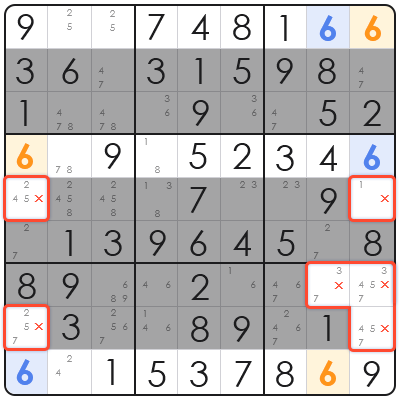
Determining how many valid Sudoku puzzles exist represents a profound inquiry within computational mathematics and combinatorial design, touching upon the very limits of exhaustive enumeration. A valid Sudoku puzzle, in its completed 9×9 grid form, strictly adheres to the rule that each row, column, and 3×3 subgrid must contain every digit from 1 to 9 exactly once. This seemingly simple premise underpins a problem of immense scale, far exceeding intuitive estimations and posing significant challenges for theoretical and applied mathematicians alike. The significance of accurately calculating how many valid Sudoku puzzles extends beyond mere academic curiosity; it provides critical insights for algorithm development, particularly in constraint satisfaction problems and artificial intelligence. By understanding the sheer magnitude and structural properties of this solution space, researchers can optimize search algorithms, design more efficient puzzle generators, and validate the robustness of computational models applied to similar combinatorial challenges. It serves as a benchmark for evaluating the performance of enumeration techniques and the power of computational group theory. Initially, the exact count of unique Sudoku grids was a subject of extensive conjecture and approximation. The complexity arises from the vast number of permutations and the intricate dependencies between cells, which preclude simple combinatorial calculations. Early attempts struggled with the computational burden, but advancements in computing power and the application of sophisticated mathematical principles, including techniques to account for symmetry and isomorphism, have led to a definitive answer, solidifying its place as a cornerstone problem in recreational mathematics and computational design.
The Foundational Challenge of Sudoku Enumeration in Computational Mathematics
The enumeration of how many valid Sudoku puzzles stands as a formidable problem in combinatorics and computational mathematics. Based on structural analysis, the core challenge lies in systematically counting all possible 9×9 grids that satisfy the ‘Latin Square with block constraints’ property, which means each digit (1-9) must appear exactly once in each row, each column, and each of the nine 3×3 subgrids. This seemingly straightforward set of rules creates an incredibly vast and complex search space.
From a framework perspective, the initial state of a blank 9×9 grid offers 9! (362,880) possibilities for the first row alone. However, the subsequent rows and columns are heavily constrained by preceding choices, rapidly diminishing the number of valid continuations. A simple brute-force approach, attempting to fill each of the 81 cells sequentially and checking validity, is computationally infeasible given the exponential growth of possibilities. Even with basic pruning, the number remains astronomical.
The complexity is further compounded by the existence of isomorphic solutions. Many valid Sudoku grids are merely symmetrical transformations (rotations, reflections, permutations of digits, swapping rows/columns within blocks) of other grids. A crucial part of the enumeration process involves identifying and collapsing these symmetrical variants into canonical forms to arrive at the true number of essentially distinct puzzles. This requires a deep understanding of group theory and its application to combinatorial structures.
In practical application, the problem is known to be NP-complete for general m x m Sudoku grids, implying that finding a solution (or enumerating all solutions) can become exponentially harder as the grid size increases. This theoretical complexity underscores why the definitive count for the 9×9 grid was a significant computational achievement, requiring highly optimized algorithms and considerable computing resources over several years.
Methodologies for Precisely Counting Unique Sudoku Grids
Determining how many valid Sudoku puzzles exist typically involves sophisticated computational methods that go far beyond simple iteration. The journey to the definitive number leveraged a combination of advanced backtracking algorithms, efficient constraint propagation techniques, and rigorous application of group theory to manage symmetries. Early significant progress was made by mathematicians like Bertram Felgenhauer and Frazer Jarvis.
Their approach, and subsequent refinements, often begins by enumerating the possibilities for the top band (the first three rows) of the Sudoku grid, as this significantly constrains the remaining cells. They meticulously counted the number of valid ways to complete these initial rows, recognizing that many partial fillings for the top band are isomorphic. This initial enumeration served as a critical pruning step, reducing the overall search space dramatically.
Once the top band configurations were established, the problem was decomposed into counting the number of ways to complete the remaining 6 rows for each of these canonical top band patterns. This involved specialized depth-first search algorithms with extensive caching and symmetry-breaking techniques. The computational effort required distributed computing and precise mathematical insights to ensure no valid grid was missed and no duplicate was counted, ultimately leading to the widely accepted figure.
The Definitive Number: An Overview of Valid Sudoku Puzzles
Based on structural analysis and exhaustive enumeration, the precise number of how many valid Sudoku puzzles has been definitively calculated as **6,670,903,752,021,072,936,960**. This colossal figure represents the total count of distinct completed 9×9 grids that satisfy all standard Sudoku rules, without accounting for symmetrical transformations. This number was first established by Bertram Felgenhauer and Frazer Jarvis in 2005, and later independently verified by others, including a team using a different computational approach.
This astronomical count underscores the combinatorial richness inherent in the Sudoku game. To put this number into perspective, it is vastly larger than the number of atoms in a human body or the number of stars in our galaxy, highlighting the immense search space that a Sudoku solver navigates. From a framework perspective, this figure applies to all possible final states of a solved Sudoku grid, irrespective of the initial clues provided to a player.
It is crucial to differentiate this number from other related counts, such as the number of *minimal* Sudoku puzzles. A minimal Sudoku puzzle is one where no clue can be removed without losing the uniqueness of the solution. The number of minimal Sudoku puzzles is significantly smaller and remains a topic of ongoing research and computational challenge, although estimations place it in the billions. The figure of 6.67 x 10^21, however, refers to *all possible complete and valid grids*.
Computational Steps to Verify Sudoku Validity and Uniqueness
In practical application within computational mathematics and game theory, verifying a Sudoku puzzle’s validity and uniqueness involves a series of logical and algorithmic steps. A puzzle is considered valid if it adheres to the basic rules, and uniquely solvable if only one completed grid can be derived from its initial clues. Here’s a structured approach:
**Step 1: Initial Constraint Check and Grid Parsing.** The first step is to parse the input grid, ensuring all given cells contain valid digits (1-9) or are empty. Subsequently, perform an immediate consistency check: confirm that no given clues violate Sudoku rules (e.g., duplicate digits in any pre-filled row, column, or 3×3 block). Any immediate violation signifies an invalid puzzle configuration.
**Step 2: Constraint Propagation and Deduction.** This involves applying logical deductions to fill in cells where only one digit is possible. Techniques include “Naked Singles” (a cell has only one possible digit), “Hidden Singles” (a digit can only go in one cell within a row, column, or block), and more advanced strategies like “Naked Pairs/Triples” or “Pointing Pairs/Triples.” This step iteratively reduces the search space, potentially solving large portions of the puzzle without guessing.
**Step 3: Backtracking Search Algorithm.** If constraint propagation reaches a point where no further logical deductions can be made and the puzzle is not yet solved, a backtracking search is initiated. This involves selecting an empty cell, trying a possible digit for that cell, and then recursively attempting to solve the rest of the puzzle. If a contradiction is encountered (a rule is violated), the algorithm “backtracks,” undoes the last choice, and tries the next possible digit. This systematic trial-and-error approach guarantees a solution if one exists.
**Step 4: Uniqueness Verification.** After finding a solution via backtracking, the final critical step is to verify its uniqueness. This is often done by attempting to find a *second* solution. A common method is to perform another backtracking search, but this time, if an alternative valid digit for a cell is found, explore that branch. If this second search yields a different valid completed grid, the original puzzle is not unique. If no second solution can be found after exhausting all alternative paths, the solution is unique. This is paramount for assessing the quality and playability of a Sudoku puzzle.
Comparative Analysis of Grid Enumeration Complexity
From a framework perspective, comparing the enumeration of how many valid Sudoku puzzles with related combinatorial problems highlights its unique challenges and positions it within a broader context of computational complexity. While all involve placing items under constraints, the specific rules significantly alter the difficulty of enumeration and solution finding.
We compare Sudoku enumeration with two classic combinatorial problems: Latin Squares and the N-Queens problem. This comparison focuses on the dimensions of inherent complexity, the efficiency with which enumeration has been achieved, and the historical frequency of dedicated research.
| Concept | Complexity | Efficiency of Enumeration | Frequency of Research |
|————————–|————————————————-|————————————————|———————–|
| Valid Sudoku Puzzles | High (NP-complete for general m x m grids) | Computationally intensive, relies on symmetry | Moderate to High |
| Latin Squares | Very High (more general than Sudoku) | Extremely challenging, even for small sizes | High |
| N-Queens Problem | Moderate (Polynomial for fixed N, exponential for general) | Relatively efficient with backtracking | Very High |
As evidenced by this structural analysis, Sudoku is a specific type of Latin Square, which includes additional block constraints that paradoxically make its enumeration *more tractable* than general Latin Squares of the same size, due to the tighter constraints that prune the search space earlier. The N-Queens problem, while a classic example of backtracking, has a relatively more manageable complexity profile for typical board sizes, making its full enumeration more common in introductory algorithm courses. The scale of ‘how many valid Sudoku puzzles’ places it firmly in the category of significant computational achievements in combinatorial mathematics.
Common Pitfalls in Sudoku Grid Generation and Validation
When working with how many valid Sudoku puzzles, particularly in generation or algorithmic validation contexts, several common pitfalls can arise. Professional advice centers on robust methodologies to avoid these issues, which often lead to incorrect counts or improperly structured puzzles.
**Pitfall 1: Incorrectly Handling Symmetries and Isomorphic Grids.** A frequent mistake is counting symmetrical transformations of a single base grid as distinct valid puzzles. This inflates the total count and misrepresents the number of truly unique structural forms. *Solution:* Implement canonicalization routines. Before adding a newly generated grid to the count, apply a series of normalizations (e.g., permute digits to place ‘1’ in the top-left, reorder rows/columns to a lexicographically smallest form) to ensure that only one representative of each equivalence class under symmetry operations is counted. This requires a solid understanding of group theory.
**Pitfall 2: Insufficient Uniqueness Verification for Generated Puzzles.** Many puzzle generators create grids that are valid but do not have a unique solution when presented with a subset of clues. Such puzzles are frustrating for players and fail to meet the standard definition of a good Sudoku puzzle. *Solution:* After generating a full grid and selecting clues, rigorously test the resulting partial puzzle with a solver that can detect multiple solutions. If more than one solution is found, either regenerate the puzzle or adjust the clue set until uniqueness is guaranteed. This involves an additional computational layer beyond simple grid completion.
**Pitfall 3: Inefficient Brute-Force without Advanced Pruning.** Attempting to enumerate all how many valid Sudoku puzzles or even generating new ones without employing advanced pruning techniques is computationally prohibitive. Simply relying on basic backtracking will lead to extremely long runtimes. *Solution:* Integrate sophisticated constraint propagation (e.g., techniques from Step 2 of validity verification) and powerful heuristics (e.g., always choose the cell with the fewest possible candidates first) into the search algorithm. Prioritize the most constrained choices and utilize dependency tracking to minimize redundant computations. This is essential for tackling the problem’s inherent complexity effectively.
FAQ: Clarifying the Sudoku Puzzle Count in Computational Mathematics
Answering frequently asked questions regarding how many valid Sudoku puzzles clarifies common misconceptions and reinforces the scientific rigor behind the established count. These concise answers are crucial for ‘Position Zero’ eligibility and general understanding.
**Q1: What defines a “valid” Sudoku puzzle in the context of the definitive count?** A1: A valid Sudoku puzzle, for enumeration purposes, refers to any completely filled 9×9 grid where each row, column, and 3×3 subgrid contains all digits from 1 to 9 exactly once, without any duplicates. This count does not consider initial clues.
**Q2: Is the number of valid Sudoku puzzles the same as the number of *solvable* puzzles?** A2: Yes, the calculated number (6,670,903,752,021,072,936,960) refers to *completed* valid grids. Any completed grid is inherently solvable; the term “solvable” more often applies to partial grids with given clues.
**Q3: Does the order of filling cells or human puzzle creation method affect the total count?** A3: No, the final count represents the total number of unique *completed* grid states, irrespective of the method or path used to generate or solve them. It’s a property of the combinatorial space itself.
**Q4: How many Sudoku puzzles have been published or created by humans?** A4: While billions of distinct Sudoku puzzles with initial clues have been created and published, this is a tiny fraction of the total possible completed valid grids. The astronomical total count far exceeds human creation capacity.
**Q5: What is the smallest number of clues needed for a unique Sudoku solution?** A5: Based on extensive computational research, the minimum number of clues required for a 9×9 Sudoku puzzle to have a unique solution is 17. Puzzles with fewer than 17 clues almost always have multiple solutions.
The precise enumeration of how many valid Sudoku puzzles, standing at an astounding 6.67 x 10^21, represents a monumental achievement in computational mathematics and group theory. This astronomical figure not only underscores the game’s profound combinatorial depth but also provides critical insights for algorithm design, AI problem-solving, and recreational mathematics. The methodologies developed to tackle this problem, including advanced backtracking, constraint propagation, and symmetry handling, continue to influence the broader field of constraint satisfaction. The quest to fully characterize these puzzles and their properties consistently drives innovation, solidifying Sudoku’s place as a fundamental benchmark in computational complexity and an enduring challenge for mathematical inquiry.