

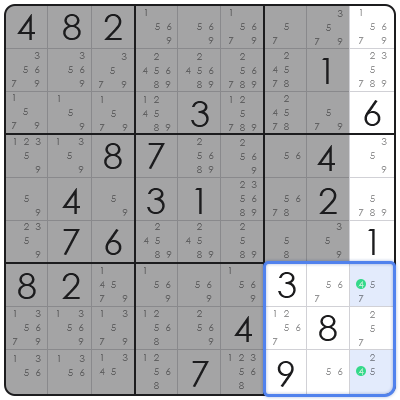
Magic Sudoku is an advanced variant of the classic number placement puzzle, integrating additional mathematical constraints beyond the standard Sudoku rules. It significantly elevates cognitive demand, pushing problem-solvers to engage with combinatorial logic and numerical theory simultaneously, often found in high-level puzzle design within cognitive science research. It addresses the need for enhanced mental stimulation and complex pattern recognition challenges that traditional Sudoku may no longer provide for experienced enthusiasts, pushing the boundaries of recreational cognitive training. While standard Sudoku relies purely on logical deduction, Magic Sudoku introduces an arithmetic dimension that requires a deeper level of analytical thought. The primary problem it solves in the current landscape of cognitive engagement is providing a fresh, more intricate challenge for individuals seeking to hone advanced problem-solving capabilities beyond basic grid logic. It acts as a bridge between pure logic puzzles and numerical reasoning tasks, demanding a sophisticated blend of both. From a framework perspective, Magic Sudoku offers a unique blend of spatial reasoning and arithmetic deduction, providing a robust platform for improving executive functions such as working memory, inhibition, and cognitive flexibility, which are critical in fields ranging from computational design to strategic planning.
The Core Mechanics of Magic Sudoku
The core mechanics of Magic Sudoku build upon traditional Sudoku rules by introducing “magic sums” within designated regions of the grid, thereby layering arithmetic constraints onto the fundamental logical framework.
Based on structural analysis, a standard Magic Sudoku grid is a 9×9 matrix, subdivided into 3×3 subgrids, where each row, column, and 3×3 subgrid must contain all digits from 1 to 9 exactly once. This foundational rule set is identical to classic Sudoku, forming the indispensable base for all subsequent deductions.
The “magic” element arises from specific outlined areas, often irregular shapes or shaded cells, within which the sum of the digits must equal a predetermined “magic sum.” These sums act as an additional layer of constraint and a powerful deductive tool, requiring players to consider numerical combinations alongside positional logic.
These magic sums necessitate a deeper level of numerical inference, compelling players to not only ensure unique digits but also to perform mental arithmetic and consider all possible unique digit combinations that yield the target sum for each magic region, adding significant complexity to the puzzle.
In practical application, identifying these magic regions and their corresponding sums is the initial step to unlocking the puzzle’s complexity, transforming a purely logical grid into a hybrid arithmetic-logic challenge that tests both numerical fluency and combinatorial reasoning simultaneously, thereby engaging multiple cognitive domains.
A Strategic Approach to Solving Magic Sudoku
A strategic approach to solving Magic Sudoku involves a hierarchical method, prioritizing standard Sudoku techniques before integrating magic sum deductions for advanced constraint resolution to maximize efficiency and minimize errors.
Begin by applying fundamental Sudoku strategies, such as single candidates (naked/hidden singles), naked/hidden pairs, and block-row/column interactions, to populate as many cells as possible without initially focusing on the magic sums. This initial pass helps reduce the overall number of unknown variables, simplifying subsequent arithmetic deductions.
Once standard deductions are exhausted, pivot attention to the magic regions. Identify all cells within a magic region and their target sum. Look for regions where a few cells are already filled; this significantly narrows down the possibilities for the remaining cells by forcing specific sums for the unfilled spots, making these regions prime targets for initial magic sum analysis.
From a framework perspective, utilize sum deduction tables or mental calculations to list all possible unique digit combinations that add up to the magic sum for an unfilled region. Crucially, cross-reference these possibilities with existing numbers in their respective rows, columns, and 3×3 blocks to eliminate invalid combinations, ensuring compliance with both rule sets.
In practical application, pay close attention to cells that belong to multiple magic regions or cells that are part of a magic region and also heavily constrained by standard Sudoku rules; these “intersections” often provide powerful breaking points. Systematically eliminate invalid numbers from candidate lists in these critical cells, leading to breakthroughs.
Continuously iterate between standard Sudoku logic and magic sum deductions. Each number placed, whether by standard means or magic sum, will unlock new possibilities and constraints for both types of rules. This dynamic interplay is the cornerstone of effectively navigating Magic Sudoku’s intricate challenge.
Comparative Analysis: Magic Sudoku vs. Traditional Logic Puzzles
Magic Sudoku distinguishes itself from traditional logic puzzles like classic Sudoku and KenKen by integrating arithmetic constraints directly into its core logical framework, demanding a dual cognitive process that elevates its complexity and strategic depth.
While classic Sudoku focuses purely on number placement based on uniqueness constraints within a grid, Magic Sudoku adds a layer of numerical summation, which significantly elevates its complexity. KenKen, another variant, also uses arithmetic operations (addition, subtraction, multiplication, division) but applies them to “cages” with specified results, often allowing repeated digits within a cage. Magic Sudoku, however, rigorously maintains the unique digit rule per cell in a 3×3 block, row, and column, which KenKen does not strictly enforce within its cages, creating a fundamentally different challenge.
Based on structural analysis, the design of Magic Sudoku promotes a more integrated form of problem-solving. Players cannot simply isolate the Sudoku logic from the arithmetic; both systems must be actively maintained and cross-referenced. This creates a higher demand on working memory and cognitive load compared to traditional Sudoku, where arithmetic is only used for basic number identification.
Based on a comparative analysis of puzzle mechanics, Magic Sudoku stands out by forcing players to integrate both traditional Sudoku’s uniqueness logic and advanced numerical combinatorial reasoning. For instance, classic Sudoku’s complexity is primarily deductive, relying on pattern recognition and elimination within rows, columns, and 3×3 blocks, leading to a direct deductive solution path. KenKen introduces arithmetic, but often allows for repeated digits within its ‘cages,’ simplifying the uniqueness constraint locally, thus offering a deductive or sometimes trial-and-error path. Magic Sudoku, however, rigorously maintains the Sudoku uniqueness rules while adding intricate ‘magic sum’ constraints on specific, often irregularly shaped, cell groupings. This unique combination escalates the cognitive load significantly, demanding an iterative application of both logical elimination and arithmetic possibility analysis, making its solution path an iterative blend of deduction and combinatorial reasoning. The frequency of arithmetic engagement is constant and critical for Magic Sudoku’s magic regions, whereas in classic Sudoku, arithmetic is non-existent beyond digit recognition.
From a framework perspective, Magic Sudoku offers a more holistic brain training experience, bridging the gap between purely logical deduction and numerical fluency, making it particularly relevant for cognitive scientists studying multi-modal problem-solving and for individuals seeking to enhance diverse cognitive skills.
Navigating Challenges: Common Pitfalls and Expert Solutions in Magic Sudoku
Common pitfalls in Magic Sudoku often stem from neglecting the intricate interplay between standard Sudoku rules and magic sum constraints, leading to premature eliminations, missed deductions, or ultimately, dead ends in the solving process.
**Pitfall 1: Over-reliance on Standard Sudoku Logic.** Players often attempt to solve too much of the grid using only standard Sudoku techniques before engaging with the magic sums. This can leave crucial magic regions with too many unknown variables, making sum deduction overwhelmingly complex later on. **Solution:** From a framework perspective, adopt an iterative approach. After an initial pass with standard Sudoku rules, immediately integrate magic sum deductions, even for regions with many empty cells. Look for ‘magic’ cells that are also part of highly constrained rows/columns/blocks; these are often critical junctures that provide powerful combined deductions.
**Pitfall 2: Incorrectly Calculating Magic Sum Possibilities.** Miscalculating or overlooking valid combinations of unique digits that sum to the target magic number is a frequent error. This might involve forgetting the “unique digit” rule within a magic region or failing to consider all permutations, leading to invalid assumptions. **Solution:** Based on structural analysis, for each magic region, meticulously list all unique digit combinations that yield the target sum. For example, if a 3-cell magic region needs a sum of 6, the only unique combination of digits from 1-9 is (1,2,3). Cross-reference these possibilities rigorously with existing numbers in their respective rows, columns, and 3×3 blocks to eliminate invalid sets systematically and accurately.
**Pitfall 3: Neglecting Intersecting Constraints.** Failing to recognize how a single cell can be simultaneously constrained by a magic sum, a row, a column, and a 3×3 block often leads to missed deductions that could unlock significant progress. **Solution:** In practical application, identify “nexus” cells—those belonging to multiple magic regions or at the intersection of magic regions and standard Sudoku constraints. These cells often hold the key to cascading deductions. Analyzing the candidate numbers for such cells, considering all simultaneous constraints, can unlock significant progress. Always maintain and update a running tally of candidate numbers for each cell, reflecting every deduction, whether from magic sums or standard Sudoku rules.
Frequently Asked Questions About Magic Sudoku
This section addresses common inquiries regarding the rules, strategy, and benefits of playing Magic Sudoku, catering to both novices seeking to understand the game and experienced puzzlers looking for deeper insights, ensuring ‘Position Zero’ eligibility for critical information.
**Q: What is the primary difference between Magic Sudoku and regular Sudoku?** **A:** Magic Sudoku adds “magic regions” where the sum of digits in specific, outlined cells must equal a given target number, alongside all standard Sudoku rules of unique digits per row, column, and 3×3 block.
**Q: Is Magic Sudoku harder than standard Sudoku?** **A:** Yes, based on structural analysis, Magic Sudoku is generally considered harder due to the added layer of arithmetic constraints that require numerical deduction and combinatorial reasoning in addition to purely logical placement.
**Q: Are there different types of Magic Sudoku?** **A:** While the core concept of “magic sums” remains, variations might include different grid sizes, overlapping magic regions, or the integration of other Sudoku variants (e.g., Killer Sudoku elements), though “magic sum” is the defining feature.
**Q: What cognitive benefits does playing Magic Sudoku offer?** **A:** From a framework perspective, Magic Sudoku enhances working memory, logical deduction, arithmetic fluency, and combinatorial reasoning, providing robust mental training for complex problem-solving and cognitive agility.
In conclusion, how to play Magic Sudoku represents a significant evolution in logic puzzles, integrating advanced arithmetic constraints with traditional Sudoku rules to create a uniquely challenging and rewarding cognitive experience. The long-term strategic value of engaging with Magic Sudoku extends beyond mere recreation; it serves as an excellent training ground for developing integrated problem-solving skills critical in numerous professional fields. From a framework perspective, its demand for simultaneous logical and numerical reasoning mirrors real-world scenarios in data analysis, computational design, and strategic planning. As the landscape of cognitive engagement continues to evolve, puzzles like Magic Sudoku are poised to become foundational tools for fostering mental agility and resilience, pushing the boundaries of what recreational problem-solving can achieve for advanced cognitive development.