

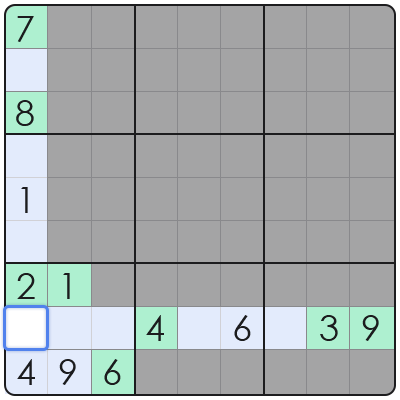
How to scan Sudoku refers to the systematic visual and logical process employed to identify immediate placements and eliminate possibilities within the 9×9 grid, fundamentally accelerating puzzle completion. This method transforms the often daunting task of solving complex Sudoku puzzles into a methodical exercise in deduction and pattern recognition. Its significance lies in providing a structured framework that players can leverage to navigate the intricate web of numbers and constraints. The primary problem that systematic Sudoku scanning solves is the inefficiency inherent in random guessing or brute-force trial-and-error. Without a structured approach, solvers often fall into traps of incorrect assumptions, leading to frustrating dead ends and the need to backtrack extensively. Scanning provides a robust alternative, establishing a reliable, step-by-step methodology that minimizes errors and maximizes the speed and enjoyment of the solving process. From a framework perspective, mastering how to scan Sudoku is not merely about solving puzzles; it’s about cultivating a potent form of analytical thinking. This approach sharpens deductive reasoning, enhances observational skills, and improves the ability to identify complex relationships within a constrained system. These cognitive benefits extend far beyond the puzzle board, making it a valuable exercise for anyone seeking to improve their problem-solving capabilities.
The Foundational Principles of Sudoku Scanning
Based on structural analysis, the essence of Sudoku scanning lies in understanding the grid’s inherent architecture: nine rows, nine columns, and nine 3×3 blocks, each requiring digits 1 through 9 without repetition. Scanning is a systematic search for single-candidate cells, where only one digit can logically fit, or for ‘hidden singles,’ where a digit can only occupy one specific cell within a given row, column, or block.
The underlying mechanics involve continuously evaluating the ‘seen’ digits. When a number is placed in a cell, it instantly eliminates that number as a possibility from all other cells in its respective row, column, and 3×3 block. This cascading effect of elimination is the engine of scanning, allowing solvers to incrementally narrow down the potential candidates for each empty cell.
Proficient scanning relies on the principle of constraint propagation. Every digit placed serves as a new constraint that simplifies the remaining puzzle. By methodically applying these constraints across the grid, even seemingly complex puzzles can be broken down into a series of manageable, logical deductions, revealing the solution one cell at a time without recourse to guessing.
Core Techniques in Sudoku Scanning: A Methodological Overview
How to scan Sudoku involves several core techniques, each designed to exploit the grid’s constraints. ‘Cross-hatching’ is a fundamental method where, for a specific digit, one scans its occurrences across rows and columns to identify empty cells in a 3×3 block where that digit *must* reside. This visual sweep efficiently places digits that have limited possible locations.
‘Counting’ is another essential technique, focusing on identifying missing digits within a specific row, column, or 3×3 block. By quickly tallying the numbers already present, a solver can determine which digits are absent and then proceed to find their unique placement by cross-referencing with other regions. This helps in spotting both obvious and hidden singles.
From a framework perspective, ‘candidate elimination’ forms the backbone of advanced scanning. This involves systematically removing potential numbers from individual cells based on the digits already present in their intersecting rows, columns, and blocks. When a cell is left with only one possible candidate after this process, that digit is a confirmed placement, fueling further deductions.
Step-by-Step Implementation: Executing an Effective Sudoku Scan
In practical application, an effective Sudoku scan begins with an initial full grid pass. Start by identifying obvious single candidates: cells where the intersecting row, column, and 3×3 block already contain all other eight digits, leaving only one possibility. Prioritize digits that appear frequently across the grid, as they tend to yield more immediate eliminations.
Next, employ systematic cross-hatching for each digit (1 through 9). For each number, methodically scan rows and columns to see where it must be placed within a 3×3 block. For instance, if a ‘5’ is in the top-left and top-middle blocks of the first three rows, then the ‘5’ in the top-right block of those rows must be in the remaining row.
Following this, conduct block-by-block and row/column analysis. Focus on a single 3×3 block, identifying the missing numbers. For each missing number, check its possible cell locations within that block by cross-referencing with its corresponding row and column. This process often reveals ‘hidden singles’ or quickly narrows down candidate pools, allowing for further definite placements.
Comparative Efficacy: Scanning vs. Other Sudoku Strategies
Based on structural analysis, how to scan Sudoku offers distinct advantages over less systematic problem-solving methods. For instance, brute-force guessing, characterized by high complexity and extremely low efficiency, often leads to frequent errors and significant time cost, ultimately diminishing the solver’s confidence and enjoyment.
In contrast, fully listing all candidates for every empty cell, while offering higher accuracy, introduces medium complexity and can be quite time-consuming, especially for numerous cells. This method’s efficiency is limited by the manual overhead of writing and updating candidates, making it less fluid for rapid progress.
Systematic scanning, by focusing on immediate, provable deductions, significantly lowers complexity to a low-medium range, maximizes efficiency by reducing unnecessary steps, minimizes time cost by preventing backtracking, and virtually eliminates errors. This makes it the preferred approach for both speed and accuracy, forming the backbone of advanced Sudoku strategies.
Navigating Common Pitfalls in Sudoku Scanning
One frequent mistake in how to scan Sudoku is overlooking obvious placements. This often occurs when a solver lacks a consistent visual scanning pattern, leading to missed opportunities. Professional advice dictates establishing a repeatable routine, such as scanning digits 1-9 across all rows, then columns, then blocks, before repeating the cycle after new placements.
Another common pitfall is premature guessing when faced with perceived dead ends. This breaks the deductive chain and introduces uncertainty. The solution involves strictly adhering to logical deduction. If no immediate placement is obvious, revisit the scanning process for each digit, or explore slightly more advanced ‘naked’ or ‘hidden’ pairs/triples if the puzzle’s difficulty warrants it, rather than resorting to arbitrary choices.
Inconsistent application of scanning techniques also hampers progress. Solvers might apply cross-hatching to some digits but not others, or fail to re-scan after new numbers are placed. From a framework perspective, continuous, iterative scanning is crucial. Each new number opens up new possibilities for deduction; therefore, a full or partial re-scan is always necessary to maintain momentum.
Frequently Asked Questions about Sudoku Scanning
What is the primary benefit of scanning Sudoku? Scanning systematically identifies immediate number placements and eliminates possibilities, drastically speeding up puzzle solving and reducing errors, making the process more enjoyable.
Can scanning improve my overall logic skills? Yes, regular Sudoku scanning hones deductive reasoning, pattern recognition, and logical inference, beneficial for many cognitive tasks and general problem-solving.
Is scanning only for beginners, or do advanced players use it? No, advanced players refine scanning for complex techniques, rapidly identifying hidden patterns and candidate reductions even in hard puzzles, making it universally applicable.
How quickly should I expect to improve with consistent scanning practice? Improvement varies, but consistent practice, even 15-30 minutes daily, typically shows noticeable speed and accuracy gains within a few weeks for most individuals.
The Strategic Advantage of Proactive Sudoku Scanning
Based on structural analysis, the strategic advantage of proactive Sudoku scanning extends beyond mere puzzle completion; it embodies a transferable methodology for tackling complex analytical challenges. By instilling a rigorous, step-by-step approach to data analysis and constraint evaluation, it prepares individuals for scenarios where initial information gathering and elimination are paramount.
In practical application, this methodical approach fosters a mindset that prioritizes verified deductions over speculation. This is critical in fields requiring meticulous problem-solving, from data science to engineering, where logical consistency and error prevention are non-negotiable. The iterative nature of scanning also teaches resilience and the importance of re-evaluating assumptions.
The long-term strategic value of mastering how to scan Sudoku lies in its capacity to cultivate cognitive flexibility and systematic thinking. It is an accessible entry point into understanding complex logical systems, demonstrating how seemingly intractable problems can be solved through persistent, structured analysis and the continuous refinement of one’s approach.
In conclusion, mastering how to scan Sudoku is a foundational skill for anyone seeking to improve their logical deduction and analytical capabilities. It moves beyond simple trial-and-error, establishing a systematic and highly efficient methodology for navigating complex constraints. Its long-term strategic value lies not only in expediting puzzle solutions but also in cultivating a transferable skill set—one that emphasizes pattern recognition, systematic elimination, and iterative refinement—essential for confronting and conquering intricate challenges across various cognitive domains.