

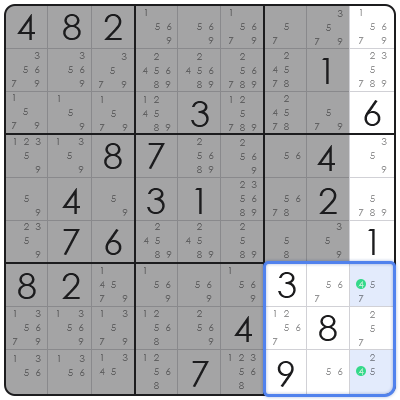
Sudoku, a number placement puzzle, has captivated millions globally, offering a compelling challenge rooted in pure logic. The fundamental goal of how to complete a Sudoku puzzle is to fill a 9×9 grid with digits so that each column, each row, and each of the nine 3×3 subgrids that compose the larger grid contains all of the digits from 1 to 9. This seemingly simple rule set belies a depth of deductive reasoning required for more complex iterations. From a cognitive development perspective, mastering how to complete a Sudoku puzzle transcends mere entertainment; it acts as a robust exercise for logical deduction, pattern recognition, and systematic problem-solving. It provides a structured environment for developing analytical thinking skills, enhancing concentration, and improving memory recall. The elegance of Sudoku lies in its universal appeal, requiring no linguistic or mathematical prowess beyond basic number recognition, making it accessible yet profoundly engaging for all ages. The primary problem that a well-structured approach to how to complete a Sudoku puzzle solves in the current landscape is the cultivation of mental agility. In an era saturated with immediate gratification and information overload, Sudoku offers a deliberate, focused activity that encourages patience and sustained intellectual effort. It hones the ability to identify constraints, hypothesize solutions, and validate outcomes, critical skills applicable far beyond the puzzle grid into various professional and personal domains.
Structural Mechanics of Sudoku Completion
Understanding how to complete a Sudoku puzzle begins with grasping its core structural mechanics, which are based on a constraint satisfaction problem. The 9×9 grid is meticulously designed, subdivided into nine 3×3 smaller grids, often referred to as ‘blocks’ or ‘regions.’ Each cell within this grid is governed by three fundamental constraints: its row, its column, and its encompassing 3×3 block. A valid Sudoku solution necessitates that each of these 27 entities (9 rows, 9 columns, 9 blocks) contains every digit from 1 to 9 exactly once.
Based on structural analysis, the interplay of these constraints forms the foundation of all solving techniques. Beginners often start with ‘single candidate’ analysis, which involves identifying cells where only one possible digit can be placed due to existing numbers in its row, column, and block. This direct deduction is the most straightforward application of the structural rules. Similarly, ‘hidden single’ analysis extends this by looking for a digit that can only appear in one specific cell within a given row, column, or block, even if that cell has multiple other potential candidates.
From a framework perspective, the grid’s fixed structure allows for a systematic reduction of possibilities. Every pre-filled number provides crucial information, eliminating that digit as a candidate for all other cells in its respective row, column, and block. The elegance of Sudoku’s design ensures that through consistent application of these basic deductions, a significant portion, if not all, of an ‘easy’ puzzle can be solved. The challenge escalates as fewer initial numbers are provided, demanding more complex multi-cell analysis techniques.
Systematic Approaches to Solving Sudoku Puzzles
To effectively demonstrate how to complete a Sudoku puzzle, one must adopt systematic approaches that go beyond basic single-candidate identification. After an initial scan for obvious placements, the next step involves detailed candidate marking, often called ‘pencil marking.’ This involves writing all possible digits for each empty cell, which then facilitates advanced deduction. This process provides a visual roadmap of possibilities and helps in identifying patterns not immediately apparent from the numbers alone.
In practical application, techniques like ‘Naked Pairs’ and ‘Hidden Pairs’ become essential. A ‘Naked Pair’ occurs when two cells in the same row, column, or block have an identical pair of candidates, and no other candidates. If these two cells must contain those two digits, then those digits can be eliminated as candidates from all other cells in that row, column, or block. Conversely, a ‘Hidden Pair’ involves two digits that, within a specific row, column, or block, can *only* appear in two specific cells, even if those cells have other candidates. This allows for the elimination of those other candidates from those two cells.
Furthering the systematic methodology, ‘Pointing Pairs’ (or Triples) and ‘Claiming Pairs’ (or Triples) are crucial for mid-to-advanced puzzles. A ‘Pointing Pair’ occurs when a set of two (or three) candidate digits for a certain number within a 3×3 block are all confined to a single row or column within that block. This ‘points’ to the fact that this number cannot exist in the rest of that row or column outside the block, allowing for eliminations. ‘Claiming Pairs’ is the inverse: if candidates for a number in a row or column are confined to a single 3×3 block, then that number cannot exist in other cells of that block, outside that specific row or column. These inter-block and intra-block eliminations are cornerstones of how experts complete difficult Sudoku puzzles.
Comparative Analysis: Sudoku Strategies vs. Related Logic Puzzles
When examining how to complete a Sudoku puzzle in relation to other logic puzzles, a comparative analysis reveals distinct strategic demands and underlying principles. While all aim to fill a grid based on rules, the nature of these constraints varies significantly. Sudoku is purely positional, focusing on unique digit placement within defined boundaries. Other puzzles, like KenKen and Kakuro, introduce arithmetic operations, adding layers of numerical calculation to the positional logic.
A comparative analysis, often presented in a tabular format, would highlight key differences in features, complexity, and strategy focus across these puzzle types. For instance, KenKen (also known as ‘Calcudoku’) requires not only digit placement but also that numbers within ‘cages’ (regions outlined by a bold line) combine using a specified arithmetic operation to achieve a target number. Kakuro, or ‘Cross Sums,’ is akin to a crossword puzzle with numbers, where digits 1-9 must sum to a target number in each horizontal and vertical run, without repetition within the run. These introduce an additional layer of constraint that significantly alters the solving methodology.
| Feature | Sudoku | KenKen | Kakuro |
|—————-|————————-|—————————-|——————————|
| Core Logic | Positional uniqueness | Arithmetic & Positional | Summation & Positional |
| Complexity | Varies (easy to evil) | Moderate to high | Moderate to high |
| Strategy Focus | Deduction & elimination | Calculation & deduction | Summation & deduction |
| Primary Skill | Pure Logic | Logic & Arithmetic | Logic & Number Sense |
This table illustrates that while Sudoku emphasizes a pure form of logical deduction and elimination, puzzles like KenKen and Kakuro integrate quantitative skills, requiring solvers to manage both positional constraints and numerical computations simultaneously. The efficiency of solving these puzzles, therefore, depends on the adeptness in each specific logical and arithmetic domain.
Avoiding Common Sudoku Completion Pitfalls
Successfully navigating how to complete a Sudoku puzzle often means avoiding common pitfalls that can lead to errors and frustration. One of the most frequent mistakes is rushing and making assumptions without thorough verification. This typically involves placing a number in a cell based on a quick visual scan rather than a rigorous check against all three constraints (row, column, and block). The professional advice here is to always double-check every placement, no matter how obvious it seems, to ensure it doesn’t violate any rules and to avoid cascading errors that can render the entire puzzle unsolvable.
Another significant pitfall is an over-reliance on a single solving technique, leading to ‘solver’s block’ when that technique no longer yields progress. Many beginners become adept at single-candidate methods but struggle when the puzzle requires more advanced deductions like Naked Pairs or Pointing Pairs. From a framework perspective, it’s crucial to cultivate a diverse toolkit of strategies. When one method stalls, pivot to another; for instance, if direct eliminations are exhausted, shift focus to identifying candidate groups within rows or blocks. Expanding one’s repertoire is key to tackling harder puzzles.
Finally, neglecting to consistently note down ‘pencil marks’ (candidate digits for each empty cell) is a common oversight, particularly in intermediate and hard puzzles. While it might seem tedious, diligent pencil marking is foundational for identifying all advanced patterns. Without a comprehensive list of candidates for each cell, it’s nearly impossible to spot Naked/Hidden Pairs/Triples or X-Wings. In practical application, maintaining clear and organized pencil marks is perhaps the most critical habit for any serious Sudoku solver, as it visually represents the entire state of the puzzle and allows for systematic, error-free deduction.
Frequently Asked Questions on Sudoku Completion
Q: What is the absolute best strategy for a beginner learning how to complete a Sudoku puzzle? A: For beginners, the best strategy is to methodically scan rows, columns, and 3×3 blocks for ‘single candidates’ where only one digit can logically fit. Start with cells that have the fewest empty neighbors to quickly identify initial placements.
Q: How can I improve my speed and efficiency when solving Sudoku puzzles? A: Improving speed requires consistent practice and familiarizing yourself with advanced patterns like Naked Pairs/Triples and Hidden Singles/Pairs. Regularly using pencil marks for all candidates is crucial for efficient pattern recognition.
Q: Is it ever acceptable to guess when learning how to complete a Sudoku puzzle? A: While advanced solvers might use ‘guessing’ (or ‘branching’) in very complex puzzles, it should be a last resort. For most puzzles, and especially for learning, focus on pure logical deduction to develop fundamental skills and avoid errors.
Q: Can all Sudoku puzzles be solved using purely logical methods, without guessing? A: Yes, a ‘well-formed’ Sudoku puzzle is defined as having a unique solution that can be reached purely through logical deduction, without the need for trial-and-error or guessing.
In summary, mastering how to complete a Sudoku puzzle is a testament to the power of structured logical thinking and persistent deduction. It is more than just a game; it is a highly effective tool for enhancing cognitive functions, improving analytical skills, and fostering methodical problem-solving. The strategic value of engaging with Sudoku lies in its ability to sharpen the mind, encouraging patience and precision in navigating complex constraint environments. As we look forward, the principles of systematic analysis and pattern recognition inherent in Sudoku completion remain profoundly relevant, mirroring the structured approach required for addressing intricate challenges across diverse professional and personal landscapes, solidifying its place as a timeless mental exercise.