

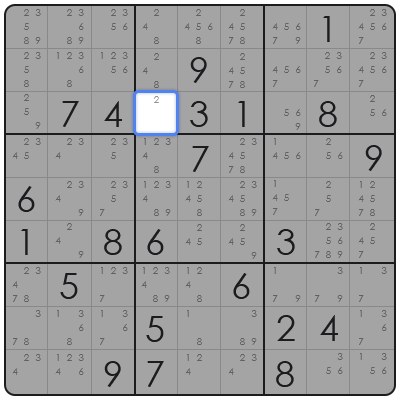
Setting a Sudoku, often mistakenly considered a simple task, is in fact a sophisticated process of crafting a solvable puzzle that guarantees a unique solution. From a framework perspective, this involves far more than randomly placing numbers; it demands a deep understanding of combinatorial logic and puzzle mechanics to ensure a balanced challenge. This meticulous construction is critical across various domains, from educational tools designed to enhance logical reasoning to the professional development of engaging mobile puzzle applications. The significance lies in delivering a consistent and fair intellectual exercise, preventing player frustration from ambiguous or unsolvable grids. The primary problem that a structured approach to how to set a sudoku solves is the proliferation of poorly designed puzzles that either have multiple solutions, no solutions, or rely on guesswork rather than pure deduction. By adhering to established methodologies, creators can consistently produce high-quality, uniquely solvable Sudokus, thereby upholding the integrity and enjoyment of the puzzle genre.
Core Principles of Sudoku Grid Construction
Sudoku grid construction adheres to specific combinatorial rules that dictate the placement of numbers across its 9×9 matrix, encompassing rows, columns, and nine distinct 3×3 blocks. Based on structural analysis, each of these structural components must contain every digit from 1 to 9 exactly once, establishing the foundational constraints for puzzle validity.
The initial ‘givens’—the pre-filled numbers in the grid—are not arbitrary; their strategic placement profoundly influences the puzzle’s difficulty and solvability. These givens act as anchors, guiding the solver through a series of logical deductions. A well-set Sudoku ensures that these initial numbers provide enough information for a unique solution without giving away too much, preserving the challenge.
Furthermore, the distribution and quantity of these givens determine the complexity of the required solving techniques. A puzzle requiring advanced strategies often has fewer, more strategically placed givens, forcing deeper inferential leaps. Conversely, an abundance of givens typically points to a simpler puzzle solvable with basic scanning and cross-hatching techniques.
The Step-by-Step Process for Setting a Solvable Sudoku
Setting a solvable Sudoku typically involves populating a grid, verifying uniqueness, and strategically removing numbers to achieve a desired difficulty, a process requiring both precision and iterative refinement. In practical application, this begins not with an empty grid, but with a fully solved one to guarantee a valid starting point.
The first step involves generating or acquiring a complete, valid 9×9 Sudoku solution. This foundational grid inherently satisfies all row, column, and block constraints. Next, numbers are strategically removed from this complete grid. Each removal must be carefully considered, as it directly impacts the puzzle’s solvability and uniqueness. The goal is to retain the minimum number of givens necessary to maintain a singular solution.
Crucially, after each significant removal, the evolving puzzle must be tested for uniqueness. This often involves employing a dedicated Sudoku solver algorithm that can confirm whether the current set of givens leads to precisely one final solution. If multiple solutions are found, the last removed number must be reinstated, or an alternative number must be chosen for removal. This iterative process continues until the desired number of givens is reached while maintaining uniqueness.
Finally, the difficulty of the puzzle is assessed. This is not merely a count of givens, but an evaluation of the logical paths required to solve it. Advanced algorithms can analyze the types and complexity of deductions needed at each step. Based on this analysis, further fine-tuning of givens may be necessary to align with the target difficulty level, ensuring a truly crafted puzzle.
Comparative Approach: Manual vs. Algorithmic Sudoku Setting
Sudoku setting methods primarily diverge between meticulous manual crafting and efficient algorithmic generation, each presenting distinct trade-offs in terms of complexity, efficiency, cost, and frequency. Understanding these differences is pivotal for content strategists aiming for specific puzzle outcomes.
Manual setting, while offering unparalleled control over specific puzzle patterns and embedded solving techniques, is characterized by high complexity and significantly lower efficiency. The ‘cost’ here is primarily human time and expertise, limiting the ‘frequency’ of new puzzle generation. Its strength lies in crafting bespoke puzzles that might demonstrate a unique logical flow or challenge a solver in a very particular way, making it valuable for niche educational or competitive contexts.
Conversely, algorithmic setting excels in high efficiency and frequency of generation, with the complexity largely concentrated in the initial development of the algorithm itself. Once established, the marginal cost per puzzle is very low, allowing for the rapid production of millions of uniquely solvable Sudokus. While it may not always produce puzzles with the same ‘artistic’ flair or specific trick patterns as manual methods, it guarantees consistent adherence to solvability and uniqueness criteria, making it the industry standard for mass-market puzzle distribution.
Common Misconceptions and Solutions in Sudoku Setup
Frequent errors in Sudoku setup include creating puzzles with multiple solutions, no solutions, or inadvertently trivial difficulties, all of which compromise the player’s experience. From a quality assurance perspective, identifying and rectifying these pitfalls is paramount for maintaining puzzle integrity.
One prevalent pitfall is inadvertently creating a puzzle with multiple valid solutions. This often occurs when too many numbers are removed, leaving ambiguous decision points for the solver. The professional solution involves rigorous post-removal testing using a uniqueness validation algorithm. Any puzzle yielding more than one solution must be re-evaluated, typically by reintroducing a strategically chosen ‘given’ to force a single logical path.
Another common mistake is generating an unsolvable puzzle, which can result from flawed initial number placement or the removal of critical ‘givens’ that were essential for deduction. To avoid this, industry best practice dictates starting with a complete, fully solved grid before any numbers are removed. This guarantees that a solution exists. Subsequent removals should be followed by a solvability check, ensuring the puzzle remains deductive and not reliant on trial-and-error.
Finally, creators often struggle with consistent difficulty scaling. Simply counting the number of ‘givens’ is an insufficient metric for difficulty. A puzzle with many givens can still be challenging if those givens force complex deductions, and vice versa. The solution involves implementing a sophisticated difficulty rating algorithm that analyzes the types of logical techniques required to solve the puzzle (e.g., hidden singles, naked pairs, X-wing). This entity-based writing approach ensures difficulty is assessed by inherent solving complexity rather than superficial counts.
Frequently Asked Questions About Sudoku Setting
Key questions about setting Sudoku puzzles often revolve around ensuring solvability, uniqueness, and achieving specific difficulty levels, crucial for content creators aiming for Position Zero eligibility.
Q: How do you ensure a Sudoku has only one solution?A: By starting with a complete, valid grid and iteratively removing numbers, checking after each removal that a unique solution still exists. This systematic approach eliminates ambiguity.
Q: What makes a Sudoku puzzle ‘hard’ to set?A: Difficulty in setting comes from strategically placing fewer ‘givens’ that force complex logical deductions, such as X-wings or Naked Pairs, rather than simple scanning methods. It’s about depth, not just sparsity.
Q: Can you set a Sudoku without solving it first?A: While technically possible, it’s highly inefficient and prone to errors like creating unsolvable or multi-solution puzzles. Starting from a solved grid is the industry-standard, most reliable approach.
Q: What is the minimum number of ‘givens’ for a unique Sudoku?A: The absolute minimum known is 17 ‘givens’ for a standard 9×9 Sudoku to ensure a unique solution, though finding such puzzles is extremely challenging and rare. Most puzzles use 20-30+.
In conclusion, the art and science of how to set a sudoku extend far beyond mere number placement; it is a critical process for crafting engaging, logically coherent, and uniquely solvable puzzles. This meticulous approach, whether manual or algorithmic, is fundamental for maintaining the integrity of the puzzle genre and providing consistent cognitive challenges. The long-term strategic value lies in its contribution to educational tools, mental acuity exercises, and the entertainment industry. Looking ahead, advancements in AI and machine learning will likely further refine puzzle generation, allowing for even more personalized and dynamically difficult Sudokus, but the core principles of unique solvability and logical consistency will remain paramount.