

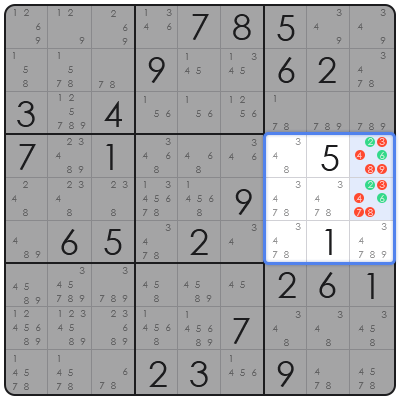
Killer Sudoku presents a fascinating evolution of the classic number puzzle, combining traditional Sudoku grid logic with arithmetic challenges that significantly deepen the strategic layer. For beginners, understanding how to play Killer Sudoku means unlocking a new dimension of cognitive engagement, moving beyond simple number placement to intricate sum-based deductions. From a framework perspective, its significance lies in enhancing mental agility, fostering advanced logical reasoning, and developing a systematic approach to complex problem-solving. This unique blend makes it not just a pastime but a rigorous mental workout, appealing to those seeking to sharpen their analytical skills within Strategic Gaming. In practical application, Killer Sudoku solves the problem of plateauing engagement often encountered by seasoned classic Sudoku players, offering a fresh, yet familiar, challenge. It bridges the gap between basic grid puzzles and more advanced logical matrix problems, providing a structured pathway for beginners to progressively master sophisticated deduction techniques.
Understanding the Fundamental Mechanics of Killer Sudoku for Beginners
Killer Sudoku, also known as ‘Sum Sudoku,’ integrates the fundamental rules of classic Sudoku with an additional arithmetic layer: cages. These cages are outlined groups of cells within the 9×9 grid, each accompanied by a target sum.
The core mechanic dictates that digits within each cage must add up to its specified sum, with the critical constraint that no digit can repeat within a single cage. This rule operates in conjunction with the standard Sudoku principles, requiring each row, column, and 3×3 block to contain digits 1 through 9 exactly once.
Based on structural analysis, these sum constraints introduce an initial level of complexity and a powerful new deduction tool. Beginners should first internalize that every cell in the 9×9 grid belongs to exactly one cage, and the sum provided for that cage is immutable, forming the bedrock of early strategic moves.
Deconstructing the Core Rules: How to Play Killer Sudoku
To effectively play Killer Sudoku, a beginner must first recall the immutable laws of classic Sudoku: every row, every column, and every 3×3 block must contain the digits 1 through 9 precisely once. These foundational rules remain paramount in Killer Sudoku, guiding all number placements.
The novel element lies in the ‘cages,’ which are groups of cells demarcated by dashed lines, each featuring a small number in its top-left corner indicating the sum its constituent digits must achieve. A crucial rule specific to Killer Sudoku is that digits within a single cage cannot repeat, even if the cage crosses multiple rows, columns, or 3×3 blocks.
From a framework perspective, these dual rule sets create a rich environment for logical deduction. Beginners learn to identify possible digit combinations for small cages first, especially those with unique sums (e.g., a two-cell cage summing to 3 must be 1+2), and then use these to eliminate possibilities or confirm placements within the classic Sudoku grid structure.
In practical application, often the most effective way to start is by focusing on cages that intersect with known Sudoku constraints, such as a cage that is entirely within a single 3×3 block, or a cage that has very few possible digit combinations. This initial focus streamlines the process for how to play Killer Sudoku for beginners.
Step-by-Step Approach: Implementing Killer Sudoku Strategies
Implementing Killer Sudoku strategies systematically begins by scanning the grid for the smallest cages or those with the most restrictive sums. Start with two-cell cages that have small sums (e.g., 3 (1+2), 4 (1+3)) or large sums (e.g., 17 (8+9)), as these often have only one possible digit pair.
Once a potential pair of digits is identified for a cage, use pencil marks to note these possibilities in the respective cells. Simultaneously, apply standard Sudoku elimination techniques: if a digit in a cage conflicts with an existing digit in its row, column, or 3×3 block, that possibility for the cage’s cell can be removed.
A crucial intermediate step involves the ‘sum of regions’ technique. Recognizing that each 3×3 block, row, or column sums to 45 (1+2+…+9=45) can be incredibly powerful. If a 3×3 block is almost entirely covered by cages, summing the known cage totals and subtracting from 45 can reveal the value of any cells outside those cages but within the block.
Based on structural analysis, gradually work from the most constrained areas to less constrained ones. Look for cages that share cells with other cages or intersect rows/columns where many numbers are already filled. These intersections provide crucial points for cross-referencing and further deductions, incrementally solving the puzzle.
Comparative Analysis: Killer Sudoku vs. Classic Sudoku and KenKen
When analyzing how to play Killer Sudoku for beginners, it is insightful to compare its strategic depth and learning curve against related number puzzles, specifically Classic Sudoku and KenKen. From a framework perspective, while all three involve grid-based numerical deduction, their primary mechanisms differ, influencing complexity and efficiency.
**Classic Sudoku** primarily focuses on digit placement based on uniqueness within rows, columns, and 3×3 blocks. Its complexity is foundational, relying purely on pattern recognition and logical elimination. The efficiency of solving is high for experienced players, but the range of deduction types is limited compared to sum puzzles.
**Killer Sudoku** significantly increases complexity by introducing arithmetic sums within ‘cages,’ requiring players to consider not only digit uniqueness but also numerical combinations. This adds a layer of mathematical deduction, making it generally more challenging than Classic Sudoku. The efficiency of solving requires more varied techniques, including ‘sum-of-regions’ and combination analysis, extending the time investment for beginners.
**KenKen**, also a sum-based puzzle, offers a similar level of arithmetic challenge but differs structurally by allowing repeated digits within cages as long as they are not in the same row or column. Its operations can also include subtraction, multiplication, and division, further diversifying its logical demands. From a cost perspective (in terms of cognitive effort), KenKen can sometimes be perceived as having a steeper initial learning curve due to diverse operations, whereas Killer Sudoku’s addition-only sums keep the arithmetic simpler while emphasizing the Sudoku rules more heavily. Killer Sudoku provides a more direct progression for those comfortable with Classic Sudoku.
Common Pitfalls and Strategic Solutions for Killer Sudoku Beginners
A frequent mistake beginners make in Killer Sudoku is overlooking the fundamental Classic Sudoku rules while overly focusing on the cage sums. Many novices might place a digit within a cage that satisfies its sum, only to realize it violates a row, column, or 3×3 block constraint. The solution is to consistently cross-reference all three types of constraints with every potential digit placement.
Another common pitfall is miscalculating cage sums or incorrectly assuming digit combinations. For instance, a two-cell cage summing to 10 has multiple combinations (1+9, 2+8, 3+7, 4+6), but a beginner might prematurely lock onto one without considering other cells in the row/column/block. Professional advice dictates listing all possible combinations for a cage and then systematically eliminating them based on surrounding numbers.
Based on structural analysis, neglecting the use of pencil marks is a significant barrier to progress. Attempting to solve Killer Sudoku purely mentally can lead to errors and wasted time. The strategic solution involves meticulous notation of all possible digits for each cell within a cage, and then using logical deductions (both Sudoku and sum-based) to narrow down these possibilities.
In practical application, beginners often struggle with the ‘sum of regions’ technique. They might fail to exploit the knowledge that a full row, column, or 3×3 block always sums to 45. Learning to identify partially filled regions and calculating missing sums is crucial. For instance, if a row contains cages summing to 20, 15, and 8, and a single isolated cell, that cell must be 45 – (20+15+8) = 2, greatly accelerating the solve.
Frequently Asked Questions About how to play killer sudoku for beginners
**What is a ‘cage’ in Killer Sudoku?** A cage is a group of cells within the Sudoku grid, outlined by a dashed line, that must contain digits summing to a specified target number. Digits within a single cage cannot repeat.
**How do sums work in Killer Sudoku?** Each cage has a sum number in its top-left corner. The digits placed into the cells of the cells of that cage must add up exactly to that sum. This is in addition to classic Sudoku rules.
**Is Killer Sudoku harder than regular Sudoku?** Generally, yes, Killer Sudoku is considered more challenging than classic Sudoku because it adds an arithmetic layer to the traditional logic constraints, requiring more complex deduction techniques.
**What is the best starting strategy for beginners?** Begin by identifying small cages with unique sum combinations (e.g., a two-cell cage summing to 3 can only be 1+2). Also, look for cages that occupy an entire row, column, or 3×3 block as these are powerful sum-to-45 deduction points.
**Can numbers repeat in a Killer Sudoku cage?** No, numbers cannot repeat within a single cage in Killer Sudoku. This is a crucial rule that differentiates it from some other sum puzzles like KenKen.
In conclusion, based on structural analysis, mastering how to play Killer Sudoku for beginners offers substantial long-term strategic value, significantly enhancing cognitive functions beyond basic pattern recognition. From a framework perspective, it equips players with advanced deductive reasoning, systematic problem-solving skills, and a deeper appreciation for mathematical logic. The forward-looking industry insight suggests that the popularity of such hybrid puzzles will continue to grow, as they provide an accessible yet profound avenue for mental training, reflecting a broader trend towards engaging and intellectually stimulating forms of strategic gaming.