

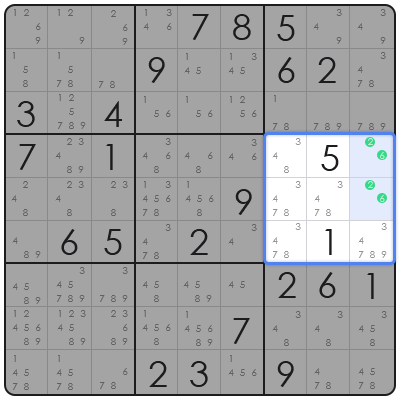
Solving mega sudoku represents a significant leap from its conventional 9×9 counterpart, demanding a more profound understanding of numerical logic and combinatorial strategy. This advanced puzzle, typically featuring 12×12 or 16×16 grids with corresponding larger sub-grids, scales the complexity exponentially, requiring solvers to manage a vastly increased number of candidates and interconnected constraints simultaneously. It is not merely a bigger grid; it’s a multi-layered challenge that tests the limits of pattern recognition and systematic deduction. From a framework perspective, mega sudoku serves as an excellent model for exploring scaled problem-solving within constrained systems, akin to complex logistical planning or advanced data array optimization. The primary problem it solves for enthusiasts and strategists alike is the intellectual stagnation that can arise from mastering standard sudoku, offering a fresh, formidable frontier for cognitive engagement. It forces a re-evaluation of established techniques, pushing for the development of more robust and flexible analytical methodologies. In practical application, mastering how to solve mega sudoku cultivates enhanced focus, patience, and a methodical approach to intricate problems—skills directly transferable to professional domains requiring meticulous attention to detail and long-term strategic planning. Its significance extends beyond entertainment, offering a potent mental exercise that refines decision-making under high complexity. This deep dive will unravel the core strategies and structural nuances required to conquer these formidable grids, providing a definitive guide for advanced solvers.
The Core Mechanics of Mega Sudoku: An Algorithmic Foundation
Understanding how to solve mega sudoku begins with grasping its fundamental structure and rules, which, while mirroring classic Sudoku, are dramatically amplified in scope. Mega Sudoku typically features a 16×16 grid, subdivided into sixteen 4×4 sub-grids (or ‘blocks’), with the objective of filling each cell with a number from 1 to 16. The core algorithmic constraint remains: each row, each column, and each 4×4 sub-grid must contain every number from 1 to 16 exactly once, without repetition. This expansion from 9 unique digits to 16 introduces new challenges in candidate management and pattern identification.
Based on structural analysis, the increased number of cells (256 vs. 81) and unique digits (16 vs. 9) means that simple scanning and single-candidate elimination, while still foundational, become far less efficient as primary solving mechanisms. The interconnectedness of 16 rows, 16 columns, and 16 blocks creates a denser web of dependencies. This mandates a more sophisticated, multi-layered approach to logical inference. The structural complexity means that a single deduction might trigger a cascade of implications across a wider area of the grid, making local analysis inextricably linked to global progress.
The identification of numerical entities (1-16) across the expansive grid requires a shift from intuitive visual sweeps to a systematic candidate tracking methodology. Instead of merely looking for missing numbers, solvers must actively map potential locations for each number, especially within the larger 4×4 blocks. The presence of 16 distinct values also increases the likelihood of encountering ’empty’ regions where many candidates are possible, demanding more advanced techniques beyond simple intersection removal. This foundational understanding is crucial before delving into specific solving strategies.
Strategic Initialization: Setting Up Your Mega Sudoku Solve
The initial phase of how to solve mega sudoku involves strategic setup and systematic scanning to uncover immediate, high-confidence placements. Begin by thoroughly scanning each row, column, and 4×4 block for numbers that appear frequently or have very few empty cells remaining. The goal is to identify ‘sure bets’—cells where only one number can logically fit based on existing digits in its row, column, and block. This initial pass is critical for establishing a strong foundation.
Based on structural analysis, focus on cells where two of the three constraints (row, column, block) are heavily populated. For example, if a cell is in a row with 14 numbers already placed and a column with 13, it will likely have very few candidates, making it easier to deduce the correct digit. Implement a systematic ‘cross-hatching’ approach: for each number (1-16), scan the entire grid to mark its possible locations. This helps in visually identifying rows, columns, or blocks where a specific number has only one remaining slot.
In practical application, do not rush this phase. Accurately filling even a small percentage of cells in the beginning can significantly reduce the complexity of the remaining puzzle. Pay particular attention to the intersections of two or more filled blocks, as these areas often yield immediate deductions. Use a pencil to lightly mark potential candidates if the grid allows, or digitally track them. This organized initial sweep not only fills cells but also reduces the candidate lists for adjacent cells, setting the stage for more advanced deductions.
Advanced Deduction Techniques for Expanded Grids
Mastering how to solve mega sudoku necessitates the application of advanced deduction techniques adapted for its larger scale, moving beyond simple single-candidate eliminations. Techniques like ‘Naked Pairs/Triples/Quads’ and ‘Hidden Pairs/Triples/Quads’ become paramount; these involve identifying sets of candidates that must occupy a specific set of cells within a row, column, or block, thereby eliminating those candidates from other cells in that unit. For a 16×16 grid, ‘Naked Quads’ (four candidates limited to four cells) become a much more common and powerful tool than in standard Sudoku.
From a framework perspective, ‘X-Wing’ and ‘Swordfish’ strategies are indispensable for mega sudoku, utilizing the principle of candidate locking across multiple rows and columns. An X-Wing, for instance, involves identifying a candidate that appears in only two cells in two different rows, but those two cells are in the same two columns. This allows the candidate to be eliminated from all other cells in those two columns. A Swordfish extends this to three rows and three columns, while a Jellyfish involves four. These patterns, though harder to spot in a larger grid, offer significant breakthroughs.
In practical application, systematically tracking candidates is non-negotiable. Dedicated candidate lists for each cell, whether mental or physical, enable the detection of these complex patterns. Look for candidates that are restricted to specific subsets of cells within a unit. For example, if the number ‘7’ can only appear in cells R2C5, R2C8, R5C5, and R5C8, you have found an X-Wing for ‘7’ across rows 2 and 5, and columns 5 and 8. The sheer number of potential candidates in mega sudoku means these advanced techniques are often the only path forward when simpler logic stalls.
Systematic Candidate Elimination and Brute Force Management
A crucial aspect of how to solve mega sudoku involves the systematic management of candidate lists and the judicious application of brute-force (or ‘what-if’) strategies when pure deduction stalls. Effective candidate tracking means maintaining a precise list of all possible numbers for every empty cell. Each time a number is placed, its candidate status must be removed from all affected cells in its row, column, and block. This meticulous update process is the backbone of advanced solving, as it clarifies the grid’s state and reveals new deductions.
Based on structural analysis, when traditional logical deductions (like Naked/Hidden sets, X-Wings) no longer yield progress, the solver must resort to ‘guessing’ or ‘bifurcation’—a controlled form of trial and error. This involves selecting a cell with the fewest candidates (ideally two or three), picking one candidate, and following its implications. It is vital to clearly mark this point as a ‘fork’ or ‘checkpoint.’ If the chosen path leads to a contradiction (e.g., a number needing to be placed twice in a unit), then the initial guess was incorrect, and the alternative candidate must be the solution.
In practical application, brute-force management requires disciplined execution. Never guess blindly. Always choose a cell with the fewest candidates to minimize the branching factor. Document your guesses meticulously: what cell, what candidate, and the subsequent deductions. If using a digital interface, leverage its ‘undo’ function. If on paper, use a separate sheet or light pencil marks to trace your hypothetical path. This systematic approach to trial and error, coupled with rigorous candidate elimination, ensures that even the most stubborn mega sudoku puzzles can eventually be cracked, preventing premature dead ends and wasted effort.
Mega Sudoku vs. Traditional Sudoku: A Comparative Strategic Overview
Comparing how to solve mega sudoku with traditional 9×9 sudoku reveals fundamental differences in complexity and required strategic depth. Traditional sudoku relies heavily on visual scanning and straightforward intersection logic; its smaller grid size and fewer candidate numbers often allow for quick resolution based on single-digit constraints. The mental overhead for candidate tracking is significantly lower, and patterns are generally easier to identify due to the contained environment.
From a framework perspective, mega sudoku introduces an exponential increase in complexity. The 16×16 grid and 16 unique digits mean that each cell has up to 16 initial candidates, compared to 9 in traditional sudoku. This necessitates a greater reliance on advanced techniques (like Naked/Hidden Quads, Jellyfish) that are rarely needed in 9×9 puzzles. The process shifts from primarily local deductions to a balanced interplay of local and global pattern recognition, demanding more sophisticated entity-based analysis across the entire grid.
In practical application, the time efficiency for mega sudoku is considerably lower, as each deduction often requires more cognitive steps and candidate cross-referencing. The ‘cost’ in terms of mental energy and time investment is higher, but the ‘reward’ in terms of problem-solving skill development is also greater. While traditional sudoku serves as an excellent entry point into logical puzzles, mega sudoku challenges experienced solvers to push beyond foundational methods, fostering a deeper, more resilient strategic mindset in large-scale constraint satisfaction problems.
Common Solving Traps and Professional Counter-Strategies
When learning how to solve mega sudoku, several common pitfalls can derail even experienced solvers. One frequent mistake is an over-reliance on simple techniques. Because the grid is so much larger, attempting to solve it solely with single-candidate logic or basic row/column elimination will quickly lead to stagnation. The sheer number of empty cells with multiple candidates makes it impossible to progress without more advanced strategies.
Based on structural analysis, another significant trap is poor candidate tracking. Many solvers attempt to keep all possible candidates in their head, which becomes unmanageable with 16 digits across 256 cells. This leads to missed deductions, incorrect eliminations, and ultimately, errors that corrupt the entire puzzle. A related pitfall is premature guessing; entering a number without sufficient logical basis, often out of frustration, frequently creates irreversible mistakes.
In practical application, the counter-strategies are clear. Firstly, systematically learn and apply advanced techniques such as Naked/Hidden N-tuples and X-Wings/Swordfish/Jellyfish. Secondly, always use a robust candidate tracking system, whether it’s digital software or pencil marks. Meticulously update candidate lists with every number placement. Finally, when deductions stall, only employ ‘what-if’ scenarios (bifurcation) as a last resort, always choosing cells with the fewest candidates and rigorously documenting your hypothetical steps. This disciplined approach minimizes errors and maximizes progress.
Frequently Asked Questions About Mega Sudoku Solving
Q: What is the biggest difference between mega sudoku and classic sudoku?
A: The biggest difference is the grid size and number range. Mega sudoku typically uses a 16×16 grid with numbers 1-16, compared to classic sudoku’s 9×9 grid with numbers 1-9. This significantly increases complexity and candidate management.
Q: How do I start solving a mega sudoku?
A: Begin with systematic scanning to find obvious placements by cross-referencing rows, columns, and 4×4 blocks. Focus on cells where few candidates remain to secure initial numbers and reduce overall complexity.
Q: What advanced techniques are essential for mega sudoku?
A: Essential advanced techniques include Naked/Hidden Pairs, Triples, Quads, and the various X-Wing, Swordfish, and Jellyfish patterns. These help eliminate candidates across multiple units in the larger grid.
Q: Is guessing ever acceptable in mega sudoku?
A: Yes, controlled guessing (bifurcation) is acceptable when logical deductions stall. Choose a cell with the fewest candidates, make a temporary choice, and meticulously track its implications. Be prepared to backtrack if a contradiction arises.
Q: How long does it typically take to solve a mega sudoku?
A: Solving a mega sudoku can take anywhere from a few hours to several days, depending on the puzzle’s difficulty, the solver’s experience, and the time invested. It demands patience and persistence due to its extended complexity.
In conclusion, understanding how to solve mega sudoku transcends mere puzzle-solving; it embodies a sophisticated exercise in logical deduction, systematic candidate management, and strategic resilience. The transition from traditional 9×9 grids to the expanded 16×16 format demands a complete recalibration of one’s approach, moving beyond simple pattern recognition to embrace complex, multi-layered analytical frameworks. The mastery of advanced techniques, coupled with disciplined candidate tracking and judicious ‘what-if’ scenarios, forms the bedrock of success. This pursuit not only offers immense intellectual satisfaction but also hones cognitive skills invaluable in any field requiring meticulous problem-solving. As the landscape of logical puzzles continues to evolve, mega sudoku stands as a testament to the enduring power of human intellect in conquering ever-greater complexities, pushing the boundaries of strategic thought.