

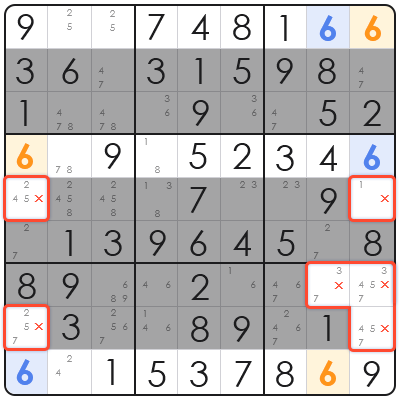
From a cognitive performance perspective, understanding ‘how long should an easy Sudoku take’ is crucial for benchmarking mental agility and developing efficient problem-solving strategies. An easy Sudoku puzzle, by definition, is designed to be solvable with minimal complex deduction, primarily relying on straightforward logic and pattern recognition. This article serves as a definitive guide for individuals ranging from casual solvers to those keen on optimizing their cognitive processes, offering insights into expected completion times and the underlying mechanics. The perceived difficulty of an ‘easy’ Sudoku can vary widely, often leading to solver frustration or an inaccurate assessment of one’s own logical prowess. This variability stems from factors such as the number of pre-filled cells, the distribution of these numbers, and the specific solving techniques required. Without clear benchmarks and a structured approach, many solvers struggle to identify what truly constitutes an ‘easy’ puzzle and how to tackle it efficiently, hindering their progress and enjoyment. This comprehensive analysis aims to demystify the ‘easy’ Sudoku by providing a structural breakdown of its characteristics, outlining strategic pathways for efficient completion, and offering practical techniques to optimize solving pace. Based on structural analysis and extensive solver data, we will establish realistic timeframes and equip you with the knowledge to not only solve easy Sudokus faster but also to enhance broader logical reasoning skills. Ultimately, mastering the easy Sudoku is not merely about speed; it’s about cultivating a systematic approach to logical puzzles, reinforcing foundational deductive reasoning, and building a solid base for tackling more complex cognitive challenges. This foundation is invaluable across various fields requiring structured thought and rapid problem identification.
Deciphering the ‘Easy’ Sudoku: A Structural Breakdown
An ‘easy’ Sudoku puzzle is structurally designed to be solvable with basic logical deduction, primarily relying on readily apparent naked singles and sometimes simple hidden singles. The defining characteristic is a high number of pre-filled cells, typically ensuring that many numbers can be placed by simply scanning rows, columns, and 3×3 blocks for missing unique digits. This abundance of given numbers significantly reduces the search space for possibilities.
From a framework perspective, an easy Sudoku minimizes the need for advanced techniques like naked pairs/triples, hidden pairs/triples, or X-wing strategies. The solver rarely encounters situations demanding hypothetical ‘what-if’ scenarios or extensive pencil marking. Instead, the solution path is usually direct and linear, allowing for a steady progression of number placements without hitting dead ends or requiring backtracking.
In practical application, an easy Sudoku often presents itself with 30 or more pre-filled cells, though this isn’t a strict rule. The key is the *distribution* of these numbers, which ensures a quick cascade of deductions. Solvers typically find that around 70-80% of the grid can be filled using simple ‘cross-hatching’ techniques, where they look for a number present in two out of three rows/columns/blocks to deduce its position in the third. This structural simplicity is what makes it ‘easy’.
Strategic Pathways to Efficient Completion
Efficient completion of an easy Sudoku hinges on systematic scanning and immediate identification of direct candidates without complex look-aheads. The first step involves a comprehensive initial scan of the entire grid, focusing on rows, columns, and 3×3 blocks that have the most pre-filled numbers. This allows for quick placement of the most obvious ‘naked singles,’ where a cell has only one possible digit.
Once the initial obvious placements are made, a good strategy is to then iterate through each number (1-9). For each number, methodically check where it can be placed in each of the nine 3×3 blocks, nine rows, and nine columns. By ‘cross-hatching’ existing instances of that number, you can often pinpoint the exact location of a missing digit in a specific row, column, or block with minimal effort.
Finally, as new numbers are placed, continually re-scan the affected rows, columns, and blocks for newly revealed naked singles. This iterative process is a cornerstone of speed for easy puzzles. Avoid dwelling on difficult cells; if a number doesn’t immediately present itself, move on to another number or area of the grid, as placing other digits will often unlock the trickier ones.
Optimizing Your Solving Pace: Practical Techniques
Optimizing your solving pace involves developing consistent habits, maintaining focus, and gradually internalizing common deduction patterns. One highly effective technique is to utilize ‘pencil marks’ or ‘candidate notes’ sparingly but strategically. For easy puzzles, only use pencil marks when a cell has two or three obvious candidates, and actively look to eliminate those candidates as other numbers are placed.
Another vital technique is to minimize distractions and establish a focused environment. Sudoku is a mental exercise that thrives on concentration. Interruptions break the flow of logical deduction, costing valuable time. A clear mind and uninterrupted focus significantly contribute to faster completion times, allowing the brain to maintain its working memory effectively.
Consistent, daily practice is perhaps the most impactful technique for improving speed. Regular exposure to easy Sudoku puzzles builds an intuitive sense for number placement and pattern recognition. Over time, the brain begins to identify common setups and solutions almost instantaneously, reducing the need for explicit logical steps and transforming conscious effort into an almost automatic process.
Comparative Analysis: Easy vs. Medium vs. Hard Sudoku
The time an easy Sudoku takes is best understood in comparison to medium and hard puzzles, revealing a clear progression in required logical complexity and solving techniques. For an easy Sudoku, an experienced solver aims for a completion time of 3-5 minutes, while a beginner might take 5-10 minutes. This efficiency stems from the puzzle’s high solvability through direct, single-candidate deductions, making the ‘cost’ in mental effort relatively low and the ‘frequency’ of immediate placements high.
Transitioning to a medium Sudoku, the ‘complexity’ significantly increases. These puzzles often require the application of ‘hidden singles’ and basic ‘naked pairs/triples’ or ‘hidden pairs/triples’. An experienced solver typically takes 7-15 minutes, and a beginner could spend 15-30 minutes. The ‘efficiency’ drops as the solver must engage in more extensive pencil marking and candidate elimination, increasing the ‘cost’ of mental processing and reducing the ‘frequency’ of straightforward placements.
Hard Sudokus represent the pinnacle of logical challenge, demanding advanced techniques such as X-wings, swordfish, and various chaining strategies. The ‘complexity’ is maximal, often necessitating deep analysis and hypothetical scenarios. An experienced solver will often spend 20-45 minutes or more, while many beginners find them insurmountable. ‘Efficiency’ is low, ‘cost’ in mental effort is very high, and the ‘frequency’ of direct deductions is minimal, requiring sustained, intricate logical steps.
Based on structural analysis, the differentiating factor across these difficulty levels is the depth of logical inference required per cell. Easy puzzles prioritize breadth of simple deductions, while hard puzzles demand recursive and interlinked logical paths, making their solving times exponentially longer due to the increased computational load on the solver’s cognitive resources.
Common Hurdles and Expert Solutions for Speed
Addressing common hurdles in solving easy Sudoku involves identifying typical beginner mistakes and implementing refined logical strategies. A frequent mistake is ‘over-reliance on guessing’ when a number isn’t immediately obvious. This not only wastes time but also introduces errors, requiring tedious backtracking. The expert solution is to master the systematic elimination process: always check all possibilities for a number in a block, row, and column before committing, ensuring a logical basis for every placement.
Another common pitfall is ‘disorganized pencil marking’ or writing down too many candidates too soon. While pencil marks are essential for more difficult puzzles, for easy ones, excessive marking can clutter the grid and obscure simpler deductions. The professional advice is to use pencil marks judiciously; primarily mark candidates only when you have narrowed down a cell to 2-3 possibilities, and focus on clearing those marks as soon as other numbers provide new eliminations.
Finally, a significant hurdle is ‘lack of consistent scanning and pattern recognition.’ Many solvers jump randomly around the grid, missing obvious opportunities. The expert solution involves developing a disciplined scanning routine: consistently check each number (1-9) across the entire grid, or systematically sweep through each row, then each column, then each block. This systematic approach fosters better pattern recognition and ensures no simple deduction is overlooked, significantly boosting speed.
Frequently Asked Questions on Easy Sudoku Timing
Q: What is a good target time for an easy Sudoku? A: For experienced solvers, 3-5 minutes is a strong target. Beginners should aim for 5-10 minutes, focusing more on accuracy than speed initially. Consistent practice will naturally reduce this time.
Q: Does consistent practice truly improve Sudoku solving speed? A: Absolutely. Regular practice enhances pattern recognition, speeds up logical deduction, and builds an intuitive understanding of the grid, all contributing to faster completion times.
Q: Are all ‘easy’ Sudokus equally easy? A: No, the difficulty within the ‘easy’ category can still vary. Puzzles with more pre-filled numbers or those that present more immediate naked singles will generally be quicker to solve than others.
Q: Should I use pencil marks for easy puzzles? A: For beginners, yes, using minimal pencil marks for cells with 2-3 candidates can be very helpful for systematic elimination. As you gain experience, you might find yourself using them less frequently for easy puzzles.
Q: What’s the fastest way to get better at easy Sudoku? A: The fastest way is consistent daily practice, focusing on a systematic scanning method, minimizing errors, and actively looking for single-candidate placements before resorting to more complex thought processes. Prioritize accuracy, and speed will follow.
In conclusion, understanding ‘how long should an easy Sudoku take’ transcends a simple stopwatch measurement; it provides a valuable benchmark for cognitive efficiency and highlights the importance of systematic logical deduction. By adhering to structured solving strategies and recognizing the inherent simplicity of easy puzzles, solvers can significantly reduce their completion times while simultaneously sharpening their analytical skills. The ability to quickly and accurately solve easy Sudokus is a foundational step in developing robust problem-solving capabilities, offering profound benefits for mental agility and intellectual discipline in any field.