

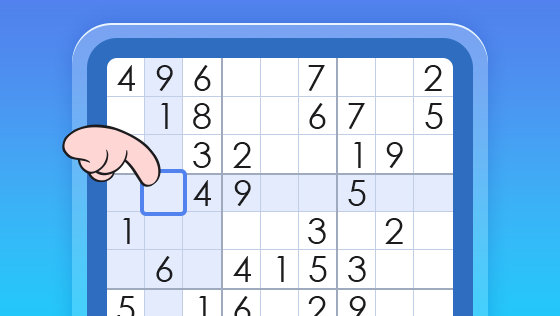
Learning how to answer Sudoku easily is a pursuit that transcends simple leisure, serving as a powerful exercise in cognitive strategy and logical deduction. At its core, Sudoku is a grid-based number puzzle designed to test and enhance an individual’s pattern recognition, critical thinking, and systematic problem-solving abilities. This article delves into the methodologies that allow for efficient and effortless resolution of even the most challenging Sudoku grids, transforming what many perceive as a daunting task into an accessible and rewarding mental workout. The primary challenge Sudoku presents lies in its deceptive simplicity: a 9×9 grid, partially filled, requiring the placement of digits 1 through 9 in each row, column, and 3×3 block without repetition. Without a structured approach, players often resort to trial-and-error, leading to frustration and increased solving times. The problem this analysis addresses is the common stumbling block of inefficient strategies, offering a framework to navigate complex puzzles with clarity and confidence. This deep dive aims to demystify the art of Sudoku, providing actionable insights rooted in established cognitive principles. By dissecting the underlying logic and mechanics, we will present a suite of techniques ranging from foundational scanning to advanced pattern recognition. Our goal is to equip enthusiasts and novices alike with the strategic toolkit necessary to consistently and easily conquer any Sudoku puzzle, fostering not just speed but a profound understanding of logical inference.
The Foundational Mechanics of Sudoku Logic
The foundational mechanics of Sudoku logic involve understanding the three core constraints: rows, columns, and 3×3 blocks, each of which must contain the digits 1 through 9 exactly once. This tripartite constraint system forms the bedrock of every Sudoku puzzle, dictating the validity of every number placement. Grasping this interwoven structure is the first step towards deciphering the grid, as it immediately narrows down potential candidates for any given cell.
Based on structural analysis, the most basic yet powerful technique is ‘scanning,’ which involves systematically checking each row, column, and block for missing numbers and identifying ‘Naked Singles.’ A Naked Single is a cell where, after considering all existing numbers in its corresponding row, column, and 3×3 block, only one possible digit remains. This direct deduction is often the starting point for unwrapping the puzzle, providing initial footholds in the grid.
From a framework perspective, maintaining a clear mental or physical record of ‘possibilities’ – often referred to as ‘pencil marks’ – for each empty cell is critical. This systematic notation allows players to track potential candidates, making subsequent deductions more explicit and preventing oversight. The efficiency gained by diligently applying pencil marks, especially in the early stages, streamlines the entire solving process and reduces the likelihood of errors.
Systematic Application of Candidate Elimination
Systematic candidate elimination is a core strategy for rapid Sudoku resolution that involves methodically removing impossible digits from cells based on existing numbers in their row, column, and block. This iterative process refines the set of potential numbers for each empty cell, gradually revealing the correct solution. Once initial Naked Singles are placed, the focus shifts to more intricate forms of elimination.
Key among these techniques are ‘Hidden Singles,’ where a digit is the only possible candidate for a specific cell within its row, column, or block, even if that cell has multiple pencil marks. For instance, if the number ‘5’ can only appear in one specific cell within a 3×3 block (because all other cells in that block already contain a ‘5’ in their respective row or column), then that cell must be ‘5’. Identifying these hidden gems often unlocks significant portions of the puzzle.
In practical application, techniques like ‘cross-hatching’ involve visually scanning for how a number’s presence in one part of the grid restricts its placement in others. By extending lines from existing numbers horizontally and vertically, one can quickly identify cells where certain numbers cannot be placed. This visual deduction, combined with diligent pencil marking, creates a robust system for systematically reducing candidate lists.
Advanced Pattern Recognition and Deduction
Advanced pattern recognition and deduction facilitate efficient Sudoku solving by identifying more complex relationships between cells beyond simple single candidates. These techniques move beyond individual cells to focus on groups of cells, revealing deeper structural implications. Mastering these patterns is essential for tackling ‘hard’ and ‘expert’ level Sudoku puzzles.
Concepts like ‘Naked Pairs,’ ‘Naked Triples,’ and ‘Naked Quadruples’ are prime examples. A Naked Pair, for instance, occurs when two cells in the same row, column, or block have only the exact same two candidate digits. Once identified, these two digits can be eliminated as possibilities from all other cells in that row, column, or block, significantly simplifying the remaining options. Similar logic applies to groups of three or four cells with shared unique candidates.
Furthering this, ‘Hidden Pairs,’ ‘Hidden Triples,’ and ‘Hidden Quadruples’ involve groups of candidates that are unique to a specific set of cells within a row, column, or block. For example, a Hidden Pair exists when two specific digits only appear as candidates in two specific cells within a house, implying those cells must contain those two digits. Techniques such as ‘X-Wing’ and ‘Swordfish’ extend this logic across multiple rows or columns, forming powerful elimination chains that can resolve complex deadlocks.
Implementing an Easy-Solve Sudoku Workflow
Implementing an easy-solve Sudoku workflow involves a structured, iterative process starting with basic scanning and progressively applying more complex techniques to reveal solutions efficiently. This systematic approach minimizes errors and ensures no simple deductions are overlooked before moving to advanced strategies.
Step 1: Initial Scan and Naked Singles. Begin by thoroughly scanning the entire grid for Naked Singles. Fill in any numbers that are immediately obvious. This initial pass often resolves a significant portion of ‘easy’ puzzles and sets the stage for more advanced deductions by providing more ‘given’ numbers.
Step 2: Full Pencil Mark Notation. Once obvious singles are placed, go through every empty cell and fill in all possible candidate digits (pencil marks). Be meticulous. This step is foundational for all subsequent advanced techniques and prevents mental fatigue from constantly re-evaluating possibilities.
Step 3: Iterative Candidate Elimination. Repeatedly cycle through techniques such as Hidden Singles, Naked Pairs/Triples/Quadruples, and Hidden Pairs/Triples/Quadruples. Each time a number is placed or a candidate is eliminated, check for new opportunities created by that change. This iterative process is crucial as one deduction often leads to several others.
Step 4: Advanced Pattern Application. If the puzzle becomes stuck, systematically look for advanced patterns like X-Wing, Swordfish, and more complex chaining techniques. These are typically required for ‘hard’ or ‘expert’ puzzles when simpler methods have been exhausted.
Step 5: Structured Backtracking (Last Resort). Only if all logical deductions fail, and the puzzle appears to require a guess, employ ‘structured backtracking.’ Choose a cell with the fewest candidates, make a temporary guess, and proceed. If a contradiction arises, revert to the choice point and try the next candidate. This is a rare necessity for well-formed puzzles.
Comparing Efficiency: Human Heuristics vs. Algorithmic Approaches
Comparing efficiency in Sudoku solving methodologies reveals that human heuristics often rely on intuitive pattern recognition, while algorithmic approaches provide exhaustive, guaranteed solutions. Human solvers employ a mix of local search (focusing on specific cells) and global pattern recognition (identifying cross-grid relationships), prioritizing speed and cognitive effort reduction. This approach is highly efficient for most puzzles, leveraging human visual processing capabilities.
Algorithmic approaches, conversely, typically employ brute-force or constraint satisfaction problem (CSP) solvers. Brute-force methods systematically try every possible number in every cell until a solution is found, guaranteeing success but often at a significant computational cost. CSP solvers, while more sophisticated, still rely on exhaustive search but incorporate advanced pruning techniques to eliminate invalid paths early, drastically improving efficiency.
From a practical perspective, the ‘how to answer Sudoku easily’ methodology aligns closely with optimized human heuristics, focusing on a layered approach to deduction. While algorithms can solve any puzzle, the elegance and cognitive benefits of human-centric methods lie in their ability to teach transferable logical reasoning skills, fostering a deeper understanding of the puzzle’s structure rather than merely finding an answer.
Navigating Challenges in Sudoku Solving
Navigating challenges in Sudoku solving often requires identifying common pitfalls such as premature guessing or overlooking simple eliminations, and applying professional solutions like systematic pencil marking and double-checking. One of the most frequent errors is attempting to guess numbers when a logical deduction path still exists. This introduces unnecessary complexity and error potential.
A crucial pitfall is ‘analysis paralysis’ or getting stuck, often caused by overwhelming pencil marks or a failure to spot a critical pattern. The professional solution is to adopt a cyclical review process: after making deductions, re-scan the entire grid for new Naked Singles or Hidden Singles that may have emerged. Regularly stepping back and viewing the grid holistically can reveal missed opportunities.
Another common mistake is messy or incomplete pencil marks, which can lead to misinterpretations or overlooked candidates. The advised solution is to maintain a clear, consistent system for notation, ensuring that all possibilities are accurately recorded and updated. Double-checking each digit placement against its row, column, and block constraints before proceeding can also prevent cascades of errors.
Key Insights into Sudoku Mastery
Key insights into Sudoku mastery revolve around understanding fundamental rules, practicing systematic elimination, and gradually applying advanced pattern recognition to solve puzzles with greater speed and accuracy. The journey to easily solving Sudoku is one of continuous learning and refinement of logical processes.
Q: What is the single most important tip for solving Sudoku easily? A: Systematic pencil marking and regular scanning for singles are paramount. These foundational steps pave the way for all advanced techniques.
Q: How do I avoid guessing in Sudoku? A: Exhaust all logical deduction techniques like singles, pairs, and advanced patterns before ever resorting to guessing. True Sudoku puzzles are designed to be solved through pure logic.
Q: Are all Sudoku puzzles solvable with pure logic? A: Yes, all valid Sudoku puzzles are designed to be solvable with pure logic. If you feel stuck, it means there’s a deduction you’ve missed, not that a guess is required.
Q: How can I improve my Sudoku solving speed? A: Consistent practice, memorizing common patterns (like X-Wing setups), and developing a structured workflow that you adhere to rigorously are key to improving speed and efficiency.
Q: What’s the best strategy for beginners? A: Focus intently on finding Naked Singles and Hidden Singles. Once comfortable, learn to use pencil marks systematically for all cells, which is the gateway to more complex deductions.
In conclusion, the ability to answer Sudoku easily is not an innate talent but a cultivated skill, built upon a structured understanding of its underlying logic and a systematic application of proven techniques. From foundational candidate elimination to sophisticated pattern recognition, each method contributes to a holistic problem-solving framework. Embracing these strategies not only demystifies complex puzzles but also hones broader cognitive faculties, offering long-term strategic value in analytical thinking and decision-making. As the field of cognitive strategy evolves, the principles learned from mastering Sudoku remain evergreen, empowering individuals to approach intricate problems with confidence and precision.