

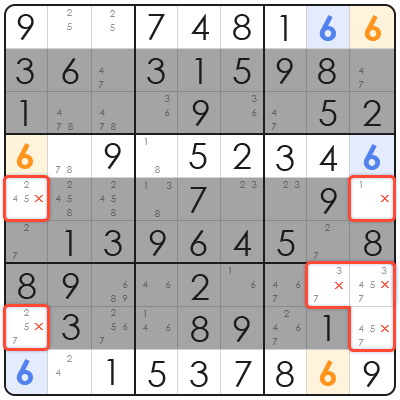
Level 4 Sudoku represents a pivotal stage in the progression of puzzle difficulty, serving as a critical bridge between foundational logic and advanced combinatorial reasoning. Unlike simpler levels that primarily rely on direct elimination and single-cell deductions, Level 4 demands a more sophisticated approach, integrating pattern recognition and conditional analysis. Based on structural analysis, it is precisely this elevated complexity that makes mastering Level 4 Sudoku an invaluable exercise for enhancing cognitive flexibility and problem-solving acumen. At its core, how to solve level 4 sudoku involves navigating scenarios where direct naked singles become scarce, compelling solvers to identify ‘hidden’ relationships and apply more abstract deduction techniques. The primary challenge this level solves is the stagnation that can occur when basic strategies are exhausted, pushing individuals to develop a systematic framework for uncovering less obvious numerical placements. This analytical challenge directly translates into improved decision-making capabilities within intricate systems, mirroring real-world strategic planning in various professional domains. From a framework perspective, successfully tackling a Level 4 Sudoku requires not just rote application of rules, but an iterative process of hypothesis testing and meticulous candidate tracking. This article will deconstruct the underlying mechanics of Level 4 Sudoku, provide a step-by-step guide to its resolution, and offer strategic insights derived from extensive experience in cognitive strategy and puzzle analytics, ensuring a comprehensive understanding for both enthusiasts and analytical professionals. The strategic implications extend beyond mere recreation; the discipline fostered by how to solve level 4 sudoku cultivates patience, precision, and the ability to manage multiple interdependent variables concurrently. It forces a methodological approach to ambiguity, where the absence of clear answers necessitates a structured path toward resolution. This is not merely about finding numbers; it is about refining the cognitive tools essential for complex analytical endeavors.
The Foundational Logic of Level 4 Sudoku
The foundational logic of how to solve level 4 sudoku is rooted in moving beyond simple Naked Singles to more subtle forms of deduction, primarily relying on ‘Hidden Singles’ and early ‘Naked Pairs/Triples’. A Hidden Single occurs when a number can only appear in one specific cell within a row, column, or 3×3 block, even if that cell has other potential candidates. Identifying these requires a shift from looking at cells to looking at numbers within a confined region.
Based on structural analysis, Level 4 Sudoku introduces scenarios where candidates for a cell are not immediately obvious and require cross-referencing multiple regions simultaneously. This often involves the technique of ‘Locked Candidates’, where a candidate number within a block is restricted to a single row or column within that block. This restriction then allows for the elimination of that candidate from other cells in that respective row or column outside the block, proving a highly efficient method for reducing possibilities.
In practical application, the strategic framework for Level 4 Sudoku emphasizes thorough pencil marking and meticulous candidate tracking. Each cell’s potential numbers must be systematically recorded, and as deductions are made, these candidates are pruned. This iterative refinement process is critical; a single incorrect elimination or oversight can cascade into unsolvable paradoxes, underscoring the demand for precision inherent in this difficulty level. Mastery here establishes a robust platform for tackling even higher-tier Sudoku challenges.
Systematic Application: A Step-by-Step Framework for Solving
Solving a Level 4 Sudoku systematically involves a multi-layered approach, beginning with foundational scans and progressively moving to more complex candidate analyses. The first step is to complete a comprehensive ‘Candidate Scan’, wherein every empty cell is initially populated with all possible numbers (1-9) that do not violate existing row, column, or block rules. This establishes the complete universe of possibilities for each cell.
Next, execute the ‘Direct Deduction Pass’, which involves identifying and filling in all ‘Naked Singles’ – cells with only one possible candidate – and then performing ‘Hidden Single’ searches across all rows, columns, and 3×3 blocks. This phase is iterative; each filled cell provides new constraints, potentially revealing more singles. This forms the bedrock of reduction, clearing the board of its most apparent solutions before deeper analysis.
The third critical phase involves applying ‘Locked Candidates’ and ‘Naked Pairs/Triples’ techniques. For Locked Candidates, identify instances where a number’s potential positions within a block are confined to a single row or column, allowing for elimination elsewhere. For Naked Pairs/Triples, look for two or three cells in a row, column, or block that share the exact same two or three candidates, respectively, and no others. These numbers can then be removed as candidates from all other cells in that region, significantly pruning the solution space. This structured progression ensures that increasingly complex techniques are only deployed when simpler methods have been exhausted, optimizing efficiency and minimizing errors.
Comparative Strategic Depth: Level 4 vs. Adjacent Sudoku Complexities
Understanding how to solve level 4 sudoku is best achieved by comparing its strategic depth with both simpler and more complex variants. Relative to a Level 3 (Medium) Sudoku, Level 4 demands a significantly greater reliance on ‘Hidden Singles’ and ‘Locked Candidates’. Level 3 puzzles are predominantly solvable with ‘Naked Singles’ and straightforward scanning, presenting a lower cognitive load and faster resolution times due to fewer interdependencies.
Conversely, when placed against a Level 5 (Hard) or Expert Sudoku, Level 4 still maintains a degree of predictability. Level 5 often necessitates the consistent application of more advanced techniques such as ‘X-Wings’, ‘Swordfish’, ‘Jellyfish’, and various ‘Chains’ or ‘Loops’. These techniques involve identifying complex patterns of candidate eliminations that span multiple rows, columns, and blocks, requiring a higher order of abstract thinking and exhaustive trial-and-error simulation, making Level 5 considerably more time-consuming and computationally intensive.
From a framework perspective, Level 4 Sudoku acts as the ideal training ground for transitioning from basic to advanced logical deduction. It requires the development of systematic pencil marking and careful candidate management, without yet demanding the often counter-intuitive or highly intricate pattern recognition necessary for expert-level puzzles. The frequency of applying techniques like Locked Candidates is high in Level 4, whereas in Level 5, these become foundational, and more intricate patterns are sought. This structured progression ensures a balanced development of analytical prowess.
Mitigating Common Analytical Obstacles
In practical application, several common pitfalls can impede progress when learning how to solve level 4 sudoku. One frequent mistake is ‘premature candidate elimination’ – removing a potential number from a cell without absolute certainty, often based on a hasty visual scan rather than a thorough check against all constraints. This can lead to an unsolvable puzzle or a forced guess. The professional advice here is to always double-check every elimination; if there’s any doubt, leave the candidate in place until irrefutable evidence for its removal emerges.
Another significant obstacle is ‘inconsistent or incomplete pencil marking’. Many solvers start strong with marking candidates but grow lax as the puzzle progresses, especially when the number of candidates per cell becomes high. This neglect obscures potential Naked Pairs or Hidden Singles. The solution, from a framework perspective, is to establish a rigorous and consistent system for pencil marking, such as writing all possible candidates in small script within each cell, and diligently erasing them as deductions are made. Utilize a systematic approach: complete one type of scan (e.g., Hidden Singles) across the entire board before moving to the next technique.
Finally, ‘tunnel vision’ or focusing too intensely on one area of the grid can prevent the solver from seeing broader patterns. Level 4 Sudoku often requires shifting focus across different rows, columns, and blocks to identify interconnected eliminations. To mitigate this, after exhausting local deductions, intentionally scan the entire grid for opportunities in previously overlooked areas. A structured approach, such as scanning all rows, then all columns, then all blocks for each technique, helps ensure comprehensive coverage and prevents overlooking critical clues that might be elsewhere on the board.
Strategic Insights: Frequently Asked Questions on Level 4 Sudoku
What defines a Level 4 Sudoku? A Level 4 Sudoku is characterized by the scarcity of immediate Naked Singles, requiring consistent application of Hidden Singles, Naked Pairs/Triples, and Locked Candidates to progress. It serves as a bridge to more advanced logical deductions.
What are essential techniques for Level 4 Sudoku? Key techniques include comprehensive candidate pencil marking, systematic searching for Hidden Singles in rows, columns, and blocks, and identifying Locked Candidates (Pointing/Claiming) and Naked Pairs/Triples.
How does Level 4 Sudoku improve cognitive skills? Based on structural analysis, Level 4 Sudoku significantly enhances logical deduction, pattern recognition, systematic problem-solving, and patience. It hones the ability to manage multiple interdependent variables.
Can Level 4 Sudoku be solved without advanced techniques? While possible, it’s highly inefficient. Relying solely on basic techniques will lead to extensive guesswork or impasses. Advanced strategies are crucial for systematic and error-free resolution.
What is the typical time required for Level 4 Sudoku? From a framework perspective, an experienced solver might take 15-30 minutes for a Level 4 puzzle. Novices might take significantly longer, often 45+ minutes, as they develop their systematic approach.
Mastering how to solve level 4 sudoku is more than just a recreational achievement; it is a profound exercise in enhancing advanced analytical and strategic thinking. Based on structural analysis, this level serves as an indispensable training ground, solidifying the foundational logical processes while introducing the subtle complexities required for expert-level challenges. In practical application, the discipline, precision, and systematic approach cultivated here are directly transferable to complex problem-solving in any analytical field. The long-term strategic value lies in building a robust cognitive framework that embraces ambiguity and thrives on methodical deduction, preparing individuals for even the most intricate challenges in puzzle analytics and beyond.