

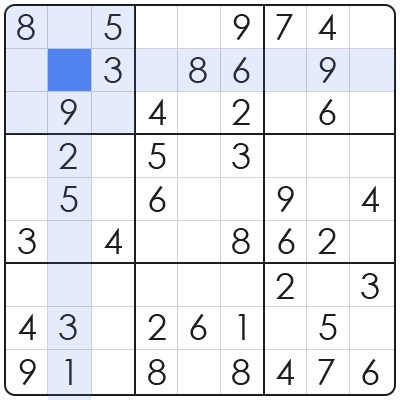
Determining how much time to solve sudoku is a nuanced endeavor, reflecting a complex interplay of cognitive skills, strategic application, and the inherent difficulty of the puzzle itself. Sudoku, a number-placement puzzle, challenges individuals to fill a 9×9 grid with digits so that each column, each row, and each of the nine 3×3 subgrids contain all of the digits from 1 to 9, making it a globally recognized benchmark for logical deduction and pattern recognition. From a cognitive science perspective, the act of solving Sudoku serves as an accessible model for examining human problem-solving capabilities under constrained conditions. Understanding the time taken to complete these puzzles provides critical insights into the efficiency of analytical processing, the effectiveness of heuristic strategies, and the impact of focused attention. This analysis transcends mere recreational interest, touching upon principles relevant to various professional domains that demand structured thinking and optimization. The primary challenge this exploration addresses is the variability and subjectivity often associated with Sudoku solving times. By dissecting the underlying mechanics and influential factors, this article aims to establish a more objective framework for understanding typical solution durations, bridging the gap between anecdotal experience and analytical benchmarks, and offering actionable insights for improving problem-solving speed and accuracy in both recreational and professional contexts. In practical application, quantifying and enhancing Sudoku solving speed can be seen as a microcosm for refining broader strategic decision-making processes.
Understanding Sudoku Solving Dynamics: The Core Mechanics
The fundamental mechanics dictating how much time to solve sudoku revolve around a systematic process of deduction and elimination, underpinned by the puzzle’s three core rules: uniqueness within rows, columns, and 3×3 blocks. This intricate logic requires solvers to continuously scan the grid, identify missing numbers, and cross-reference existing digits to logically place new ones. Initially, solvers often employ a ‘scanning’ technique, looking for cells where only one possible number can fit based on existing constraints, a method often referred to as ‘single candidate’ or ‘hidden single’ identification.
As the puzzle progresses, the complexity escalates, often necessitating more advanced strategies beyond simple singles. Techniques like ‘naked pairs,’ ‘hidden pairs,’ ‘pointing pairs/triples,’ and ‘X-wing’ become essential for breaking deadlocks and revealing further deductions. These advanced methods require a deeper level of pattern recognition and conditional thinking, where the solver must envision potential outcomes of placing a number in a specific cell and its ripple effect across the grid. The mastery of these techniques significantly impacts the overall solving time, moving from brute-force checking to elegant logical progression.
Based on structural analysis, the efficiency of these mechanical applications is heavily influenced by the solver’s ability to maintain a mental map of possibilities and constraints. This cognitive load can be substantial, especially in harder puzzles where multiple interconnected deductions are required. From a framework perspective, efficient Sudoku solving mirrors computational optimization, where the goal is to reduce the number of trial-and-error iterations through superior algorithmic thinking and strategic choice, directly impacting the time expenditure.
Factors Influencing Sudoku Solving Speed
The time it takes to solve a Sudoku puzzle is influenced by a multitude of factors, ranging from the puzzle’s inherent difficulty to individual solver characteristics and environmental conditions. Puzzle difficulty, often categorized as easy, medium, hard, or expert, is primarily determined by the number of initial ‘givens’ and the complexity of the logical steps required to complete it; puzzles requiring advanced techniques inherently demand more time.
Individual solver proficiency is a critical determinant, encompassing experience, familiarity with various solving strategies, and cognitive abilities such as working memory, pattern recognition speed, and sustained attention. An experienced solver can identify patterns and apply advanced techniques much faster than a novice, significantly reducing their solving time. Furthermore, factors like fatigue, distraction, and even the format of the puzzle (e.g., digital vs. paper, pencil marks usage) can impact performance.
In practical application, these factors interact dynamically. A highly experienced solver might still take longer on an exceptionally difficult puzzle than a less experienced one on an easy puzzle. However, consistent practice and a systematic approach to problem-solving invariably lead to faster average times. The ‘industry standard’ for an expert Sudoku solver might be under 5 minutes for a hard puzzle, while a beginner might take 30 minutes or more for an easy one, showcasing the vast spectrum of solving speeds attributed to these variables.
Strategies for Efficient Sudoku Solving
To significantly improve how much time to solve sudoku, a structured approach incorporating proven strategies is indispensable. One foundational step is the ‘Scanning and Cross-Hatching’ method: systematically check each row, column, and block for numbers that can only fit in one cell. Start by looking for numbers 1-9 in order, placing any ‘sure’ numbers immediately, as each placement opens new possibilities.
Progressing beyond simple scanning, the next step involves ‘Pencil Marks’ or ‘Candidate Lists.’ For cells where a number cannot be immediately placed, note down all possible candidate numbers. This systematic recording helps in identifying ‘naked pairs/triples/quads’ (where a set of numbers can only exist within a specific group of cells in a row, column, or block) and ‘hidden pairs/triples/quads’ (where a set of numbers can only exist in a specific set of cells, despite other candidates being present). This organizational technique reduces cognitive load and illuminates complex deductions.
Finally, for expert-level puzzles, employing ‘X-Wing,’ ‘Swordfish,’ or ‘Jellyfish’ techniques is crucial. These advanced strategies involve looking for patterns of candidates across multiple rows or columns to eliminate possibilities in other cells. While more complex to identify, their application can unlock otherwise intractable puzzles. Furthermore, a critical, often overlooked strategy is ‘Look-Ahead’ or ‘What If’ scenarios, where a solver tentatively places a number and follows its implications for a few steps to see if it leads to a contradiction, though this should be used sparingly due to its time-consuming nature.
Comparative Insight: Sudoku Solving vs. Other Cognitive Puzzles
From a comparative analytical perspective, evaluating how much time to solve sudoku alongside other cognitive puzzles like crosswords, chess problems, or Rubik’s Cube offers distinct insights into different facets of problem-solving. Sudoku primarily tests logical deduction and constraint satisfaction, operating within a fixed, non-adversarial environment where the solution is always unique and discoverable through pure logic.
Crossword puzzles, in contrast, demand a broader range of semantic knowledge, vocabulary, and lateral thinking, with solution times heavily influenced by linguistic proficiency and cultural references rather than strict numerical logic. Chess problems, while also logic-based, introduce an adversarial element, requiring predictive analysis, strategic planning, and understanding of opponent moves, making their ‘solving time’ inherently about identifying optimal sequences rather than filling a grid.
Rubik’s Cube solving, while also structured, is primarily a spatial reasoning and algorithmic application challenge, where memorization of sequences and precise execution are paramount. Compared to these, Sudoku’s efficiency is measured purely by the speed and accuracy of logical processing within a defined system, establishing it as a unique benchmark for analytical discipline. The ‘cost’ of error in Sudoku is a dead-end, while in chess it could be a loss, and in Rubik’s Cube, a scramble that prolongs the solution.
Common Obstacles and Solutions in Sudoku Timing
A frequent obstacle encountered when trying to optimize how much time to solve sudoku is ‘tunnel vision,’ where solvers become fixated on a particular number or region, overlooking easier deductions elsewhere. This leads to inefficient scanning and missed opportunities. The professional advice to overcome this is to employ a systematic, broad scanning approach, regularly shifting focus between rows, columns, and blocks, and to specifically look for ‘low-hanging fruit’ (single candidates) before delving into more complex areas.
Another common pitfall is the premature use of ‘guessing’ or ‘trial and error’ when faced with a seemingly intractable section. While sometimes necessary in highly advanced puzzles with branching logic, relying on guesswork often leads to errors that propagate through the grid, forcing lengthy backtracking and significantly increasing solving time. A professional solution involves meticulously noting down all pencil marks and exhausting all logical deductions before resorting to any form of tentative branching, ensuring every step is justified by the rules.
Finally, ‘cognitive fatigue’ significantly impacts solving speed and accuracy, especially during extended sessions or with multiple difficult puzzles. Sustained focus on complex logical problems depletes mental resources, leading to slower processing and increased error rates. The recommended strategy is to take short, regular breaks (e.g., 5 minutes every 20-30 minutes) to refresh cognitive function, or to switch to a less demanding task to prevent burnout, which aligns with optimal performance strategies in high-stakes analytical professions.
Frequently Asked Questions About Sudoku Solving Times
Q: What is a good time for solving Sudoku?
A: A ‘good’ time varies significantly by difficulty. For an easy puzzle, under 5 minutes is excellent; for medium, 5-10 minutes; hard, 10-20 minutes. Expert puzzles can take 20+ minutes even for seasoned solvers.
Q: Does practice actually make you faster at Sudoku?
A: Yes, consistent practice is paramount. It improves pattern recognition, speeds up logical deduction, and enhances familiarity with advanced techniques, directly reducing how much time to solve sudoku.
Q: Are some Sudoku puzzles impossible to solve?
A: No, every well-formed Sudoku puzzle has at least one unique solution that can be found through logical deduction without guessing. If you’re stuck, it means a logical step was missed.
Q: How do competitive Sudoku solvers achieve such fast times?
A: Competitive solvers combine intense practice with a mastery of advanced techniques (like X-Wing, Naked/Hidden sets), efficient scanning, and often, exceptional visual processing and memory skills.
Q: What is the fastest recorded time to solve a Sudoku puzzle?
A: The fastest recorded human time for a standard 9×9 Sudoku is around 1 minute 28 seconds for an easy puzzle, set by Thomas Snyder. Expert puzzles take much longer.
Optimizing Sudoku Solving: From Novice to Expert Timings
Optimizing how much time to solve sudoku involves a strategic blend of understanding puzzle mechanics, adopting efficient techniques, and addressing common cognitive pitfalls. As a micro-representation of broader analytical challenges, the journey from a novice’s lengthy solve time to an expert’s rapid completion offers a compelling demonstration of improved cognitive efficiency and strategic application. This evolution is not merely about speed, but about developing a systematic, error-resistant approach to complex problem-solving. Based on structural analysis, the most successful solvers are those who continuously refine their methodologies, embracing both the foundational principles and the advanced heuristics.
From a framework perspective, the insights gained from analyzing Sudoku solving times extend beyond the puzzle itself. They underscore the importance of structured thinking, iterative refinement of processes, and the strategic management of cognitive resources in any domain demanding logical precision and timely decision-making. The ability to quickly discern patterns, apply appropriate rules, and eliminate irrelevant data — all central to fast Sudoku solving — are invaluable skills in professional environments ranging from data analysis to engineering and strategic planning.
In practical application, the pursuit of faster, more accurate Sudoku solving is a tangible exercise in mental agility and resilience. It reinforces the understanding that proficiency in complex tasks is cultivated through deliberate practice, self-assessment, and the continuous integration of more sophisticated strategies. The long-term strategic value lies not just in conquering a puzzle, but in honing the very cognitive engines that drive innovation and efficiency across diverse industries, making the question of ‘how much time to solve sudoku’ a potent metric for human analytical potential.
In conclusion, the inquiry into how much time to solve sudoku unravels a rich tapestry of cognitive processes, strategic depth, and individual proficiency. It is not a singular metric but a dynamic indicator influenced by puzzle complexity, solver experience, and the meticulous application of logical deduction. By embracing structured strategies, avoiding common pitfalls, and understanding the comparative landscape of cognitive puzzles, individuals can systematically improve their solving times, transforming a recreational activity into a powerful exercise in enhancing analytical prowess. The strategic value of this journey extends far beyond the grid, equipping individuals with refined problem-solving skills directly applicable to the complex challenges of the modern professional landscape.