

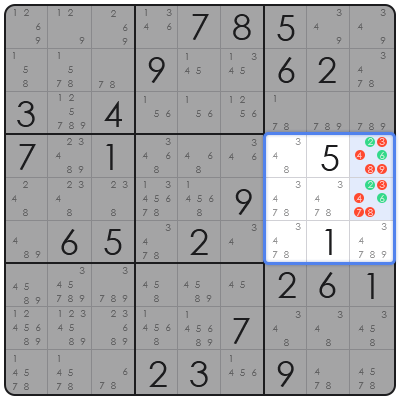
Solving easy Sudoku puzzles involves applying a set of fundamental logical deduction rules to fill a 9×9 grid, ensuring each row, column, and 3×3 subgrid contains all digits from 1 to 9 without repetition. From a framework perspective, this classic number placement puzzle serves as an excellent entry point into logical reasoning and pattern recognition, offering accessible cognitive training for individuals of all ages. The primary problem that understanding how to solve easy Sudoku puzzles addresses in the current landscape is the initial intimidation many feel towards complex problem-solving. By breaking down the process into manageable, systematic steps, it demystifies the game, fostering confidence and analytical skills that are transferable to various real-world scenarios. Based on structural analysis, easy Sudoku puzzles are characterized by a higher number of pre-filled cells and fewer ambiguous choices, making them ideal for beginners. This article will deconstruct the core mechanics and provide actionable strategies to navigate these puzzles with proficiency, transforming potential frustration into consistent success.
Core Principles of Easy Sudoku Puzzles
The core principles of easy Sudoku puzzles revolve around three fundamental rules that govern the placement of digits 1 through 9 within a 9×9 grid. Each digit must appear exactly once in every row, once in every column, and once in each of the nine 3×3 subgrids. Understanding these constraints is the absolute prerequisite for successful puzzle resolution.
What makes a Sudoku ‘easy’ is the density of pre-filled numbers, known as ‘givens,’ which significantly reduces the number of initial possibilities for empty cells. This abundance of information often leads to immediate, undeniable deductions, allowing solvers to place numbers without needing complex, multi-step logic or trial-and-error.
From a strategic perspective, the process begins with identifying ‘candidates’—the potential numbers that could occupy an empty cell without violating any of the three rules. For easy puzzles, many cells will quickly narrow down to a single candidate, making them prime targets for initial placement and forming the backbone of the systematic solving approach.
Mastering the Single-Candidate Strategy
Mastering the single-candidate strategy is the most effective approach for how to solve easy Sudoku puzzles, focusing on identifying cells where only one number can logically be placed. This technique eliminates ambiguity and ensures a deterministic path forward, crucial for building momentum in solving.
In practical application, the first step involves a thorough visual scan of the entire grid, looking for ‘naked singles.’ These are cells where, by examining their row, column, and 3×3 block, only one number (from 1-9) remains as a valid candidate. Often, a quick pass reveals several such opportunities, which should be filled immediately.
The next layer of this strategy involves identifying ‘hidden singles.’ These occur when a specific number can only be placed in one particular cell within a given row, column, or 3×3 block, even if that cell has other candidates. Systematically checking each number (1 through 9) for its unique placement within each region is a powerful way to uncover these less obvious single candidates.
Cross-Hatching and Exclusion Techniques
Cross-hatching and exclusion techniques are fundamental for how to solve easy Sudoku puzzles, allowing solvers to methodically eliminate candidates for empty cells by leveraging the positions of existing numbers. This systematic reduction of possibilities is key to uncovering new single-candidate opportunities.
From a methodical standpoint, cross-hatching involves extending the lines (rows and columns) from a specific number into other regions to see where that number *cannot* be placed. For instance, if a ‘5’ is in row 3 and another ‘5’ is in column 5, any empty cell at their intersection (e.g., cell [3,5]) and any cells in other regions that share those lines cannot contain a ‘5’.
This principle extends to ‘block exclusion,’ where the presence of a number in a specific row or column within a 3×3 block eliminates that number as a candidate for the remaining cells in that row or column within *adjacent* 3×3 blocks. By systematically applying these exclusion rules, the grid progressively reveals more single-candidate placements, making the puzzle solvable purely through logical deduction.
Comparative Efficacy: Easy Sudoku vs. Other Logic Puzzles
When considering how to solve easy Sudoku puzzles in comparison to other logic puzzles like Kakuro or KenKen, easy Sudoku generally stands out for its lower complexity, higher solving efficiency for beginners, virtually zero cost, and widespread accessibility. Unlike Kakuro, which involves arithmetic sums, or KenKen, which combines arithmetic with grouping, Sudoku relies solely on number placement and uniqueness constraints.
From a practical standpoint, the initial learning curve for easy Sudoku is significantly gentler, making it a highly efficient entry point for developing logical reasoning skills. Its core mechanism of ‘single-candidate’ identification provides quick wins and positive reinforcement, fostering a sense of accomplishment that might take longer to achieve with more arithmetically intensive puzzles. The ‘cost’ dimension for easy Sudoku is often non-existent, as countless free puzzles are available online, in newspapers, or in free apps.
In terms of ‘frequency,’ easy Sudoku puzzles are ubiquitous, appearing daily in various media, offering consistent opportunities for practice and skill refinement. While other puzzles offer their unique cognitive benefits, easy Sudoku’s simplicity and immediate feedback loop make it an unparalleled tool for foundational logical problem-solving and mental agility training.
Common Pitfalls for Novice Solvers and Their Solutions
A frequent mistake when learning how to solve easy Sudoku puzzles is succumbing to the temptation of guessing a number rather than applying pure logic, which inevitably leads to errors and necessitates restarting the puzzle. The solution is to adhere strictly to deductive reasoning, only placing a number when it’s the *only* possible option for that cell or region.
Another common pitfall is failing to systematically scan the entire grid after placing a new number, thus overlooking newly created single-candidate opportunities. Professional advice dictates that every time a digit is placed, the solver should immediately re-scan its associated row, column, and 3×3 block, as well as any intersecting regions, for cells that now have only one valid candidate. This cyclical process ensures maximum efficiency.
Finally, many novices underutilize or incorrectly use ‘pencil marks’ (notation of potential candidates in a cell), leading to mental clutter or missed deductions. From a best-practice perspective, using a consistent and clear method for noting down all possible candidates in empty cells – at least initially – provides a visual map of the puzzle’s state, making hidden and naked singles far easier to spot and significantly reducing cognitive load.
Essential FAQs on Easy Sudoku Solving
Q: What defines an easy Sudoku puzzle?
A: An easy Sudoku puzzle typically has more pre-filled numbers, offering numerous immediate single-candidate opportunities and requiring less complex deduction logic.
Q: Is it okay to guess numbers in Sudoku?
A: No, it is strictly prohibited in Sudoku. All puzzles, especially easy ones, are designed to be solvable purely through logical deduction, without any guessing.
Q: How should I start an easy Sudoku?
A: Begin by scanning each row, column, and 3×3 block for numbers that can only fit into one specific empty cell, a method known as finding ‘naked singles’.
Q: What is a ‘candidate’ in Sudoku terminology?
A: A candidate is a potential number that could logically occupy an empty cell without violating any of the Sudoku rules, based on the current state of the grid.
Q: How long does it usually take to solve an easy Sudoku?
A: For beginners, an easy Sudoku typically takes between 5 to 15 minutes, depending on practice and focus, but can be much quicker with experience.
In conclusion, mastering how to solve easy Sudoku puzzles is an accessible and rewarding journey into logical reasoning, providing a solid foundation for more complex problem-solving. By consistently applying systematic strategies such as single-candidate identification, cross-hatching, and meticulous candidate management, individuals can transform initial confusion into confident, deductive success. The long-term strategic value lies not just in puzzle completion, but in the enhanced cognitive agility and patience developed, skills that are increasingly vital in an information-dense world. From a forward-looking industry insight, these foundational logic exercises serve as an excellent, low-barrier entry point for developing analytical mindsets applicable across diverse professional and personal challenges.