

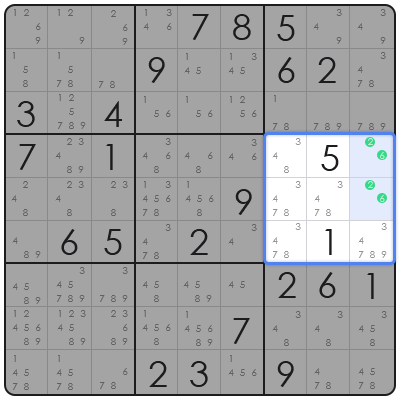
Solving Sudoku using linear integer programming (LIP) involves transforming the popular number puzzle into a mathematical optimization problem, a sophisticated approach frequently employed in computational logic and operations research. This methodology leverages the power of mathematical modeling to systematically find a solution that satisfies all Sudoku rules, demonstrating the versatility of LIP beyond traditional industrial applications. The significance of this approach lies in its ability to provide a rigorous, verifiable, and often highly efficient method for solving Sudoku puzzles of varying difficulty. Unlike heuristic or brute-force methods, LIP offers a declarative framework where the problem’s constraints and objective are explicitly defined, allowing a solver to determine the optimal (or any valid) assignment of numbers. The primary problem that solving Sudoku with LIP addresses is the need for a robust and automatable solution strategy that can handle the combinatorial complexity of the puzzle without relying on trial-and-error. In an industry context where complex scheduling, resource allocation, or logistical challenges mirror Sudoku’s constraint-satisfaction nature, understanding this application provides valuable insight into broader problem-solving paradigms.
The Foundations of Sudoku as an Optimization Problem
From a framework perspective, how to solve Sudoku using linear integer programming begins by defining decision variables that represent the state of each cell in the grid. Specifically, a binary variable `x_ijk` is introduced, which is 1 if the number `k` is placed in row `i` and column `j`, and 0 otherwise. This systematic enumeration of possibilities forms the cornerstone of the mathematical model.
Based on structural analysis, the core rules of Sudoku — that each row, column, and 3×3 subgrid must contain each digit from 1 to 9 exactly once — are translated into a set of linear equality constraints. For instance, the constraint that each cell must contain exactly one number is expressed by summing `x_ijk` over all possible numbers `k` for a fixed `i` and `j`, setting the sum equal to 1.
Furthermore, the pre-filled cells in a Sudoku puzzle are incorporated into the LIP model as initial fixed values for specific `x_ijk` variables. This initialization is crucial as it restricts the solution space, guiding the solver towards a valid completion. Understanding these foundational elements is critical for anyone looking to apply LIP to combinatorial problems.
Formulating Sudoku into a Linear Integer Program
Formulating how to solve Sudoku using linear integer programming involves translating the puzzle’s constraints into algebraic expressions that an LIP solver can process. The objective function in this context is typically trivial, often set to minimize 0, as the goal is simply to find any feasible solution that satisfies all constraints, rather than optimizing a specific metric.
The three primary Sudoku rules are modeled as follows: For each row `i` and number `k`, the sum of `x_ijk` over all columns `j` must equal 1. Similarly, for each column `j` and number `k`, the sum of `x_ijk` over all rows `i` must equal 1. These ensure uniqueness within rows and columns.
The subgrid constraint is slightly more complex. For each 3×3 block, defined by its top-left cell coordinates (e.g., `(3a+r, 3b+c)` where `a, b, r, c` are indices), and for each number `k`, the sum of `x_ijk` for all cells within that block must equal 1. This comprehensive set of constraints, combined with the binary nature of the variables, completely defines the Sudoku problem within the LIP framework.
A Step-by-Step Approach to Implementation
In practical application, how to solve Sudoku using linear integer programming requires a structured implementation process. The first step involves selecting a suitable programming language (e.g., Python with `PuLP` or `Gurobi`) and a corresponding LIP solver. This choice impacts performance and ease of integration into existing systems.
Second, the Sudoku grid’s initial state must be accurately translated into the LIP model’s fixed variables. This means for every pre-filled cell `(i, j)` with number `k`, the variable `x_ijk` is set to 1. This setup ensures that the solver respects the given puzzle configuration before attempting to fill empty cells.
Finally, the defined constraints (row, column, and subgrid uniqueness, plus single number per cell) are added to the model. Once the model is complete, it is passed to the LIP solver. The solver then employs algorithms like branch and bound to find a set of values for `x_ijk` that satisfy all conditions, effectively solving the Sudoku puzzle. The solution is then extracted by identifying which `x_ijk` variables are 1.
Comparative Analysis: LIP vs. Other Solving Methods
When considering how to solve Sudoku using linear integer programming against alternative methods, a comparative analysis reveals distinct advantages and disadvantages across several dimensions. Backtracking algorithms, for instance, are often intuitive and easy to implement, focusing on trial-and-error with reversions. Their complexity can be exponential in the worst case, and their efficiency heavily depends on the order of cell evaluation and number placement heuristics.
Constraint Programming (CP) offers a more declarative approach than pure backtracking, allowing for sophisticated propagation techniques that prune the search space more effectively. CP solvers are highly optimized for constraint satisfaction problems and can often solve Sudoku puzzles very quickly. The ‘cost’ of implementing CP can be higher than simple backtracking due to the need for specialized libraries, but its efficiency gains are significant.
In contrast, LIP provides a mathematically rigorous and generalizable framework. Its complexity is tied to the efficiency of the underlying simplex and branch-and-bound algorithms, which can be computationally intensive for extremely large or highly constrained problems, though Sudoku usually falls within manageable bounds. The ‘cost’ here involves understanding mathematical modeling notation and integrating with industrial-grade solvers, which might have licensing fees. However, its frequency of application in other domains means an LIP skillset is highly transferable.
Mitigating Challenges in LIP Sudoku Solutions
One common pitfall when attempting how to solve Sudoku using linear integer programming is incorrectly formulating the constraints, leading to infeasible models or incorrect solutions. For instance, a subtle error in defining the 3×3 subgrid indices can invalidate the entire model. Professional advice dictates rigorous double-checking of each constraint’s mathematical representation against the actual Sudoku rule.
Another frequent mistake involves overlooking the binary nature of the decision variables, `x_ijk`. If these are not explicitly declared as binary (0 or 1), the solver might return fractional values, which are nonsensical for placing numbers in a Sudoku grid. From a framework perspective, ensuring strict adherence to variable types is fundamental for LIP integrity.
Finally, the performance of LIP solvers can be a challenge for very large grids or when using less optimized open-source tools. While Sudoku is typically 9×9, scaling to larger grid variations might expose computational bottlenecks. A solution involves profiling the solver’s performance and, if necessary, exploring commercial-grade solvers or employing pre-processing techniques to simplify the initial puzzle state, reducing the search space for the LIP solver.
Frequently Asked Questions on Sudoku LIP Solutions
Q: What makes linear integer programming suitable for Sudoku?
A: LIP is suitable because Sudoku is a classic constraint satisfaction problem, and LIP excels at finding integer solutions that adhere to a system of linear constraints, perfectly matching the puzzle’s rules.
Q: Is LIP the fastest way to solve Sudoku?
A: While effective, LIP isn’t always the fastest for all Sudoku puzzles. Dedicated backtracking or constraint programming algorithms can sometimes be quicker, especially for simpler puzzles, due to their specialized heuristics.
Q: Can LIP solve any Sudoku puzzle?
A: Yes, if a valid solution exists, a correctly formulated LIP model will find it. It’s a deterministic method that guarantees a solution if the puzzle is well-posed and solvable.
Q: What software is needed to implement this?
A: You’ll need a programming language like Python, along with an optimization library such as `PuLP` (open-source) or commercial solvers like `Gurobi` or `CPLEX`, which interface with these languages.
Q: What are the benefits of using LIP over manual solving?
A: LIP provides an automated, error-free, and scalable method, offering a formal mathematical proof of the solution’s validity. It also serves as an excellent educational example for applying optimization techniques.
In conclusion, approaching how to solve Sudoku using linear integer programming represents a powerful convergence of recreational mathematics and advanced computational techniques. This structural analysis demonstrates that by meticulously translating the puzzle’s rules into a set of binary variables and linear constraints, we can leverage sophisticated optimization solvers to derive solutions. The strategic value of understanding this application extends far beyond mere puzzle-solving; it offers profound insights into modeling complex real-world constraint-satisfaction and resource allocation problems. From a forward-looking industry perspective, mastering such declarative problem-solving paradigms is crucial for developing robust, scalable, and verifiable solutions in an increasingly data-driven and interconnected world.