

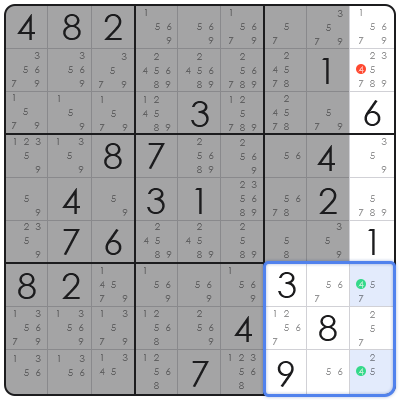
Working through medium Sudoku puzzles represents a crucial intermediate step for enthusiasts seeking to advance their logical reasoning skills beyond foundational levels. This category of puzzles serves as a significant bridge, introducing increased complexity without immediately overwhelming solvers with the intricate strategies required for hard or expert-level grids. Its significance lies in refining deductive processes and fostering a more nuanced understanding of numerical placement. The primary problem that medium Sudoku solves for players is the stagnation often experienced after mastering basic techniques. It compels solvers to move beyond simple scanning and single-candidate elimination, pushing them to identify subtle patterns and apply more sophisticated logical steps. This engagement is vital for developing analytical precision and maintaining cognitive agility in problem-solving endeavors. This article will conduct a structural analysis of medium Sudoku, detailing its core mechanics, providing a step-by-step guide to essential solving techniques, and offering professional insights into common pitfalls. Based on structural analysis, understanding these elements is paramount for efficient and enjoyable progression in the Sudoku journey.
Technical/Structural Breakdown: The Core Mechanics of Medium Sudoku
Medium Sudoku puzzles integrate foundational rules with a requirement for more intricate logical deduction compared to their easy counterparts. From a framework perspective, these puzzles still adhere to the fundamental 9×9 grid, divided into nine 3×3 subgrids, where each row, column, and subgrid must contain digits 1 through 9 exactly once.
Based on structural analysis, the key differentiator in medium puzzles is the reduced number of initially pre-filled cells, necessitating the application of intermediate strategies beyond simple single-candidate elimination. This complexity fosters a deeper understanding of positional logic and numerical relationships within the grid.
In practical application, players working through medium Sudoku must begin to systematically identify and track potential candidates for each empty cell, often requiring a multi-layered approach to rule out possibilities that are not immediately obvious.
The mechanics involve not just direct observation but also the inference of numbers based on exclusions across multiple linked cells, demanding a more comprehensive and iterative review of the grid state.
Step-by-Step Implementation: Initial Candidate Identification and Single-Cell Logic
Working through medium Sudoku puzzles begins with a systematic identification of single-candidate cells using basic scanning techniques across rows, columns, and 3×3 blocks. This involves meticulously checking each empty cell for the digit that can *only* fit into that specific position within its row, column, or block.
A crucial first step is to “cross-hatch” by visually scanning each row and column for missing numbers, then cross-referencing these with the numbers present in the 3×3 block containing the target cell. Based on structural analysis, this direct elimination often yields the first set of solutions.
Beyond single candidates, players should look for “hidden singles” where a number, though not the only candidate for a specific cell, is the *only* possible location for that number within its row, column, or 3×3 block. This technique requires a slightly broader scan for each digit across a unit.
In practical application, consistently marking down all potential candidates for each empty cell, even if mentally, significantly aids in visualising these relationships and paving the way for more advanced deductions later on in the solving process.
Step-by-Step Implementation: Advanced Deductions for Medium Puzzles
Once initial single-candidate placements are exhausted, medium Sudoku puzzles require stepping into advanced deduction techniques, primarily focusing on “naked pairs” and “hidden pairs.” Naked pairs occur when two cells in a row, column, or block share the exact same two candidates, and no other number can go in those cells.
From a framework perspective, identifying a naked pair allows you to eliminate those two candidates from all other cells within that same row, column, or block, significantly reducing possibilities elsewhere. Hidden pairs operate similarly but are less obvious: two cells in a unit contain a pair of numbers that are not candidates anywhere else in that unit.
Another essential technique involves “pointing pairs/triples,” where if two or three cells in a block contain a specific candidate and are all aligned within the same row or column, that candidate can be eliminated from the rest of that row or column outside of the block. This highlights the interconnectedness of the grid.
In practical application, consistently re-evaluating the grid after each successful placement or elimination is vital, as a single new number can unlock a cascade of further deductions, eventually leading to the puzzle’s resolution and demonstrating the recursive nature of Sudoku logic.
Comparative Analysis: Medium Sudoku’s Place in the Puzzle Spectrum
Medium Sudoku occupies a pivotal position in the difficulty spectrum, balancing the straightforwardness of easy puzzles with the intricate demands of hard and expert levels. From a framework perspective, easy puzzles primarily rely on direct elimination and single candidates, offering a low complexity entry point.
In contrast, hard Sudoku often necessitates advanced techniques such as X-Wings, Swordfish, and more complex chaining, demanding significantly higher cognitive load and a greater frequency of complex deductions. Medium puzzles bridge this gap by introducing basic paired strategies and pointing techniques without overwhelming the solver.
Based on structural analysis, the efficiency of solving medium puzzles lies in developing a flexible mental toolkit, allowing solvers to transition between simple scans and intermediate logical steps. This level is crucial for building the foundational deductive reasoning skills required for subsequent, more challenging puzzles.
Cost, in terms of time investment for cognitive development, is optimized at the medium level, as it provides enough challenge to foster growth without the extensive time commitment or potential frustration associated with frequently getting stuck on expert-level puzzles.
The frequency of applying intermediate techniques is highest at the medium level, making it the ideal training ground for honing these skills before progressing to truly complex grids.
Common Pitfalls and Strategic Solutions for Medium Sudoku
A frequent mistake when working through medium Sudoku puzzles is failing to systematically mark candidates, leading to missed opportunities for paired or pointing eliminations. This oversight can drastically increase solving time and lead to unnecessary trial and error, undermining the logical process.
Professional advice dictates adopting a consistent notation system, whether mentally tracking or lightly penciling in candidates, ensuring all potential numbers for each cell are considered. Based on structural analysis, this reduces cognitive load and makes patterns like naked/hidden pairs more apparent, enhancing efficiency.
Another common pitfall is the premature assumption of numbers, often based on a hurried scan rather than thorough elimination, resulting in errors that propagate through the puzzle. From a framework perspective, such assumptions break the fundamental rules of Sudoku and can render a puzzle unsolvable, requiring a complete restart.
The solution lies in disciplined verification: always double-check deductions before confirming a number, and be prepared to backtrack if inconsistencies arise. In practical application, taking short breaks can also help reset the mind and catch errors that were previously overlooked due to prolonged focus.
Lastly, neglecting to re-scan the entire grid for new single candidates after placing a number is a common oversight. Every new digit can unlock several immediate deductions, so constant re-evaluation is key.
Frequently Asked Questions (FAQ) for Medium Sudoku Solvers
**Q: What is the primary difference between easy and medium Sudoku?** A: Medium Sudoku requires more deductive steps and often introduces basic paired candidate logic (naked/hidden pairs) beyond simple single-cell eliminations found in easy puzzles, demanding more nuanced observation.
**Q: How can I improve my speed in solving medium Sudoku?** A: Consistent practice, systematic candidate marking, and familiarization with intermediate techniques like naked pairs and pointing pairs will significantly enhance your solving speed and accuracy.
**Q: Is trial and error acceptable for medium Sudoku?** A: While sometimes unavoidable in complex scenarios, reliance on trial and error should be minimized. Medium puzzles are designed to be solvable through pure logic; trial and error usually indicates a missed deduction.
**Q: What’s a “naked pair” in Sudoku?** A: A naked pair is when two cells in a row, column, or block are the only cells containing two specific candidates (e.g., 2 and 5), allowing you to eliminate 2 and 5 from other cells in that unit.
**Q: When should I switch from candidate marking to looking for pairs?** A: Based on structural analysis, after exhausting all single-candidate placements and hidden singles across the entire grid, it’s the optimal time to transition to identifying naked or hidden pairs.
In conclusion, mastering how to work through medium Sudoku puzzles represents a pivotal stage in developing advanced logical reasoning skills. This level, based on structural analysis, necessitates a thoughtful integration of basic and intermediate strategies, fostering analytical precision and enhancing problem-solving acumen. The strategic value lies not only in solving individual puzzles but also in cultivating a resilient and adaptable problem-solving mindset applicable across various domains. Moving forward, a sustained engagement with medium-difficulty puzzles will solidify foundational deductive capabilities, paving the way for tackling the most complex challenges with confidence and efficiency in any field requiring systematic thought.