

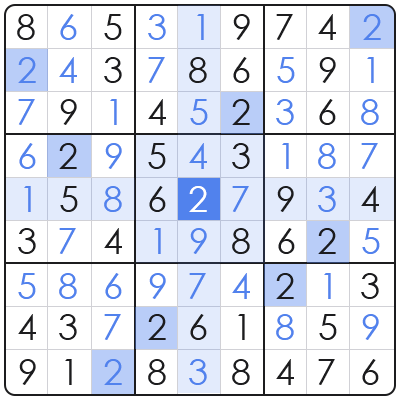
Tackling the hardest Sudoku puzzles transcends mere number placement; it is a profound exercise in advanced logical deduction and pattern recognition, pushing the boundaries of cognitive strategy. These formidable grids are not designed for casual solvers but for those ready to delve into intricate interdependencies and subtle numerical relationships, demanding a sophisticated mental toolkit. The primary problem solved by mastering how to solve hardest sudoku puzzle lies in developing superior analytical and problem-solving skills that are transferable across various complex domains. It hones an individual’s capacity to identify underlying structures, anticipate outcomes, and apply multi-faceted solutions to seemingly intractable problems, moving beyond surface-level observations. This article will provide a deep-dive into the strategic frameworks and advanced techniques required to conquer the most challenging Sudoku puzzles. We will explore the underlying logic, offer a systematic implementation guide, compare different solving methodologies, address common pitfalls, and answer frequently asked questions to equip you with the expertise to navigate extreme Sudoku with confidence.
Deconstructing the Complexity: Underlying Logic of Advanced Sudoku
Explaining how the hardest Sudoku puzzles move beyond simple elimination, demanding an understanding of intricate cell relationships. Based on structural analysis, these puzzles require solvers to employ advanced logical frameworks that extend beyond basic candidate reduction. From a framework perspective, these methods include naked and hidden subsets (pairs, triplets, quadruplets), X-Wings, Swordfish, and advanced chaining techniques.
Advanced Sudoku techniques fundamentally rely on identifying patterns of exclusion and inclusion across rows, columns, and 3×3 blocks simultaneously. In practical application, an X-Wing, for instance, identifies two rows (or columns) where a specific candidate only appears in two positions, which align across the two selected dimensions, thereby allowing for the elimination of that candidate from other cells in the corresponding columns (or rows).
Another critical component is the application of coloring or chain strategies, which involve hypothesizing a value for a cell and tracing the logical implications across the entire grid. This approach, rooted in propositional logic, helps identify contradictions or forced values. Based on structural analysis, these techniques demonstrate the interconnectedness of all cells, often revealing hidden dependencies that are not immediately apparent through simpler methods.
Systematic Application: A Guided Approach to Extreme Sudoku
Applying expert techniques to solve the hardest Sudoku puzzles involves a multi-layered strategic process that systematically eliminates possibilities and confirms values. This structured approach begins with a thorough initial scan for basic singles and progresses to more complex pattern recognition. From a framework perspective, this is not merely a brute-force effort but a deliberate and iterative application of logical rules.
The initial step in tackling a challenging Sudoku involves accurately populating all possible candidates for each empty cell, ensuring no simple deductions are missed. Based on structural analysis, this foundational step provides the necessary data for identifying more advanced patterns. Subsequent steps focus on locating naked and hidden subsets (pairs, triplets), which are groups of candidates confined to a specific set of cells within a row, column, or block. In practical application, finding a naked pair means those two candidates can be eliminated from other cells in that unit.
Progressing further, techniques such as X-Wing and Swordfish come into play, identifying candidates that are constrained to specific lines, allowing for broader eliminations. The most advanced puzzles often necessitate the use of chaining, such as Simple Coloring, XY-Chains, or Forcing Chains, which involve making a provisional assumption and tracing its logical consequences to either confirm a value or derive a contradiction. Based on structural analysis, these iterative applications gradually reduce the grid’s complexity until a solution emerges.
Analytical Frameworks: Comparing Advanced Sudoku Solving Techniques
Comparing advanced Sudoku solving techniques reveals their varying complexities, efficiencies, and frequencies of application, crucial for strategic problem-solving. Based on structural analysis, techniques range from relatively straightforward pattern recognition to highly abstract logical deductions. This comparison aids solvers in selecting the most appropriate tool for a given challenge.
For instance, Naked/Hidden Singles and Pairs are foundational, high-frequency techniques that offer high efficiency in early-to-mid game stages, with relatively low cognitive complexity. In practical application, they rapidly reduce candidate counts. Conversely, X-Wings and Swordfish, while still patterns, demand a higher degree of visual scanning and abstract thinking, making them moderately complex. Their efficiency is high when applicable, but their frequency of occurrence is lower than basic subsets, often appearing in harder puzzles.
At the peak of complexity are techniques like XY-Chains, Forcing Chains, and advanced coloring methods. From a framework perspective, these involve deep hypothetical reasoning and path tracing, requiring significant cognitive effort. Their efficiency can be extremely high, often breaking open a seemingly intractable puzzle, but their frequency is low, being reserved for the most formidable Sudoku variants. Based on structural analysis, mastering these comparative applications allows for a more adaptive and resilient problem-solving strategy.
Navigating Obstacles: Common Errors and Expert Strategies in Challenging Sudoku
Solving the hardest Sudoku puzzles often exposes common pitfalls that can derail progress, necessitating a proactive understanding of these errors and their professional solutions. These challenges typically stem from overlooking subtle patterns or making incorrect initial assumptions. From a framework perspective, recognizing these vulnerabilities is key to developing a robust solving methodology.
A frequent mistake is incomplete candidate marking, where solvers prematurely commit to a technique without ensuring all possible numbers are accurately listed for each empty cell. This oversight can lead to missed opportunities for simpler deductions or misinterpretations of advanced patterns. Based on structural analysis, the professional advice is to meticulously re-check candidate lists after each significant deduction, using a systematic scanning method to ensure completeness. In practical application, this diligence prevents cascading errors.
Another common pitfall is over-reliance on a single advanced technique, leading to ‘solver’s block’ when that technique doesn’t yield results. For example, persistently looking for an X-Wing when a simpler Naked Triplet might exist. Based on structural analysis, the solution involves developing a flexible toolkit of techniques and cycling through them strategically, starting from simpler methods and only escalating complexity when necessary. This adaptive strategy prevents tunnel vision and optimizes effort.
A third error is sloppy note-taking or mental tracking in complex chain deductions, leading to logical inconsistencies or dead ends. When tracing chains, a single mistake can invalidate an entire line of reasoning. From a framework perspective, the professional solution is to adopt clear, organized notation for hypothetical scenarios, marking assumptions and their derived consequences distinctly. In practical application, this rigorous documentation minimizes errors and allows for easier backtracking.
Frequently Asked Questions: Deepening Your Hardest Sudoku Mastery
What makes a Sudoku puzzle ‘hardest’? A Sudoku’s difficulty is determined by the number of pre-filled cells and the reliance on advanced logical techniques beyond simple singles, requiring patterns like X-Wings, chains, or complex candidate eliminations for resolution.
Is there a universal ‘best’ strategy for hard Sudoku? No single strategy is universally “best”; rather, an effective approach involves a systematic application of a hierarchy of techniques, starting with basic scans and escalating to advanced patterns as needed.
How do I improve my speed in solving difficult Sudoku? Improving speed comes from practice, pattern recognition, and efficient candidate marking. Regularly tackling challenging puzzles helps internalize advanced strategies and quicken deduction.
Can computers solve any Sudoku puzzle? Yes, computers can solve any solvable Sudoku, often using backtracking algorithms that systematically test possibilities until a valid solution is found, far surpassing human computational limits.
What is the role of ‘guessing’ in hard Sudoku? True Sudoku solving involves pure logic without guessing. What appears as a “guess” is often a well-informed hypothesis (like in forcing chains) whose implications are logically traced to confirm or contradict.
Mastering how to solve hardest sudoku puzzle represents more than just conquering a game; it is a profound journey into the depths of logical reasoning and structured problem-solving. This mastery equips individuals with enhanced cognitive agility, a keen eye for subtle patterns, and the discipline to systematically approach complex challenges. The insights gained from tackling these intricate grids resonate beyond the puzzle itself, contributing to a more analytical and resilient approach to problem-solving in any field, affirming its long-term strategic value in fostering intellectual growth and decision-making capabilities.