

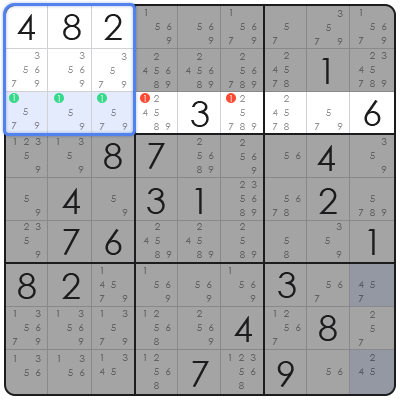
Programmatically generating a Sudoku board involves leveraging algorithmic principles to construct valid, solvable grids, a fundamental capability in modern software engineering for game development, artificial intelligence testing, and educational platforms. This process moves beyond manual grid creation, which is often tedious and prone to human error, by employing structured computational logic. Based on structural analysis, the core objective is to ensure that the generated board adheres to all Sudoku rules: each row, column, and 3×3 subgrid must contain all digits from 1 to 9 exactly once. The significance of automated Sudoku generation extends to its application in producing dynamic content for puzzle games, providing a rich, endless supply of unique challenges. From a framework perspective, it also serves as an excellent pedagogical tool for understanding backtracking algorithms, constraint satisfaction problems, and recursive programming paradigms. It addresses the primary problem of scalability and consistency, as manually crafting hundreds or thousands of unique, valid Sudoku puzzles of varying difficulties is impractical and inefficient. In practical application, the ability to programmatically generate Sudoku boards allows developers to focus on user experience and game mechanics rather than content creation. This systematic approach ensures not only correctness but also opens avenues for controlling difficulty levels, guaranteeing solution uniqueness, and even integrating these grids into more complex simulation or AI training environments, solidifying its role as a key component in robust puzzle-based software solutions.
Understanding the Core Algorithms for Programmatic Sudoku Generation
Understanding the core algorithms for programmatic Sudoku generation involves a deep dive into backtracking and constraint propagation, which are foundational for constructing valid grids. Backtracking is a general algorithmic technique that systematically searches for a solution by trying to extend a partial solution candidate step by step. If a partial solution cannot be extended to a complete solution, it ‘backtracks’ to the previous step and tries an alternative. This recursive approach is particularly well-suited for problems like Sudoku where choices at one step affect possibilities at subsequent steps.
Constraint propagation, often used in conjunction with backtracking, enhances efficiency by reducing the search space. It involves observing the current state of the grid and making logical deductions about which numbers can or cannot occupy specific cells based on existing values in their respective rows, columns, and 3×3 blocks. When a number is placed in a cell, constraint propagation immediately updates the possible values for all related empty cells, potentially revealing cells where only one number is possible, or identifying contradictions early.
Board validation is an indispensable component throughout the generation process, ensuring that at every stage, the partially filled grid adheres to all Sudoku rules. This involves functions to check if a proposed number is valid for a given cell, considering its row, column, and subgrid. Without continuous validation, the backtracking algorithm might pursue paths that lead to invalid grids, wasting computational resources and increasing the likelihood of generating unsolvable puzzles.
A common strategy, often termed a recursive depth-first search, starts by attempting to fill an empty cell with a valid number. If successful, it recursively calls itself to fill the next empty cell. If no valid number can be placed in the current cell, or if a recursive call returns false (indicating a dead end), it backtracks, un-assigns the number, and tries the next possible digit. This systematic exploration guarantees that if a solution exists, it will be found, forming a complete and valid Sudoku grid.
A Step-by-Step Implementation Guide for Sudoku Board Creation
Implementing a Sudoku board generation algorithm typically begins with initializing an empty 9×9 grid, represented as a 2D array or similar data structure. The initial state comprises all cells set to zero or null, signifying that they are unfilled. The objective is to populate this grid systematically, ensuring all Sudoku constraints are met, leading to a fully solved, valid puzzle. This foundation sets the stage for the algorithmic filling process.
A strategic initial step involves filling the diagonal 3×3 blocks, as this significantly simplifies the constraint satisfaction for the remaining cells. By independently filling the top-left, middle, and bottom-right 3×3 blocks with random but valid numbers (1-9 without repetition within each block), we establish a partial grid that is inherently consistent. This reduces the complexity for subsequent backtracking, providing a strong starting point and ensuring a diverse range of initial board configurations.
The core of the generation process then employs a backtracking algorithm to fill the remaining empty cells. Starting from the first empty cell, the algorithm iterates through numbers 1 to 9. For each number, it checks if placing it in the current cell is valid according to Sudoku rules (no repetition in row, column, or 3×3 block). If valid, it places the number and recursively calls itself for the next empty cell. If the recursive call returns `true` (meaning a valid grid was completed), the process continues; otherwise, it removes the number (backtracks) and tries the next digit. If no digit works, it returns `false` to the previous call.
After a complete, valid Sudoku grid has been generated, the final step involves carefully removing numbers to create a playable puzzle with a specific difficulty level. This is achieved by randomly selecting cells and removing their values, one by one. After each removal, a solver algorithm is used to verify that the puzzle still has a unique solution. The number of cells removed and the complexity of the solving path determine the puzzle’s difficulty. This iterative removal, coupled with solution uniqueness verification, ensures a high-quality playable Sudoku board.
Comparative Analysis of Sudoku Generation Methodologies
Comparing Sudoku generation methods reveals distinct trade-offs in complexity, efficiency, and resource utilization, influencing their suitability for different applications. While backtracking is a widely used and flexible approach, other methodologies offer alternative benefits, particularly concerning performance and the nature of the generated output. From a framework perspective, selecting the appropriate method hinges on specific project requirements.
The primary methods for generating Sudoku boards include pure backtracking algorithms, pre-computed Sudoku databases, and approaches leveraging constraint programming libraries. Each has its strengths and weaknesses when evaluated against key dimensions such as the computational resources required and the flexibility of output. Understanding these distinctions is crucial for an informed implementation decision.
| Method | Complexity | Efficiency | Cost (Resource/Time) | Frequency (Usage) |
|:————————–|:—————–|:———————–|:———————|:——————|
| **Backtracking Generation** | High (Algorithmic)| Moderate (CPU-bound) | Moderate | Very Common |
| **Pre-computed Database** | Low (Generation) | Very High (Retrieval) | High (Storage) | Moderate |
| **Constraint Programming** | Moderate | High (Optimized Solvers)| Moderate | Niche/Specialized |
Backtracking offers immense flexibility in generating unique puzzles but can be computationally intensive, especially for ensuring solution uniqueness after cell removal. Pre-computed databases provide instant puzzle retrieval but require significant storage and lack on-the-fly generation variability. Constraint programming libraries, on the other hand, abstract away much of the low-level logic, offering a balance of efficiency and customizability, making them suitable for complex scenarios where optimized constraint handling is paramount, although they may introduce external dependencies.
Common Pitfalls and Professional Solutions in Sudoku Generation
Navigating challenges in Sudoku board generation requires addressing common pitfalls that can lead to subpar or unusable puzzles. One frequent mistake is generating boards that have multiple solutions or, conversely, no solution at all, which severely undermines the player experience. A professional solution involves rigorously testing for solution uniqueness after each cell removal step. This can be computationally expensive but is crucial; typically, a dedicated Sudoku solver is run to count solutions, ensuring only puzzles with a single unique solution are presented.
Another significant pitfall is encountering performance bottlenecks, particularly with complex backtracking algorithms or when attempting to generate very difficult puzzles. The recursive nature of backtracking can lead to deep search trees and long computation times. Professional advice for mitigating this includes implementing optimizations such as ‘Minimum Remaining Values’ (MRV) heuristic, which prioritizes filling cells with the fewest possible valid options, and ‘Least Constraining Value’ (LCV) heuristic, which chooses a value that rules out the fewest options for neighboring cells, thereby pruning the search space more effectively.
Balancing the difficulty curve of generated Sudoku boards presents another common challenge. Simply removing a fixed number of cells does not guarantee a specific difficulty. Boards can inadvertently become too easy or too hard. To address this, an entity-based writing approach suggests correlating difficulty with the number of clues and the complexity of the solver’s path to a unique solution. In practical application, this means using an intelligent cell removal strategy that involves repeatedly solving the puzzle to assess the ‘difficulty score’ of the required logical steps, adjusting removals until the desired score is achieved.
Finally, ensuring that the generated Sudoku board feels ‘natural’ and free from obvious patterns (unless intentionally designed) can be tricky. Random number generation often leads to predictable or aesthetically unappealing configurations. A robust solution involves combining initial randomization with intelligent shuffling or transformation techniques, such as row/column permutations and number remapping, without altering the puzzle’s solvability or uniqueness. This adds an extra layer of complexity to the generation but results in more varied and engaging puzzles, enhancing user satisfaction and the perception of a well-crafted game.
Frequently Asked Questions About Programmatic Sudoku Generation
**Q: Why generate Sudoku boards programmatically?** Programmatic generation provides an endless supply of unique puzzles, eliminates manual errors, and allows for dynamic difficulty adjustment, crucial for game development and AI training.
**Q: What is the most challenging aspect of programmatic Sudoku generation?** Ensuring that the generated puzzle has a single, unique solution after cells are removed is often the most complex and computationally intensive part of the process.
**Q: Can programmatic generation create Sudokus of varying difficulty levels?** Yes, by strategically removing cells and verifying the solution path complexity with a solver, algorithms can control and adjust the difficulty from easy to expert.
**Q: Which programming languages are best suited for this task?** Languages like Python, Java, and C++ are highly suitable due to their strong support for recursion, data structures, and algorithmic implementation, making them ideal for backtracking.
**Q: Is programmatic Sudoku generation computationally intensive?** While initial full grid generation is relatively quick, the process of removing cells and repeatedly checking for unique solvability can be computationally intensive, especially for harder puzzles.
In conclusion, the ability to programmatically generate Sudoku boards is a testament to the power of algorithmic thinking and constraint satisfaction within software engineering. It transcends simple puzzle creation, serving as a critical tool for developing robust, scalable, and dynamic gaming experiences, while also offering profound insights into computational problem-solving. Based on structural analysis, the systematic application of backtracking, enhanced by validation and optimization techniques, ensures the delivery of high-quality, unique, and solvable puzzles. From a framework perspective, continued innovation in this area, including machine learning approaches to difficulty assessment and adaptive puzzle generation, promises even more sophisticated and engaging interactive experiences, cementing its long-term strategic value in the evolving landscape of digital entertainment and educational software.