

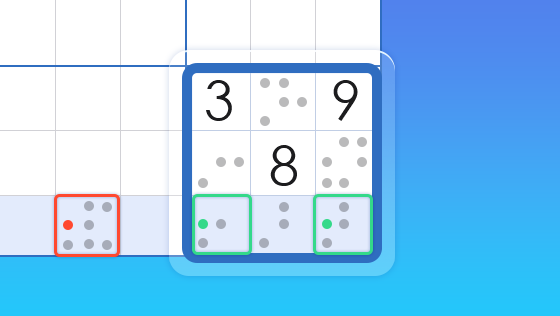
In the realm of algorithmic design and puzzle generation, the challenge of creating Sudoku puzzles efficiently and elegantly often surfaces. The traditional approach of brute-force generation, which involves randomly filling cells and backtracking upon conflict, is notoriously inefficient and often fails to produce puzzles with unique solutions or desired difficulty levels. This method relies heavily on trial and error, consuming significant computational resources without guaranteeing quality output. Generating a Sudoku puzzle without resorting to brute force signifies a shift towards more sophisticated algorithmic strategies that prioritize constructive methods and constraint satisfaction. This approach moves beyond simple guess-and-check, instead focusing on intelligent grid construction and strategic cell removal. It’s a critical area for developers aiming to build high-performance puzzle applications or integrate sophisticated logic puzzles into larger systems, where speed and quality of output are paramount. The primary problem solved by non-brute force generation lies in overcoming the computational bottlenecks and quality inconsistencies inherent in naive approaches. By leveraging advanced data structures, combinatorial logic, and intelligent backtracking, developers can reliably produce valid, solvable Sudoku puzzles with guaranteed unique solutions and finely tuned difficulty settings, transforming a computationally intensive task into an optimized, predictable process based on structural analysis.
The Core Algorithms for Non-Brute Force Sudoku Generation
Generating a Sudoku puzzle without brute force fundamentally involves employing constructive algorithms or constraint propagation techniques, rather than relying on a trial-and-error approach. This method begins by ensuring a valid, fully solved Sudoku grid is created, from which clues are then strategically removed. Key to this process are algorithms capable of quickly producing a complete grid, such as randomized backtracking, followed by methods for verifying puzzle properties.
One effective technique for the initial grid generation is a randomized backtracking algorithm. This involves filling the grid cell by cell, ensuring each placement is valid according to Sudoku rules. Unlike a simple brute-force solver, the ‘randomized’ aspect ensures a diverse set of starting grids, preventing repetitive puzzle structures. The algorithm will attempt to place a random valid number in an empty cell, moving to the next; if it hits a dead end, it backtracks and tries a different number. This ensures a complete and valid Sudoku solution is always achieved.
Further advanced methods include the use of Dancing Links (DLX) algorithm, developed by Donald Knuth, which efficiently solves exact cover problems. While often used for solving Sudoku, it can be adapted for generation by constructing a set of constraints for a solved grid, then using DLX to find a valid arrangement of numbers. From a framework perspective, these methods establish the foundational ‘solved state’ of a Sudoku grid, a prerequisite for the subsequent puzzle creation phase where clues are intelligently obscured.
Implementing Advanced Sudoku Puzzle Generation Methods
Implementing advanced Sudoku puzzle generation methods involves a systematic three-step process: establishing a solved grid, strategically removing cells, and verifying the uniqueness and difficulty of the resulting puzzle. This structured approach moves beyond random trial-and-error, focusing on controlled and verifiable outcomes.
Step 1: Construct a complete and valid Sudoku grid. Begin with an empty 9×9 grid. Utilize a randomized backtracking algorithm to fill the grid entirely, ensuring all Sudoku rules (unique numbers in rows, columns, and 3×3 blocks) are satisfied. The randomization at this stage is crucial for generating a variety of base solutions. This initial full grid serves as the answer key for the puzzle being created. Based on structural analysis, ensuring a completely filled, valid grid at the outset streamlines the subsequent puzzle creation steps, as uniqueness and solvability concerns shift to the removal process.
Step 2: Iteratively remove numbers from the filled grid. Starting with the complete grid, randomly select cells and remove their numbers. After each removal, it is imperative to verify that the remaining grid still possesses a unique solution. If removing a cell leads to multiple solutions or no solution, the removal is reverted, and another cell is chosen. This iterative process continues until the desired number of clues (or difficulty level) is achieved. In practical application, this unique solution verification is the most computationally intensive part of the generation process and requires an efficient Sudoku solver.
Step 3: Evaluate and adjust puzzle difficulty. Beyond simply counting remaining clues, a robust generator will assess difficulty based on the complexity of human solving techniques required (e.g., naked singles, hidden pairs, X-wing). If the generated puzzle is too easy or too hard, the removal process can be adjusted by either adding back clues or removing more, respectively. This involves heuristic evaluations of the board state during the solution verification phase to provide an estimated difficulty score, ensuring the generated puzzle aligns with specific challenge requirements for the user.
Comparative Analysis of Sudoku Generation Paradigms
Comparing different Sudoku generation paradigms reveals distinct trade-offs in terms of computational efficiency, algorithm complexity, and the quality of the puzzles produced. Understanding these differences is critical for developers in algorithmic design seeking to select the most appropriate method for their specific application.
The table below delineates the key characteristics of brute-force generation, the constructive backtracking approach with unique solution verification, and constraint programming models like those leveraging exact cover algorithms. Each method offers a different balance between development effort and resulting puzzle attributes, impacting scalability and user experience. From a framework perspective, the choice often hinges on whether raw speed (even if producing lower-quality puzzles) or guaranteed unique and challenging puzzles is the priority.
| Method | Complexity (Time/Space) | Efficiency (Puzzle Quality/Speed) | Ease of Implementation |
|———————————————-|——————————|———————————–|————————|
| Brute Force (Random Fill & Validate) | High (Exponential) | Low (Slow, unreliable unique solutions) | Moderate (Basic backtracking) |
| Constructive Backtracking with Verification | Moderate (Polynomial to Near-Exponential) | High (Good speed, guaranteed unique/solvable) | Moderate to High (Requires robust solver) |
| Constraint Programming (e.g., Exact Cover) | Low to Moderate (Highly Optimized) | Very High (Fast, high-quality, flexible) | High (Specialized libraries/understanding) |
This analysis underscores that while brute force may seem simplest initially, its inefficiency and lack of control over puzzle quality make it unsuitable for professional applications. Constructive backtracking provides a strong balance, while advanced constraint programming offers superior performance and flexibility for sophisticated generation needs.
Navigating Common Pitfalls in Sudoku Generation
Common pitfalls in generating Sudoku puzzles without brute force frequently revolve around ensuring unique solutions, accurately controlling puzzle difficulty, and optimizing the performance of the generation process itself. These challenges require careful algorithmic consideration and robust implementation strategies.
A frequent mistake is generating puzzles that possess multiple valid solutions. This significantly degrades the player experience, as a core tenet of Sudoku is the expectation of a single, unambiguous path to completion. The solution involves implementing a rigorous unique solution verification step after each cell removal. This typically means employing a highly optimized Sudoku solver to check if, given the current set of clues, there is only one way to fill the remaining cells. If multiple solutions are found, that particular cell removal must be reverted. Based on structural analysis, this verification loop is critical for maintaining puzzle integrity.
Another pitfall is the inability to precisely control the difficulty level of generated puzzles. Simply adjusting the number of clues often provides a poor proxy for actual human-perceived difficulty. A solution involves developing or integrating advanced difficulty metrics that analyze the solving techniques required (e.g., counting instances of naked singles, hidden pairs, or more complex strategies). This allows the generation algorithm to make informed decisions about which cells to remove or retain, tailoring the puzzle to specific challenge tiers. In practical application, this often requires profiling the solver’s execution path and counting the types of logical inferences made.
Performance bottlenecks, particularly during the unique solution verification phase, can also hinder efficient generation. If the verification solver is not highly optimized, the iterative removal process can become excruciatingly slow, especially for generating a large volume of puzzles. Professional advice includes using specialized, high-performance Sudoku solvers for the verification step, often leveraging bit manipulation for fast constraint checking or highly optimized backtracking implementations. Furthermore, caching intermediate results and employing parallel processing techniques can significantly accelerate the overall generation pipeline.
Frequently Asked Questions About Efficient Sudoku Generation
This section addresses common queries regarding the methodologies and best practices for creating Sudoku puzzles without relying on brute-force approaches, focusing on clarity and utility for developers and enthusiasts.
Q: Why is avoiding brute force important for Sudoku generation? A: Brute force is inefficient and unreliable for producing high-quality puzzles with unique solutions, leading to slow generation times and inconsistent output.
Q: What ensures a Sudoku puzzle has a unique solution? A: A rigorous unique solution verification step, typically a full solve of the partially filled grid, must confirm only one possible completion exists.
Q: Can these methods create puzzles of varying difficulty? A: Yes, by carefully controlling the number and strategic placement of removed cells, and by using advanced difficulty metrics based on solving techniques.
Q: Is specialized software or libraries required? A: While specialized libraries can assist, the core algorithms can be implemented in any general-purpose programming language by a skilled algorithmic designer.
The strategic pivot from brute-force tactics to intelligent, constructive algorithms for Sudoku puzzle generation marks a significant advancement in algorithmic design. This approach ensures not only computational efficiency but also the consistent production of high-quality puzzles with guaranteed unique solutions and controllable difficulty. Embracing these advanced methodologies is crucial for any developer or organization aiming to deliver robust, engaging, and performant puzzle experiences. As the demand for sophisticated algorithmic solutions grows, mastering these non-brute force generation techniques will remain a core competency, reflecting a commitment to optimized design and superior user engagement in the digital landscape.