

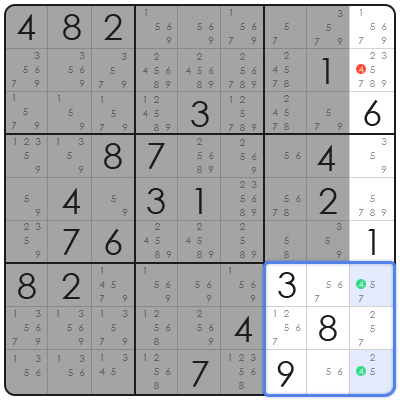
How do NYT Sudoku hints work? They function as an intelligent, adaptive guidance system designed to assist players in navigating challenging puzzles without fully compromising the game’s core intellectual engagement. In the realm of Puzzle Design & AI, this mechanism represents a sophisticated balance between user support and maintaining cognitive challenge, directly addressing the common frustration players face when stuck, which often leads to abandonment. From a framework perspective, the primary problem NYT Sudoku hints solve is the ‘frustration barrier’ in complex puzzles. By offering targeted assistance, they prevent players from reaching a deadlock that might otherwise deter them from completing the game or, more importantly, from improving their own problem-solving skills. This strategic intervention is critical for fostering long-term player engagement and a positive learning curve. Based on structural analysis, these hints are not simply solvers but rather algorithmic pointers, calibrated to reveal the next logical deduction a human player might reasonably be expected to find. Their significance lies in democratizing access to more complex Sudoku variations, allowing a wider audience to experience the satisfaction of completion while subtly educating them on advanced solving techniques.
Unpacking the Algorithmic Core of NYT Sudoku Hints
How do NYT Sudoku hints work on a fundamental level? They function by employing sophisticated algorithms that simulate human deduction strategies, progressively evaluating the puzzle state to identify the simplest, most logical next move. This process typically involves a constraint satisfaction problem solver, which maintains a list of possible candidates for each empty cell and applies a hierarchy of Sudoku-solving techniques.
The underlying mechanics involve continuously scanning rows, columns, and 3×3 blocks for ‘naked singles’ (where only one candidate is possible for a cell) and ‘hidden singles’ (where a candidate can only be in one cell within a row, column, or block). More advanced hints might leverage ‘naked pairs/triples’ or ‘hidden pairs/triples’, identifying groups of candidates that occupy a specific set of cells, thereby eliminating those candidates from other cells.
In practical application, the hint system doesn’t just ‘know’ the answer; it systematically searches for the easiest and most instructive step, much like an expert human player would. This includes dynamically adjusting its strategy based on the puzzle’s current complexity and the player’s progress, ensuring the provided hint is relevant and minimal, thereby maximizing the learning opportunity without spoiling the challenge.
A Phased Approach to Utilizing NYT Sudoku Hints Effectively
Effectively utilizing NYT Sudoku hints involves a phased approach that balances immediate assistance with long-term skill development. This isn’t about rote application, but strategic engagement to deepen one’s understanding of Sudoku logic. The first phase involves a thorough personal scan of the puzzle using your established strategies.
When a true deadlock is encountered, the second phase involves strategic hint activation. Once the hint reveals a digit, the crucial next step is deductive learning. Based on structural analysis, players should work backward from the revealed cell to identify *why* that digit was the correct placement. This involves re-examining the surrounding rows, columns, and blocks for the candidate eliminations or forcing functions that led to that specific number.
The final phase emphasizes iterative practice and avoiding over-reliance. In practical application, hints should serve as occasional nudges, not constant solutions. By consistently trying to understand the ‘why’ behind each hint, players progressively internalize complex Sudoku strategies, fostering self-sufficiency and enhancing the enjoyment derived from solving increasingly difficult puzzles independently.
Comparative Dynamics: NYT Hints Versus Alternative Sudoku Assistance Paradigms
When evaluating how do NYT Sudoku hints work, a comparative analysis reveals distinct advantages and operational philosophies against other assistance paradigms in Puzzle Design & AI. Unlike a generic ‘full solver’ found online, which provides the entire solution instantly, NYT hints offer a carefully calibrated form of guided learning. Full solvers offer maximum efficiency in solving but zero learning, effectively removing the puzzle aspect entirely. NYT hints, by contrast, prioritize cognitive engagement, offering medium efficiency in solving but high potential for learning and skill development.
Another common paradigm is the ‘pencil mark’ or ‘candidate tracker’ feature, often built into digital Sudoku games. These are user-driven tools that aid in organization and manual candidate elimination. From a framework perspective, while they enhance efficiency by reducing mental load, they require active user input and understanding to deduce the next step. NYT hints, conversely, are AI-driven, providing explicit direction, reducing user complexity in moments of genuine stagnation and actively pointing towards a logical step, which pencil marks only facilitate.
Finally, ‘error checkers’ provide immediate feedback on incorrect entries but offer no guidance on how to proceed. Their utility is in validating progress rather than actively teaching. This makes them low in solving efficiency and moderate in learning potential (only learning from mistakes). NYT hints stand apart by actively demonstrating the next logical deduction, merging assistance with education, and serving as a pedagogical tool within the gaming experience, providing high strategic value for player improvement.
Navigating Common Pitfalls and Optimizing Hint Application
Despite their utility, users often encounter common pitfalls when engaging with how do NYT Sudoku hints work, underscoring the need for strategic application. One prevalent mistake is over-reliance on hints, where players resort to requesting a hint at the slightest difficulty without first exhausting their own deductive capabilities. This diminishes problem-solving skills and ultimately reduces the satisfaction derived from mastering the puzzle. The solution, based on structural analysis, is to adopt a ‘solve one, understand why’ approach, treating hints as a last resort and a learning opportunity.
Another common pitfall is merely accepting the hinted digit without understanding the underlying logic. Many players will simply input the number revealed by the hint and move on, missing a crucial learning moment. From a framework perspective, this defeats the purpose of the hint as a pedagogical tool. To optimize application, after receiving a hint, players should actively review the board, identifying the specific Sudoku rule (e.g., hidden single, naked pair) that made that digit the only possibility for that cell. This reinforces their understanding and builds their mental toolkit.
A third mistake involves inconsistent application of hint levels, if available, or failing to appreciate the *simplest* nature of NYT’s hints. Some players expect complex ‘solver’ explanations when the hint simply provides the next obvious step. In practical application, the NYT system typically offers the easiest logical move. The solution is to trust this progressive simplicity. Focus on identifying and internalizing these foundational deductions, as they form the building blocks for tackling more intricate Sudoku challenges. By avoiding these pitfalls, players can transform hints from mere solutions into powerful learning aids.
Frequently Asked Questions About NYT Sudoku Hints
Q: How do NYT Sudoku hints determine the “next best step”? A: Based on structural analysis, hints prioritize the simplest available deduction rule (e.g., hidden single, naked pair) that advances the puzzle without complex lookaheads, making it easier for players to follow.
Q: Do hints make the game easier or teach me to solve? A: From a framework perspective, hints primarily serve as a guided learning tool, providing clues to overcome specific roadblocks and implicitly teaching deduction strategies rather than simply solving for you.
Q: Can I get different types of hints in NYT Sudoku? A: In practical application, NYT hints typically provide a single, logical next digit for a cell, focusing on fundamental Sudoku strategies rather than offering multiple solution paths or strategy names.
Q: What if I don’t understand an NYT hint? A: If a hint is unclear, re-examine the row, column, and 3×3 block associated with the hinted cell. Often, a candidate elimination or forced placement rule becomes apparent upon closer inspection.
Q: Are NYT Sudoku hints always the most efficient move? A: Generally, yes. The system is designed to identify the most straightforward logical deduction available, aligning with efficiency for both solving progression and player learning.
The Evolving Role of Guided Assistance in Digital Puzzle Engagement
The design of how do NYT Sudoku hints work reflects a broader industry trend towards intelligent, user-centric design in digital puzzle engagement. This approach acknowledges that while challenge is paramount, accessibility and a managed learning curve are equally vital for sustained player interest. Developers in Puzzle Design & AI are increasingly leveraging sophisticated algorithms to create experiences that are both challenging and supportive.
From a framework perspective, this evolution signifies a move beyond simple win/lose mechanics to a more nuanced understanding of player psychology. The goal is to keep players in a ‘flow state’ where the challenge is just right – not too easy to be boring, not too hard to be frustrating. Hints serve as a crucial mechanism in maintaining this delicate balance, adapting to individual player needs and puzzle complexities.
Looking forward, the insights gleaned from how do NYT Sudoku hints work will likely inform future AI-driven adaptive learning systems in gaming. We can expect more personalized hint systems that learn a player’s individual strengths and weaknesses, offering tailored guidance that maximizes both enjoyment and skill acquisition across a wider array of cognitive puzzles, pushing the boundaries of interactive entertainment and educational software.
In conclusion, the sophisticated mechanisms behind how do NYT Sudoku hints work offer significant strategic value by enhancing player engagement and managing the learning curve in complex puzzles. From a framework perspective, they represent a pivotal advancement in Puzzle Design & AI, seamlessly integrating assistive technology without detracting from the core intellectual challenge. The forward-looking industry insight suggests that such intelligent guidance systems will become increasingly pervasive, transforming how users interact with digital puzzles and fostering a new era of personalized, adaptive learning experiences.