

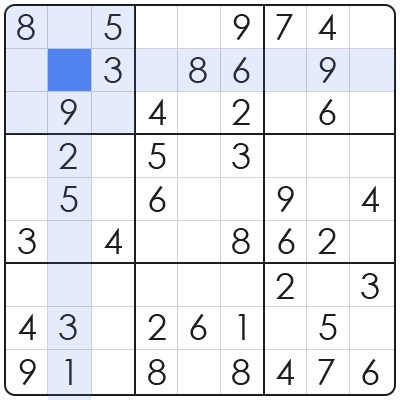
Killer Sudoku, a sophisticated variant of the classic numerical puzzle, demands a multi-layered analytical approach, challenging problem-solvers to integrate sum-based deductions with traditional positional logic. This intricate puzzle combines the familiar 9×9 grid and its row, column, and 3×3 block constraints with additional arithmetic limitations imposed by ‘cages’. Its profound significance lies in its ability to push the boundaries of logical deduction beyond simple uniqueness, requiring simultaneous consideration of combinatorial possibilities and spatial relationships. The puzzle’s structure, where groups of cells (cages) are marked with a target sum that must contain unique digits within that specific cage, fundamentally alters the strategic landscape. This variation necessitates a sophisticated blend of combinatorics, arithmetic reasoning, and classical Sudoku techniques, serving as a rigorous mental workout for puzzle enthusiasts and analytical thinkers alike. It’s not merely about placing numbers; it’s about discerning the few valid combinations from a multitude of possibilities under strict conditions. From a structural analysis perspective, mastering Killer Sudoku involves developing an intuitive understanding of number combinations and their implications across the grid, a highly transferable skill in various analytical domains. It effectively addresses the challenge of enhancing cognitive flexibility by forcing a dynamic interplay between distinct but interconnected rule sets, preparing the solver for complex, real-world problem-solving scenarios where multiple constraints must be simultaneously satisfied.
Decoding the Anatomy of Killer Sudoku Cages
Decoding the anatomy of Killer Sudoku cages involves understanding their dual role in both sum constraint and digit uniqueness within their boundaries. Each cage is a distinctly outlined group of cells, accompanied by a small number indicating the sum of the digits that must be placed within those cells. Critically, all digits within a single cage must be unique, even if the cells are not in the same row, column, or 3×3 block.
Based on structural analysis, the immediate implications of cage sums can often reveal ‘forced digits’ or highly restricted combinations. For instance, a two-cell cage with a sum of 3 must contain the digits 1 and 2, regardless of their order. Similarly, a three-cell cage summing to 6 must contain 1, 2, and 3. Recognizing these absolute combinations is the foundational step, providing concrete starting points within a seemingly vast problem space.
Furthermore, understanding the minimum and maximum possible sums for cages of various sizes is crucial. For example, a two-cell cage can have a minimum sum of 1+2=3 and a maximum of 8+9=17. A four-cell cage can range from 1+2+3+4=10 to 6+7+8+9=30. These ranges help eliminate impossible combinations early in the solving process, streamlining candidate elimination from a framework perspective.
Fundamental Principles of Killer Sudoku Strategy
Fundamental principles of Killer Sudoku strategy center on the synergistic application of traditional Sudoku rules with cage-specific arithmetic deduction. It’s imperative to remember that the core rules of classic Sudoku – each row, column, and 3×3 block must contain the digits 1 through 9 exactly once – remain fully active and are often the key to resolving ambiguities introduced by the cages.
From a framework perspective, one of the most powerful initial techniques involves leveraging the ‘sum of a region’ principle. In a standard 9×9 Sudoku grid, the sum of digits 1 through 9 is always 45. This applies universally to every row, column, and 3×3 block. When an entire region (row, column, or block) is either fully encompassed by a set of cages or significantly overlapped by them, this ’45-rule’ becomes an invaluable tool for deduction.
In practical application, if a row, for example, consists of several cages and one single, un-caged cell, the sum of that single cell can be deduced by subtracting the sums of all the cages within that row from 45. This method allows for the identification of specific digits or sums for remaining cells, significantly reducing the pool of potential candidates and accelerating the solving process, embodying efficient entity-based writing for problem-solving.
Initial Deductions: Targeting Small Cages and Overlapping Regions
Initial deductions in Killer Sudoku focus on identifying cages with unique or highly restricted digit combinations, along with leveraging the ‘sum of a region’ principle in overlapping areas. The first step involves systematically scanning the entire grid for cages that offer immediate, unambiguous answers. These are typically small cages (two or three cells) with sums that allow for only one possible set of digits.
Based on structural analysis, examples include a two-cell cage summing to 3 (always 1+2), a two-cell cage summing to 4 (always 1+3), or a three-cell cage summing to 6 (always 1+2+3). Once these combinations are identified, note the digits that must occupy those cells. While their exact positions within the cage may not be immediately clear, their presence within those cells is certain, allowing for elimination in other cells within the same row, column, or block.
The next critical step is to utilize the
Advanced Cage Techniques: Overlap and Exclusion Principles
Advanced Killer Sudoku techniques involve the strategic application of overlap and exclusion principles to deduce specific digit placements within interconnected cages and standard Sudoku regions. When cages intersect or overlap with other cells within a row, column, or 3×3 block, the ‘sum of 45’ rule becomes even more potent. By identifying the sum of cells covered by cages within a particular region, the sum of the remaining cells in that region can be precisely determined.
From a framework perspective, this ‘overlap analysis’ is crucial. For instance, if a 3×3 block has a known sum of 45, and parts of it are occupied by specific cages whose sums are known, the sum of the digits in the remaining cells of that 3×3 block can be calculated by subtracting the cage sums from 45. This deduced sum for the remaining cells often provides enough constraint to narrow down digit possibilities significantly.
The principle of exclusion, including concepts akin to ‘naked pairs’ or ‘hidden triples’ from classic Sudoku, also applies within cages. If a cage requires a specific set of digits (e.g., {1, 2, 3} for a sum of 6 in three cells), and one or more of those digits are already restricted or placed in cells within the same row, column, or block outside of that cage, it helps confirm the placement of the remaining digits within the cage or in other cells.
Iterative Refinement: Candidate Management and Backtracking
Iterative refinement in Killer Sudoku involves systematically managing candidate digits for each cell and employing backtracking when deductions lead to contradictions. For cells where a definitive digit cannot be immediately placed, maintaining a list of possible candidate digits is a best practice. As new digits are placed and deductions are made across the grid, these candidate lists must be updated, eliminating any digits that violate either classic Sudoku or Killer Sudoku rules.
Based on structural analysis, the process of candidate elimination is a continuous cycle of observation and refinement. Each new number placed should trigger a re-evaluation of its impact on surrounding cells and cages. This disciplined approach minimizes the need for speculative guessing and ensures that every move is founded on solid logical deduction, aligning with industry standards for robust problem-solving.
In more challenging puzzles, ‘what if’ scenarios or tentative assignments may become necessary. In such cases, temporarily assuming a digit in a difficult cell and following its logical implications can reveal a path forward. However, it is paramount to perform this with extreme caution and always be prepared to backtrack if the assumption leads to a contradiction, marking the assumed digit as incorrect and exploring other candidates.
Comparative Analysis: Killer Sudoku vs. Related Logic Puzzles
Comparative analysis reveals Killer Sudoku’s unique position among logic puzzles, balancing classic Sudoku’s positional constraints with advanced arithmetic challenges, thereby demanding a broader set of cognitive skills.
| Puzzle Type | Complexity | Efficiency (Solver Time) | Learning Curve | Primary Skill Set |
|——————|————————————————-|——————————————|——————————————————–|——————————————————-|
| Killer Sudoku | High (Arithmetic + Positional + Combinatorial)| Longer (Due to combinatorial analysis) | Steep (Requires arithmetic combinations & Sudoku logic)| Combinatorics, Deduction, Spatial Reasoning, Arithmetic |
| Classic Sudoku | Moderate (Positional only) | Faster (Pattern recognition, deduction) | Gentle (Basic rules, pattern recognition) | Pattern Recognition, Deduction, Spatial Reasoning |
| KenKen | Moderate (Arithmetic + Positional, fewer rules)| Moderate (Fewer total cells, arithmetic) | Moderate (Arithmetic & unique grid rules) | Arithmetic, Deduction, Spatial Reasoning |
From a framework perspective, this comparison highlights Killer Sudoku as the most intellectually demanding of the three, integrating both numerical fluency and spatial deduction to an extent not found in its counterparts. This makes it an exceptional tool for enhancing holistic analytical capabilities.
Common Pitfalls and Strategic Mitigation
Common pitfalls in Killer Sudoku often stem from neglecting either the arithmetic or the positional constraints, leading to incorrect deductions that can be mitigated through systematic checking and candidate management. One frequent mistake is **forgetting the uniqueness rule within cages**. Many solvers correctly sum the digits but overlook that all digits within a single cage, regardless of their location on the grid, must be distinct. The professional advice is to always double-check cage uniqueness whenever placing a digit, particularly in larger cages.
Another significant pitfall is **underutilizing or misapplying the ‘sum of 45’ rule for regions**. Solvers sometimes fail to systematically apply this powerful deduction technique across all rows, columns, and 3×3 blocks. Based on structural analysis, professional advice suggests making a deliberate pass through the grid, specifically identifying regions that are almost entirely covered by cages, and using the 45-rule to deduce the sum of the remaining cells. This often unlocks multiple new deductions simultaneously.
Finally, **premature guessing without exhausting all logical deductions** is a common mistake. Faced with a challenging section, some solvers might guess a digit prematurely, often leading to contradictions much later in the puzzle. From a framework perspective, professional advice is to maintain candidate lists for complex cells and only resort to ‘what-if’ scenarios as a last resort, ensuring that any assumptions are clearly marked and meticulously checked for contradictions. Patience and thoroughness are paramount.
FAQ: Essential Killer Sudoku Insights
The FAQ section addresses essential insights into Killer Sudoku’s rules, advanced techniques, and optimal solving approaches for quick reference, providing direct answers for common queries.
**Q1: What is the main difference between Killer Sudoku and classic Sudoku?** A1: Killer Sudoku adds ‘cages’ with target sums, requiring digits within each cage to be unique and sum to the target, in addition to classic Sudoku’s row, column, and block rules.
**Q2: How do you start a Killer Sudoku puzzle effectively?** A2: Begin by identifying small cages with limited combinations (e.g., a two-cell cage summing to 3 must be 1+2) and leverage the 45-rule for rows, columns, and 3×3 blocks.
**Q3: What is the ‘sum of 45’ rule in Killer Sudoku?** A3: Each row, column, and 3×3 block in a standard 9×9 grid must contain digits 1-9, which always sum to 45. This rule is crucial for deducing missing sums.
**Q4: Can a digit be repeated within a Killer Sudoku cage?** A4: No, a fundamental rule of Killer Sudoku is that all digits within a single cage must be unique, even if they are not in the same row, column, or 3×3 block.
**Q5: Are there any specific apps or tools recommended for practicing Killer Sudoku?** A5: Many mobile apps and websites offer Killer Sudoku puzzles with varying difficulty levels and hints, providing an accessible platform for practice and skill development.
In conclusion, mastering how to do Killer Sudoku is a profound exercise in multi-faceted logical deduction, demanding a synergistic application of arithmetic reasoning, combinatorial analysis, and traditional spatial logic. Its strategic value extends far beyond the realm of puzzles, honing analytical skills essential for complex problem-solving in any field requiring meticulous attention to interwoven constraints. The widespread and enduring popularity of Killer Sudoku underscores a growing appreciation for structured challenges that integrate diverse logical frameworks, suggesting a forward-looking trend towards more complex, hybrid intellectual pursuits that foster adaptive and comprehensive analytical capabilities.