

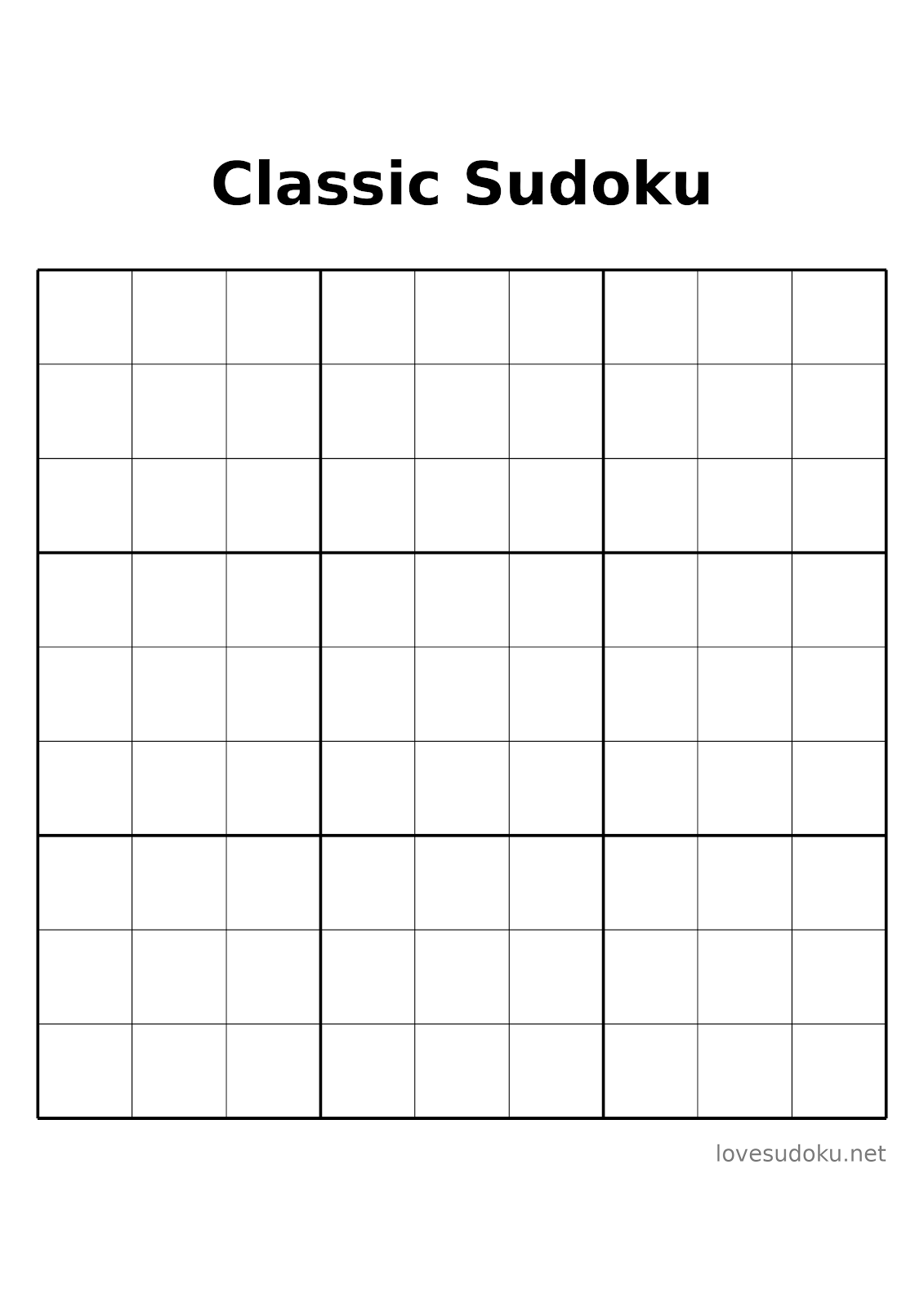
Solving Sudoku, at its core, involves a systematic application of logical deduction to fill a 9×9 grid, where each row, column, and 3×3 subgrid must contain all digits from 1 to 9 without repetition. This intricate puzzle, originating from Latin Squares, has evolved into a global phenomenon, captivating minds with its deceptively simple rules and profound strategic depth. The significance of engaging with Sudoku extends beyond mere entertainment; it serves as a powerful cognitive exercise. Regular engagement with Sudoku sharpens critical thinking, enhances pattern recognition abilities, and refines problem-solving methodologies under constrained conditions. It is a mental workout that reinforces meticulous observation and precise logical sequencing. From a strategic perspective, Sudoku primarily solves the challenge of developing structured analytical thinking. In an era saturated with information, the ability to filter, categorize, and deduce based on explicit rules is invaluable. Sudoku offers a practical, low-stakes environment to hone these essential skills, providing immediate feedback on the efficacy of one’s logical pathways.
Understanding the Core Sudoku Grid Structure
Solving Sudoku involves systematically filling a 9×9 grid with numbers 1 to 9, ensuring each number appears only once in each row, column, and 3×3 subgrid. This foundational structure dictates every move and deduction within the puzzle, making a thorough understanding of its components paramount.
The grid is composed of 81 cells, organized into nine rows and nine columns. Crucially, these cells are also divided into nine larger 3×3 ‘blocks’ or ‘regions.’ The three primary rules—unique numbers per row, unique numbers per column, and unique numbers per block—form the complete logical framework for resolution.
Based on structural analysis, the interplay between these three constraints creates a complex web of dependencies. An empty cell’s potential values are determined not just by its immediate row and column, but also by the specific 3×3 block it resides within. This interdependency is the bedrock of all Sudoku solving techniques.
Foundational Techniques for Initial Sudoku Resolution
Fundamental techniques for solving Sudoku begin with scanning and identifying definite placements, often referred to as ‘singles,’ which require no assumptions or advanced deductions. These initial moves are critical for reducing the complexity of the grid and revealing further opportunities.
One of the most straightforward methods is finding ‘Naked Singles.’ This occurs when a cell is the only one in its row, column, or 3×3 block that can legitimately hold a particular number, after all other candidate numbers have been eliminated by existing numbers in its constraints. Identifying these provides immediate, certain placements.
Another essential technique is the ‘Hidden Single.’ This arises when a specific number can only be placed in one particular cell within a given row, column, or 3×3 block, even if that cell has multiple other candidate numbers. From a framework perspective, these are often overlooked but offer equally definitive solutions, demanding a focused scan for a single number’s unique home within a larger constraint.
Advanced Strategies for Navigating Complex Sudoku Puzzles
Advanced Sudoku strategies involve identifying patterns and dependencies to deduce cell values where direct methods fall short, moving beyond simple single-cell placements to reveal hidden relationships across multiple cells or regions. These techniques are vital for puzzles that resist basic solutions.
One common advanced method involves ‘Candidate Lines’ or ‘Pointing Pairs/Triples.’ If a candidate number appears in only one row or column within a 3×3 block, then that number can be eliminated from all other cells in that specific row or column outside of that block. This effectively ‘points’ the number’s location within the block, reducing candidates elsewhere.
Another powerful strategy is the ‘X-Wing.’ This pattern emerges when a specific candidate number appears in exactly two cells in two different rows, and these four cells form a rectangle, with the two cells in each row sharing the same two columns. This allows for the elimination of that candidate from all other cells in those two columns, outside the X-Wing rows. Based on structural analysis, X-Wings leverage a symmetry of possibilities across the grid to make significant deductions.
A Step-by-Step Practical Approach to Solving Sudoku
A systematic approach to solving Sudoku involves an iterative application of basic and advanced techniques, ensuring that every deduction is logically sound and contributes to the puzzle’s eventual resolution. This structured methodology minimizes errors and maximizes efficiency.
Step 1: Initial Scan for Obvious Placements. Begin by scanning each row, column, and 3×3 block for ‘Naked Singles’ and ‘Hidden Singles.’ Fill in any numbers that can be definitively placed. Repeat this process until no more immediate singles are apparent.
Step 2: Candidate Marking. For all remaining empty cells, pencil in all possible candidate numbers. This creates a visual map of potential values, which is essential for identifying more complex patterns. Consistently update these candidates as numbers are placed.
Step 3: Pattern Identification (Pairs, Triples). Look for ‘Naked Pairs,’ ‘Naked Triples,’ ‘Hidden Pairs,’ and ‘Hidden Triples’ within rows, columns, and blocks. These occur when two or three cells share the same two or three candidate numbers, allowing for the elimination of those candidates from other cells within that constraint.
Step 4: Advanced Strategy Application. If the puzzle remains stuck, employ advanced techniques such as ‘Pointing Pairs/Triples’ (Candidate Lines), ‘X-Wing,’ ‘Swordfish,’ or more intricate ‘Chains’ and ‘Cycles.’ In practical application, these often require a more comprehensive view of the grid and careful tracking of dependencies. Revert to Step 1 after each successful placement, as new opportunities may arise.
Navigating Common Sudoku Pitfalls and Professional Solutions
Common pitfalls in Sudoku solving often stem from hurried deductions or overlooking subtle patterns, leading to errors that can propagate throughout the grid and make the puzzle unsolvable. Recognizing and addressing these mistakes is crucial for consistent success.
Pitfall 1: Incorrect Candidate Elimination. A frequent mistake is prematurely eliminating a candidate number from a cell without thoroughly verifying all three constraints (row, column, block). Solution: Always double-check every elimination. Use a light pencil for candidates and erase only when a number is definitively placed. From a framework perspective, this discipline ensures the integrity of the candidate pool.
Pitfall 2: Failure to Re-scan the Grid. After placing a number, many solvers neglect to re-scan the relevant rows, columns, and blocks for new ‘singles’ or other emergent patterns. Solution: Develop a habit of systematically reviewing the affected areas immediately after each number placement. This iterative process often reveals new, simpler deductions that were previously obscured.
Pitfall 3: Guessing. Resorting to guessing when stuck is a common amateur mistake. This often leads to convoluted paths, requiring extensive backtracking. Solution: Professional solvers avoid guessing. Instead, they pause, re-examine the grid, and look for advanced patterns, candidate lines, or even ‘what-if’ scenarios (often called ‘Nishio’ or ‘Forcing Chains’) which, while technically ‘trial and error,’ are structured and lead to proof rather than blind assumptions.
Sudoku Solving: Comparative Strategies and Analytical Insights
Comparing Sudoku solving strategies reveals varying levels of complexity, efficiency, and cognitive load in problem resolution, distinguishing between human-centric methods and computational approaches. This analysis provides insight into the inherent design principles of the puzzle itself.
From a comparative analysis, human logical deduction (Complexity: Moderate, Efficiency: High for most puzzles, Cognitive Load: High) contrasts sharply with brute-force algorithmic solutions (Complexity: Low for implementation, Efficiency: Very High for computers, Cognitive Load: None). While humans excel at pattern recognition and intuitive leaps, computers can exhaustively test every possibility in milliseconds, making the human challenge about optimizing logical pathways.
Another comparison involves the ‘pencil mark’ strategy versus ‘mental elimination’ (Frequency: High vs. Low). Pencil marking (Complexity: Low, Efficiency: Moderate, Cognitive Load: Moderate) systematically notes all candidates, making complex patterns easier to spot. Mental elimination (Complexity: High, Efficiency: Variable, Cognitive Load: Very High) relies on holding possibilities in short-term memory, often faster for simpler puzzles but prone to error in harder ones. In practical application, most professional solvers leverage a blend, using pencil marks for intricate sections.
Frequently Asked Questions about Sudoku Solving
Q1: What is the best starting point for a Sudoku beginner? A1: Beginners should focus on identifying ‘Naked Singles’ and ‘Hidden Singles’ first, as these are the most straightforward deductions, providing immediate breakthroughs and building confidence.
Q2: How can I improve my Sudoku speed? A2: Consistent practice, learning advanced patterns like ‘Naked Pairs’ or ‘X-Wings’, and consistently using candidate notation can significantly boost solving speed and accuracy over time.
Q3: Is guessing ever a valid strategy in Sudoku? A3: Professional Sudoku solvers strictly avoid guessing. They employ logical deductions and “what-if” scenarios, ensuring every placement is confirmed by the grid’s inherent rules, never by mere chance.
Q4: What’s the hardest part about solving Sudoku? A4: The most challenging aspect is often navigating complex deduction chains or identifying intricate patterns like ‘X-Wings’ or ‘Swordfish’ when simple moves are exhausted, requiring advanced grid analysis.
Q5: Why do some Sudoku puzzles have multiple solutions? A5: A well-formed Sudoku puzzle, by definition, must have only one unique solution. If a puzzle appears to have multiple solutions, it likely has insufficient ‘givens’ or was poorly constructed from the outset.
The process of learning how do you solve sudoku is more than just mastering a game; it’s an exercise in developing robust logical faculties, patience, and systematic problem-solving. Based on structural analysis, the underlying principles of Sudoku — constraints, dependencies, and iterative deduction — mirror challenges faced in numerous analytical fields. Embracing its methodology provides a powerful framework for dissecting complex problems into manageable, rule-bound steps, proving its long-term strategic value as a cognitive enhancer in an ever-complex world.