

Sudoku Sum, also widely known as Killer Sudoku, represents an advanced iteration of the classic number puzzle, seamlessly integrating arithmetic challenges with traditional positional logic. In the realm of strategic problem-solving, how to play Sudoku Sum necessitates not only the familiar 9×9 grid constraints but also unique ‘cage’ regions, each bearing a specified sum that its constituent numbers must achieve without repetition. This intricate fusion elevates the puzzle from simple deduction to a multi-layered analytical exercise. Its significance lies in pushing the boundaries of logical deduction and mathematical reasoning beyond standard Sudoku. For enthusiasts and professionals in fields requiring precise analytical skills, how to play Sudoku Sum serves as an exceptional mental workout, sharpening the ability to simultaneously process multiple interwoven conditions. From a framework perspective, it challenges the solver to build solutions from both micro (cage sums) and macro (grid rules) perspectives. The primary problem how to play Sudoku Sum solves in the current landscape of intellectual games is offering a richer, more challenging variant for those who have mastered traditional Sudoku and seek deeper engagement. It demands a more sophisticated approach, compelling players to consider numerical combinations and their implications across the entire grid, thereby transforming a familiar pastime into a truly demanding cognitive exercise.
Understanding the Core Components of how to play sudoku sum
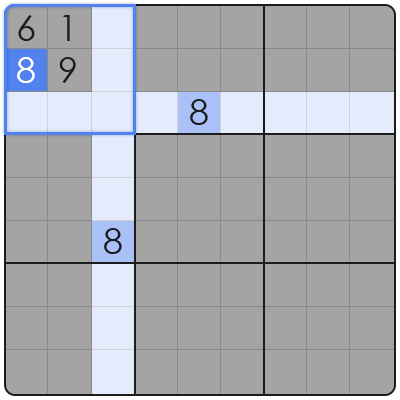
Understanding how to play Sudoku Sum fundamentally involves solving a standard 9×9 Sudoku grid while adhering to additional ‘cage’ rules where cells sum to a given total. Based on structural analysis, the foundation remains the classic 9×9 grid, subdivided into nine 3×3 blocks, where each row, column, and block must contain digits from 1 to 9 exactly once. This familiar structure provides the bedrock of the puzzle’s positional logic.
The distinguishing feature, however, is the introduction of ‘cages’—irregularly shaped, outlined regions that can span multiple cells. Each cage is marked with a small number, which represents the sum of the digits that must be placed within its cells. These cages can vary in size and shape, creating diverse sub-problems that interlock with the overall grid.
Crucially, within each individual cage, the numbers placed must also be unique; repetition is strictly prohibited, even if the sum could be achieved otherwise. This uniqueness constraint, combined with the sum requirement and the overarching Sudoku rules, generates a complex interplay of dependencies, demanding a highly systematic approach to how to play Sudoku Sum.
The Arithmetic and Logical Underpinnings of how to play sudoku sum
The fundamental mechanics of how to play Sudoku Sum combine classic Sudoku’s single-digit placement rules with cage-specific arithmetic constraints, establishing a sophisticated blend of numerical and positional reasoning. From a framework perspective, solving these puzzles relies on iteratively deducing possibilities by cross-referencing these two distinct sets of rules, rather than applying them in isolation.
In practical application, the sum of a cage guides the possible number combinations for its constituent cells. For instance, a two-cell cage summing to ‘3’ can only contain ‘1’ and ‘2’. A three-cell cage summing to ‘6’ must contain ‘1’, ‘2’, and ‘3’. These combinations form the initial pool of candidates for each cell within the cage, drastically reducing guesswork.
This initial deduction is then filtered through the standard Sudoku rules: if a ‘1’ is already present in the same row, column, or 3×3 block as a cell within a ‘1,2’ cage, then the ‘1’ cannot be placed in that cell, forcing the ‘2’ into it and the ‘1’ into the other cage cell. This iterative process of listing possibilities, eliminating based on existing numbers, and then confirming placements is central to effectively how to play Sudoku Sum.
A Step-by-Step Guide to Mastering how to play sudoku sum Puzzles
Successfully approaching how to play Sudoku Sum involves a systematic process of identifying key cages, listing possibilities, and leveraging classic Sudoku logic to progressively fill the grid. Based on structural analysis, the most efficient method combines top-down strategic planning with bottom-up tactical deductions, ensuring consistent progress.
**Step 1: Prioritize ‘Small’ or ‘Large’ Cages with Few Cells.** Begin by scanning the puzzle for cages that have very few cells (e.g., 2 or 3) and very small (e.g., sum of 3 for 2 cells) or very large sums (e.g., sum of 17 for 2 cells). These cages typically have a highly restricted set of possible unique number combinations, often allowing for immediate deductions. For example, a 2-cell cage summing to 3 must be 1 and 2.
**Step 2: Utilize Unique Combinations and External Constraints.** Identify cages that only have one possible set of numbers, regardless of the order, then cross-reference these with existing numbers in their respective rows, columns, or 3×3 blocks. This often allows for immediate placement of numbers into cells or the elimination of candidates for neighboring cells, providing critical breakthroughs.
**Step 3: Integrate Classic Sudoku Rules Aggressively.** As you make placements or narrow down possibilities from cage analysis, constantly apply the standard Sudoku rules. Check rows, columns, and 3×3 blocks for missing numbers or places where numbers can be uniquely positioned. How to play Sudoku Sum effectively means treating cage sums as additional constraints, not as replacements for the fundamental grid logic.
Comparing how to play sudoku sum with Related Logic Puzzles
When evaluating how to play Sudoku Sum against other puzzle types, its distinct blend of arithmetic and positional logic sets it apart in terms of complexity and cognitive demand within the strategic problem-solving domain. From a framework perspective, while all these puzzles challenge logical inference, Sudoku Sum introduces a unique layer of combinatorial mathematics.
| Feature | how to play sudoku sum | Classic Sudoku | Kakuro |
|—|—|—|—|
| Complexity | High (arithmetic + positional) | Moderate (positional only) | High (arithmetic + positional, sum hints outside grid) |
| Efficiency | Requires iterative deduction on sums & positions | Direct positional deduction | Requires combination finding & positional placement |
| Cognitive Load | Significant; multi-layered processing | Moderate; pattern recognition | Significant; numerical combinations |
| Frequency | Growing niche, less ubiquitous | Very High, foundational | Moderate, distinct audience |
Based on structural analysis, how to play Sudoku Sum demands a more integrated strategic approach than Classic Sudoku, which primarily relies on elimination within fixed positional rules. Compared to Kakuro, which also uses sums but typically provides hints externally and restricts numbers to specific sums within horizontal or vertical runs, Sudoku Sum’s cage structure introduces irregular shapes and often overlapping sum areas, intensifying the challenge.
Navigating Common Challenges in how to play sudoku sum
Effective play in how to play Sudoku Sum requires recognizing typical missteps and employing targeted strategies to overcome them, ensuring a smoother and more successful solving experience. From a practical application perspective, anticipating these common pitfalls can significantly reduce frustration and improve puzzle-solving efficiency.
**Pitfall 1: Ignoring Cage Uniqueness.** A frequent mistake is forgetting that numbers within a specific cage cannot repeat, even if the sum could theoretically be achieved with duplicates. Solution: Always explicitly list valid combinations for each cage, ensuring all digits are unique. This foundational rule is as critical as the sum itself when learning how to play Sudoku Sum.
**Pitfall 2: Overlooking Global Sudoku Constraints.** Solvers often become so focused on satisfying cage sums that they neglect the overarching row, column, and 3×3 block rules, which still strictly apply. Solution: Continuously cross-reference cage possibilities with standard Sudoku constraints. A number might be valid for a cage sum but invalid for its position in a row or column, requiring constant vigilance.
Advanced Tactics for Mastering how to play sudoku sum
Beyond basic deduction, advanced how to play Sudoku Sum techniques involve utilizing “sum-sharing,” “subtraction method,” and sophisticated “pencil mark analysis” to break deadlocks and accelerate solutions. Based on structural analysis, these methods leverage the interconnectedness of the grid and the arithmetic properties of cages for deeper insights.
**Sum-Sharing (or “Regions of Fixed Sums”):** This involves identifying a row, column, or 3×3 block that is entirely comprised of cells belonging to various cages, plus potentially some independent cells. By knowing that the sum of all digits 1-9 is 45, you can deduce the values of any independent cells by subtracting the sums of the cages within that region from 45. In practical application, this is a powerful method for revealing hidden numbers.
**The Subtraction Method:** If a cage partially overlaps with a row, column, or block where many numbers are already known, you can use subtraction to find the value of the remaining cells in the cage. For example, if a 4-cell cage sums to 10, and two of its cells are in a row where ‘1’ and ‘2’ are already placed (and are part of the cage), then the remaining two cells in the cage must sum to (10 – 1 – 2) = 7. This iterative calculation is key to how to play Sudoku Sum efficiently.
Essential FAQ for how to play sudoku sum Enthusiasts
Addressing common queries provides clarity on the nuances and optimal engagement with how to play Sudoku Sum, facilitating a deeper understanding for both novices and seasoned puzzlers. These insights are crucial for navigating the specific challenges presented by this advanced puzzle variant.
**Q: What is the primary difference between Sudoku Sum and classic Sudoku?** A: Sudoku Sum, also known as Killer Sudoku, adds arithmetic cage constraints to the classic Sudoku rules, where numbers within specific outlined regions must sum to a given total, enhancing complexity.
**Q: Can numbers repeat within a cage in Sudoku Sum?** A: No, a fundamental rule of how to play Sudoku Sum is that numbers within any given cage, like in classic Sudoku, must be unique; repetition of digits within a cage is strictly prohibited.
**Q: What’s a good starting strategy for a Sudoku Sum puzzle?** A: Begin by identifying small-celled cages with small or large sums, as these often have fewer unique number combinations, providing immediate deductions and critical initial placements.
**Q: Is Sudoku Sum harder than regular Sudoku?** A: Generally, yes. How to play Sudoku Sum demands an additional layer of arithmetic calculation and combinatorial logic alongside standard Sudoku rules, making it significantly more challenging for many solvers.
In conclusion, how to play Sudoku Sum represents a pinnacle of logical puzzle design, seamlessly blending numerical reasoning with spatial deduction to create an intellectually stimulating challenge. Its long-term strategic value lies in its capacity to cultivate advanced problem-solving skills, fostering the ability to manage multiple interdependent constraints simultaneously. From a forward-looking industry insight perspective in the realm of strategic problem-solving, mastery of such intricate puzzles prepares individuals for complex analytical tasks, demonstrating agility in abstract reasoning and a meticulous approach to detail, skills increasingly prized across diverse professional domains.