

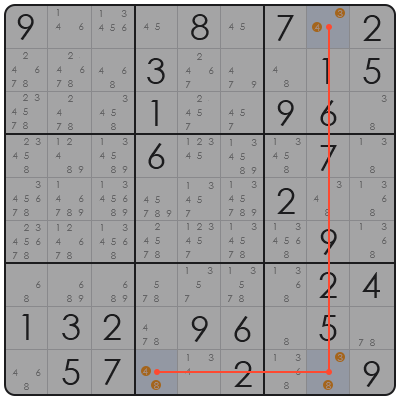
### How to Solve Sudoku Moderate: A Step-by-Step Guide
Sudoku is a popular puzzle game that challenges your logical thinking and problem-solving skills. Moderate Sudoku puzzles are designed for those who have already mastered the basics and are ready to take their skills to the next level. In this guide, we will provide you with a step-by-step approach to solving moderate Sudoku puzzles effectively.
#### Step 1: Understand the Rules
Before diving into solving moderate Sudoku puzzles, it’s essential to understand the rules. A standard Sudoku puzzle consists of a 9×9 grid, divided into nine 3×3 subgrids called “boxes.” The objective is to fill the grid with numbers from 1 to 9 such that each row, column, and box contains all the digits exactly once.
#### Step 2: Identify Pairs and Triples
One of the key strategies for solving moderate Sudoku puzzles is to identify pairs and triples. A pair is a situation where two cells in the same row, column, or box can only contain two numbers. A triple is similar, but it involves three cells. By identifying these patterns, you can eliminate numbers in other cells in the same row, column, or box, making the puzzle easier to solve.
#### Step 3: Use the Process of Elimination
The process of elimination is a fundamental technique in solving Sudoku puzzles. Start by looking for rows, columns, or boxes that have the fewest possible numbers left. Eliminate any numbers that are not possible in those cells, and continue this process until you have filled in as many cells as possible.
#### Step 4: Apply X-Wing and Swordfish Techniques
X-Wing and Swordfish are advanced techniques that can be used to solve moderate Sudoku puzzles. These techniques involve identifying patterns in four cells that can be used to eliminate numbers in other cells. X-Wing is used when two rows or columns share two numbers, while Swordfish is used when two rows or columns share three numbers.
#### Step 5: Look for Hidden Pairs and Triples
Hidden pairs and triples are patterns that are not immediately obvious. They involve cells that are not in the same row, column, or box but are still connected through other cells. By identifying these patterns, you can eliminate numbers in other cells, making the puzzle easier to solve.
#### Step 6: Use Guessing and Backtracking
In some cases, you may need to make educated guesses and use backtracking to solve a moderate Sudoku puzzle. This involves filling in a number in a cell, then checking if it leads to a contradiction. If it does, you can backtrack and try a different number until you find the correct one.
### Frequently Asked Questions (FAQ)
**Q: What is the difference between easy, moderate, and hard Sudoku puzzles?**
A: Easy Sudoku puzzles have fewer constraints and are more straightforward, while hard Sudoku puzzles have more complex patterns and require advanced techniques to solve. Moderate Sudoku puzzles fall in between, challenging your skills without being too difficult.
**Q: Can I use a calculator or computer program to solve Sudoku puzzles?**
A: While you can use a calculator or computer program to solve Sudoku puzzles, the goal is to improve your logical thinking and problem-solving skills. It’s recommended to solve puzzles manually to fully benefit from the experience.
**Q: Are there any online resources for learning how to solve Sudoku puzzles?**
A: Yes, there are numerous online resources available, including tutorials, forums, and interactive puzzles. Some popular websites include Sudoku.com, SudokuSolver.com, and SudokuPuzzles.com.
**Q: Can I solve Sudoku puzzles on my phone?**
A: Absolutely! Many mobile apps are available for solving Sudoku puzzles on your phone. Some popular apps include Sudoku Free, Sudoku Pro, and Sudoku Mania.
Solving moderate Sudoku puzzles can be challenging, but with practice and the right techniques, you can improve your skills and enjoy the satisfaction of completing these puzzles. Happy solving!