

Checking Sudoku Uniqueness with C++
Article:
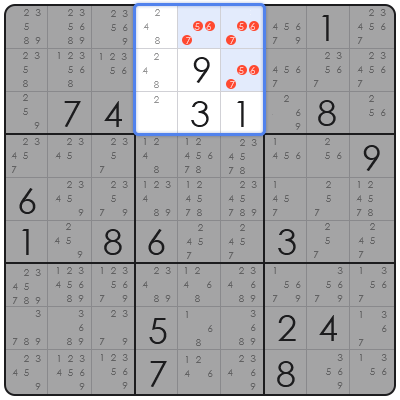
In the realm of puzzle games, Sudoku has garnered immense popularity. A key aspect that keeps players engaged is the uniqueness of the puzzles. With C++, you can implement algorithms to determine if a Sudoku puzzle is unique. This article explores how to check Sudoku uniqueness in C++ and answers some frequently asked questions about the process.
### Algorithm Overview
To check if a Sudoku puzzle is unique, we need to ensure that there’s only one solution for the given puzzle. We can achieve this by:
1. Validating the initial board.
2. Solving the Sudoku puzzle.
3. Checking if there’s only one solution.
### Step-by-Step Guide
#### Step 1: Validate the Initial Board
Before attempting to solve the Sudoku, we must validate the initial board to ensure it adheres to Sudoku rules. Here’s a high-level overview of the validation process:
– Check if the board is a 9×9 grid.
– Ensure that each row, column, and 3×3 subgrid contains unique numbers from 1 to 9.
#### Step 2: Solve the Sudoku Puzzle
Next, we solve the Sudoku puzzle using a backtracking algorithm. The algorithm works by:
– Iterating through each cell of the board.
– For each empty cell, trying all possible numbers (1-9).
– Validating the chosen number against Sudoku rules.
– Recursively solving the puzzle for the next cell.
– If a solution is found, return the solution; otherwise, backtrack and try a different number.
#### Step 3: Check for Uniqueness
Once the Sudoku puzzle is solved, we check for uniqueness by ensuring that there are no other solutions. If the algorithm finds multiple solutions, the puzzle is not unique.
### C++ Code Example
Below is a simplified C++ code snippet demonstrating how to check Sudoku uniqueness:
“`cpp
#include
#include
#include
using namespace std;
bool isValid(int board[9][9], int row, int col, int num) {
// Check if the number already exists in the row, column, or 3×3 subgrid
for (int i = 0; i < 9; ++i) {
if (board[row][i] == num || board[i][col] == num) return false;
if (board[3 * (row / 3) + i / 3][3 * (col / 3) + i % 3] == num) return false;
}
return true;
}
bool solveSudoku(vector
for (int i = 0; i < 9; ++i) {
for (int j = 0; j < 9; ++j) {
if (board[i][j] == 0) {
for (int num = 1; num <= 9; ++num) {
if (isValid(board, i, j, num)) {
board[i][j] = num;
if (solveSudoku(board, solutionCount)) return true;
board[i][j] = 0;
}
}
return false;
}
}
}
++solutionCount;
return solutionCount > 1;
}
int main() {
vector
{5, 3, 0, 0, 7, 0, 0, 0, 0},
{6, 0, 0, 1, 9, 5, 0, 0, 0},
// … (fill in the rest of the board)
};
int solutionCount = 0;
if (solveSudoku(board, solutionCount)) {
cout << "The Sudoku puzzle has a unique solution." << endl;
} else {
cout << "The Sudoku puzzle is not unique." << endl;
}
return 0;
}
```
### Frequently Asked Questions (FAQ)
**Q1: What is Sudoku?**
A1: Sudoku is a logic-based combinatorial number-placement puzzle. The objective is to fill a 9x9 grid with digits so that each column, each row, and each of the nine 3x3 subgrids that compose the grid contain all of the digits from 1 to 9.
**Q2: How do I implement a Sudoku solver in C++?**
A2: You can implement a Sudoku solver in C++ using a backtracking algorithm. The algorithm involves iterating through each cell of the board, trying all possible numbers, and validating them against Sudoku rules.
**Q3: How can I check if a Sudoku puzzle is unique?**
A3: To check if a Sudoku puzzle is unique, solve the puzzle using a backtracking algorithm and ensure that there's only one solution. If the algorithm finds multiple solutions, the puzzle is not unique.
**Q4: What are the rules for Sudoku?**
A4: Sudoku rules state that each row, column, and 3x3 subgrid must contain unique numbers from 1 to 9. Additionally, the grid must be a 9x9 matrix.
**Q5: Can I use a different algorithm to solve Sudoku?**
A5: Yes, you can use other algorithms like the Dancing Links algorithm, Constraint Propagation, and backtracking with heuristic improvements to solve Sudoku puzzles. Each algorithm has its advantages and may be more efficient in certain scenarios.