

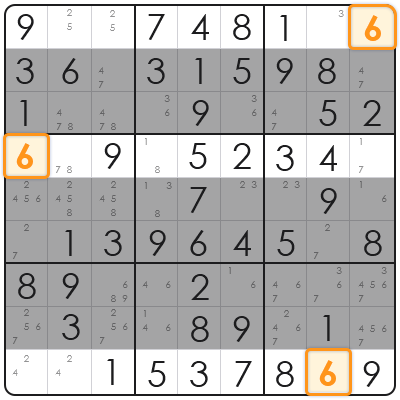
A Sudoku Swordfish explanation is a complex logical deduction technique used to solve advanced Sudoku puzzles by identifying and eliminating candidates across three rows or columns. This powerful strategy, a step up from simpler methods like Naked Pairs or the X-Wing, is crucial for speed-solvers aiming to shave seconds off their times and for dedicated players seeking to conquer more challenging grids. Understanding the Sudoku Swordfish explanation not only enhances problem-solving capabilities but also deepens an appreciation for the intricate grid topology inherent in every Sudoku puzzle. The significance of mastering the Sudoku Swordfish explanation cannot be overstated for those who engage deeply with logic puzzles. While beginners might rely on basic candidate elimination, intermediate and advanced solvers leverage such sophisticated techniques to break through seemingly impenetrable puzzles. The Sudoku Swordfish explanation, in particular, offers a unique window into how constraints interact across multiple units (rows, columns, and 3×3 boxes) simultaneously. It’s a testament to the elegant mathematical underpinnings of Sudoku, requiring a keen eye for patterns and a robust understanding of cell constraints. This article provides a comprehensive Sudoku Swordfish explanation, designed to demystify this advanced strategy. We will delve into its logical underpinnings, provide a practical step-by-step guide for its application, compare it to other techniques, highlight common errors, and answer frequently asked questions. Our aim is to equip you with the knowledge to confidently identify and implement the Sudoku Swordfish explanation, thereby elevating your overall Sudoku-solving prowess.
The Logic Behind the Sudoku Swordfish Explanation
The Sudoku Swordfish explanation operates on the principle that if a specific candidate number appears in exactly two or three cells within three different rows (or columns), and these cells fall within specific columns (or rows), then that candidate can be eliminated from all other cells in those specific columns (or rows). Mathematically, it’s a form of chained logic that exploits the interaction between row and column constraints. The ‘Swordfish’ pattern emerges when you visualize the possible locations of a candidate number across these intersecting units, resembling the shape of a swordfish when charted.
At its core, the Sudoku Swordfish explanation relies on a structural necessity derived from the exhaustive nature of Sudoku’s constraints. If a candidate number (let’s say ‘7’) *must* reside within a specific set of columns across three distinct rows, then the presence of ‘7’ in any other cell within those critical columns becomes redundant or impossible. This is because the candidate ‘7’ already has its three necessary placements accounted for within the identified rows. The grid topology, with its interwoven rows, columns, and 3×3 boxes, creates these intricate logical dependencies that the Swordfish technique illuminates. It’s a prime example of how analyzing candidate placement across multiple units simultaneously can lead to significant candidate elimination.
The technique is fundamentally about identifying a pattern of restricted candidates. Imagine a candidate ‘X’ has only two possible locations in Row 1, two in Row 2, and two in Row 3. Furthermore, these six potential locations for ‘X’ are confined to only three specific columns. This configuration is the prerequisite for a Swordfish. If ‘X’ must be in one of these three columns for each of the three rows, then any other cell within those three columns *cannot* contain ‘X’, as all instances of ‘X’ are already accounted for within the affected rows. This is a powerful logical deduction that goes beyond simple cell constraints and applies a broader view of candidate distribution.
How to Identify and Execute a Sudoku Swordfish
To successfully execute a Sudoku Swordfish explanation, the first step is to meticulously scan the grid for a candidate number that appears in only two or three cells within a significant number of rows (or columns). Begin by identifying rows where a particular digit has only two or three possible placements, using pencil marks to denote these candidates. This requires a thorough review of all digits from 1 to 9 across the entire grid.
Once you have identified at least three rows (for a row-based Swordfish) where a specific candidate appears in only two or three cells, examine the columns these candidate cells fall into. The critical condition for a Swordfish is that these candidate cells across the three chosen rows must be confined to just three columns. If this pattern holds true – three rows, a single candidate, and only three columns housing all potential placements of that candidate within those rows – you have found a Swordfish.
With the Swordfish identified, the final step is candidate elimination. The logic dictates that the candidate number in question can now be removed from all *other* cells within those three identified columns that are *not* part of the Swordfish pattern itself. For example, if your Swordfish involves candidate ‘5’ in columns 2, 5, and 8 across rows 1, 4, and 7, you can eliminate all other ‘5’s from columns 2, 5, and 8, except for those already within rows 1, 4, and 7. This targeted elimination can significantly simplify the puzzle and reveal subsequent logical steps.
Comparative Analysis: Swordfish vs. Other Sudoku Strategies
The Sudoku Swordfish explanation is a sophisticated technique that offers a significant advantage in higher-difficulty puzzles, distinguishing itself from more elementary strategies.
Compared to Naked Pairs or Triples, which focus on a small number of cells within a single unit (row, column, or box), the Swordfish operates across multiple units simultaneously, making its logical complexity considerably higher. While Naked Pairs might eliminate candidates within a single row or column, the Swordfish targets candidates across three rows (or columns) by leveraging a specific pattern of column (or row) interactions.
The X-Wing technique shares similarities with the Swordfish in its cross-unit analysis but is typically limited to two rows or two columns. The Swordfish extends this concept to three rows or columns, increasing its power and applicability to even more complex scenarios. The structural necessity for a Swordfish is more constrained than an X-Wing, making it appear less frequently, but its impact when found is often more profound, enabling larger blocks of candidate elimination. For competitive solvers, recognizing the transition from X-Wing to Swordfish indicates a progression in puzzle difficulty and the need for more advanced pattern recognition.
Common Pitfalls When Applying the Sudoku Swordfish
One of the most common mistakes is prematurely identifying a Swordfish pattern. Players might see a candidate appearing in two or three cells in a few rows and assume it’s a Swordfish without verifying that these candidate cells are strictly confined to only three columns. Always double-check that the columns housing the candidate in the selected rows are limited to exactly three. If a candidate appears in a fourth column within those rows, it’s not a Swordfish, and attempting to apply the logic will lead to errors.
Another frequent error involves incorrect candidate elimination. Once a Swordfish is correctly identified, solvers may accidentally eliminate the candidate from cells *within* the Swordfish rows, rather than solely from the ‘other’ cells in the identified columns. Remember, the candidate *must* exist in one of the Swordfish cells within those three columns; the elimination applies only to the remaining cells in those columns outside the Swordfish rows. Meticulous attention to which cells are affected is paramount.
Finally, insufficient use of pencil marks can hinder the identification of Swordfish patterns. The technique relies heavily on visualizing all possible candidate placements. Without clear and consistent use of pencil marks, spotting the precise pattern of two- or three-cell candidates across multiple rows and their confinement to three columns becomes exceedingly difficult. Ensure your pencil marks are updated and accurate to facilitate the visual recognition required for this advanced strategy.
Frequently Asked Questions About Sudoku Swordfish
What is a Sudoku Swordfish explanation?
A Sudoku Swordfish explanation is an advanced Sudoku technique used to eliminate candidates by identifying a pattern where a specific digit can only exist in two or three cells across three different rows, and these cells are all located within the same three columns. It’s a powerful logical deduction.
How difficult is the Sudoku Swordfish technique?
The Sudoku Swordfish explanation is considered an advanced technique, more complex than basic elimination or even X-Wings. It requires careful observation of candidate patterns across multiple rows and columns, making it challenging for beginners but highly rewarding for intermediate to advanced solvers.
Can a Sudoku Swordfish apply to columns instead of rows?
Yes, the Sudoku Swordfish explanation is symmetrical. It can be applied either by looking for the pattern across three rows and eliminating candidates from columns, or by looking for the pattern across three columns and eliminating candidates from rows. The underlying logic remains the same.
How does the Swordfish differ from an X-Wing?
An X-Wing involves a pattern across *two* rows (or columns) confined to *two* columns (or rows). A Swordfish extends this concept to *three* rows (or columns) confined to *three* columns (or rows). Both are complex candidate elimination techniques, but the Swordfish is generally considered more intricate and applicable to harder puzzles.
When should I look for a Sudoku Swordfish?
You should look for a Sudoku Swordfish explanation when you’ve exhausted simpler candidate elimination techniques and are faced with a puzzle that seems stalled. It’s particularly useful when a specific digit appears in only two or three possible cells in several rows or columns, suggesting a potential pattern.
Mastering the Sudoku Swordfish explanation is a significant milestone in a solver’s journey towards true Sudoku proficiency. It underscores the principle that logical deduction in Sudoku is not merely about filling cells but about understanding the intricate interplay of constraints and candidate distributions across the entire grid. By consistently applying a ‘Logic-First’ approach, dissecting patterns, and practicing systematically, you can confidently tackle even the most challenging Sudoku puzzles. The Swordfish, once demystified, becomes another powerful tool in your arsenal, enabling elegant solutions and a deeper appreciation for the art of logic puzzles.