

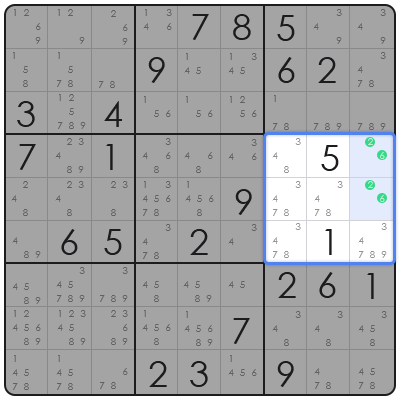
Christmas Sudoku games are a delightful seasonal variation of the classic number-placement puzzle, where the standard digits 1-9 are replaced with festive symbols or imagery, often associated with the holiday season. These themed grids retain the core Sudoku rules: each row, column, and 3×3 subgrid must contain each unique symbol exactly once. The appeal of Christmas Sudoku games lies in their ability to blend the mental challenge of logical deduction with the joyful ambiance of the holiday season, making them a popular choice for festive entertainment for both seasoned speed-solvers and casual puzzle enthusiasts. For speed-solvers, Christmas Sudoku games offer a familiar yet refreshingly different challenge. The visual alteration of symbols instead of numbers can initially slow down pattern recognition, but the underlying logic remains identical. Mastering these variations sharpens adaptability and reinforces fundamental solving techniques. For casual players, the festive theme provides an engaging and less intimidating entry point into the world of Sudoku, transforming a purely analytical exercise into a more immersive and enjoyable holiday activity. The psychological comfort of familiar holiday motifs can reduce cognitive load, allowing for a more relaxed and rewarding puzzle-solving experience. The significance of Christmas Sudoku games extends beyond mere seasonal novelty; they serve as excellent tools for reinforcing core Sudoku principles in an engaging context. By focusing on the spatial relationships and constraints within the grid, players are implicitly practicing the foundational elements of logical deduction. This makes them not just a fun pastime but also an effective, albeit festive, method for honing one’s puzzling prowess. The variety in symbol sets, while visually distinct, ensures that the critical skills of candidate elimination, pattern identification, and constraint satisfaction are consistently exercised, proving beneficial across all Sudoku puzzles, regardless of theme.
The Logic Behind Christmas Sudoku Games: A Structural Analysis
Christmas Sudoku games operate on the exact same mathematical and logical principles as traditional Sudoku, utilizing a 9×9 grid divided into nine 3×3 subgrids, known as boxes or regions. The core rule is that each row, each column, and each 3×3 box must contain each of the nine unique symbols exactly once. The ‘Christmas’ theme simply replaces the numerical digits 1 through 9 with festive symbols such as snowflakes, Christmas trees, Santa hats, candy canes, reindeer, ornaments, bells, presents, and stockings. The logical constraints are identical; for instance, if a snowflake is placed in a particular cell, no other snowflake can appear in the same row, column, or 3×3 box. The structural necessity of these rules ensures that each cell has a limited number of possible candidates, forming the basis for deductive reasoning.
The ‘grid topology’ of Christmas Sudoku remains a 9×9 matrix with inherent row, column, and box constraints. The logic-chain analysis of a Christmas Sudoku puzzle mirrors that of a standard Sudoku. Techniques like candidate elimination are performed by examining the symbols already placed in a given row, column, or box. For example, if a cell is in a row that already contains a Christmas tree, a candy cane, and a Santa hat, then the snowflake symbol cannot be placed in that cell. This process of identifying and eliminating impossible candidates is the bedrock of solving any Sudoku variant, including those with festive themes. The inherent symmetry and constraints of the 9×9 grid are the fundamental mathematical underpinnings that make these puzzles solvable through pure logic.
From a structural perspective, the 9×9 grid with its 27 constraints (9 rows, 9 columns, 9 boxes) ensures a unique solution for a well-formed Sudoku puzzle, whether it uses numbers or festive symbols. The problem is essentially an exercise in combinatorial design, specifically Latin squares with an additional constraint on the subgrids. The ‘cell constraints’ are defined by the intersection of a row, a column, and a box. By identifying which symbols are missing from each of these intersecting sets, a solver can progressively narrow down the possibilities for each empty cell. For competitive solvers, this systematic approach is crucial for maintaining speed and accuracy, even when presented with visually different symbols.
How to Solve Christmas Sudoku Games: A Step-by-Step Guide
To solve Christmas Sudoku games, begin by understanding the symbol set and then applying fundamental Sudoku solving techniques. First, familiarize yourself with which symbol represents which number (if a key is provided) or treat each symbol as a distinct entity. The initial step in any logical deduction process is to scan the grid for rows, columns, or 3×3 boxes that are already mostly filled. Identify the missing symbols within these completed sets.
Next, focus on ‘candidate elimination’ for empty cells. For each empty cell, identify all the symbols that are already present in its corresponding row, column, and 3×3 box. The symbols that are *not* present in any of these three sets are the potential candidates for that cell. This process is often aided by using ‘pencil marks’, where solvers lightly write down the possible candidates in each empty cell. Based on logic-chain analysis, if a cell has only one possible candidate symbol remaining after eliminating all others, that symbol can be definitively placed in the cell.
Continue this process iteratively. As you place symbols, the number of candidates for other cells will decrease. Look for patterns such as ‘Naked Singles’ (where a cell has only one candidate) and ‘Hidden Singles’ (where a symbol can only go in one specific cell within a given row, column, or box). Advanced techniques like ‘Naked Pairs’ or ‘Hidden Pairs’ can also be applied; for example, if two cells in the same box are identified as only being able to contain a snowflake and a candy cane, then no other snowflake or candy cane can exist in that box outside of those two cells. This systematic application of logic ensures progress toward the unique solution.
Christmas Sudoku Games vs. Other Strategies: A Comparative Analysis
While Christmas Sudoku games are a themed variation, the underlying strategies employed are universal to Sudoku. However, understanding how they fit within the broader landscape of Sudoku techniques can be insightful. Techniques like simple scanning for singles (naked and hidden) form the foundation for almost all Sudoku puzzles. More advanced strategies, such as Naked Pairs, X-Wing, and Swordfish, are applicable to particularly challenging grids. Christmas Sudoku games, due to their thematic overlay, might initially feel like a distinct category, but their solvability relies on the same fundamental principles of logical deduction and constraint satisfaction.
The difficulty of a Christmas Sudoku puzzle is determined by the initial number of given symbols and the complexity of the logical steps required for its solution, not by the theme itself. A puzzle with many given symbols will generally be easier, requiring fewer advanced techniques. Conversely, a sparsely populated grid will necessitate deeper ‘candidate elimination’ and potentially the application of more intricate logical chains, such as those used in advanced Sudoku strategies. The ‘frequency of use’ for basic techniques like scanning for singles is high in any Sudoku, whereas complex strategies like X-Wing are reserved for harder puzzles. Christmas Sudoku games can range from very easy to extremely difficult, depending on the puzzle’s construction.
The ‘logical complexity’ is directly tied to the number and arrangement of the starting symbols. Simple Christmas Sudoku puzzles can be solved using only basic scanning and single-candidate identification. More challenging ones will require identifying pairs, triples, or even more complex patterns, similar to how one would approach a difficult standard Sudoku. The core difference remains aesthetic; the symbols are different, but the ‘logic-first’ approach remains paramount. Entities like ‘Naked Pairs’ work irrespective of whether you’re looking at numbers or snowflakes, as they depend purely on the positional constraints within the grid topology.
Common Pitfalls in Solving Christmas Sudoku Games
One common pitfall is getting visually distracted by the festive symbols, leading to misidentification or overlooking placements. Players might mistakenly treat different symbols as interchangeable or fail to perform thorough scans because the visual novelty can disrupt ingrained number-pattern recognition. To avoid this, always use a key if provided, or mentally assign each symbol a number (e.g., Snowflake=1, Tree=2) and stick to it consistently. Treat the symbols as abstract logical entities rather than decorative elements.
Another frequent error involves incomplete ‘candidate elimination’. Players might only consider a symbol’s presence in a row and column, forgetting to check the 3×3 box, or vice versa. This oversight can lead to incorrect placements and dead ends. The solution is to be meticulously systematic: for every empty cell, explicitly check the row, column, AND the box for existing symbols before concluding the possible candidates. Regularly cross-referencing your pencil marks with the main grid is crucial to prevent cascading errors stemming from a single missed constraint.
A third pitfall, especially for those rushing, is assuming a symbol placement without confirming it’s the only logical possibility. This often happens when a solver finds a symbol that *could* fit but hasn’t exhaustively ruled out all other candidates for that cell or confirmed it as a ‘hidden single’. The ‘logic-first’ principle dictates that a symbol should only be placed when its position is logically necessitated. Always double-check your reasoning: ‘If I place this symbol here, does it violate any rules? Are there any other symbols that *must* go here instead?’ This verification step, though seemingly adding time, prevents errors that cost much more time to correct later.
Frequently Asked Questions about Christmas Sudoku Games
What makes Christmas Sudoku games different from regular Sudoku?
Christmas Sudoku games replace the standard digits 1-9 with festive holiday symbols. The rules of placement and logical deduction remain identical, offering a themed variation on the classic puzzle.
Are Christmas Sudoku games harder to solve?
Not inherently. Difficulty depends on the number of given symbols and the complexity of the required logical steps, just like standard Sudoku. The festive symbols might require a brief adjustment period for pattern recognition.
Can I use Sudoku solving techniques like Naked Pairs on Christmas Sudoku?
Absolutely. All standard Sudoku techniques, from candidate elimination to advanced strategies like Naked Pairs and X-Wing, are fully applicable. The logic applies regardless of the symbols used.
Where can I find Christmas Sudoku games?
Christmas Sudoku games are commonly available online on puzzle websites, in holiday-themed puzzle books, and sometimes as printable activity sheets during the festive season.
Is there a specific order to the Christmas symbols?
Typically, no. If a specific numerical correspondence is important for a particular puzzle’s difficulty, a key will be provided. Otherwise, each symbol is treated as a unique entity within the 9×9 grid constraints.
In essence, Christmas Sudoku games offer a charming, festive wrapper for the rigorous logic that defines the Sudoku experience. Whether you’re a seasoned solver looking for a seasonal diversion or a newcomer drawn in by the holiday theme, the underlying principles remain constant. Mastery hinges on a ‘Logic-First’ approach: diligently applying candidate elimination, understanding cell constraints, and systematically analyzing the grid topology. By focusing on the logical necessities rather than just the visual presentation, players can effectively unwrap the challenge and enjoy the satisfying certainty of a logically deduced solution, no matter the symbols adorning the grid.