

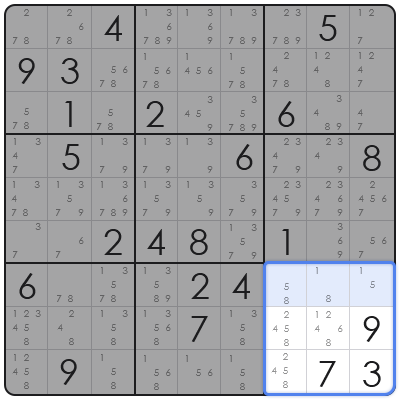
Learning how to Sudoku is the foundational process of applying rigorous logical deduction to successfully complete a 9×9 grid, ensuring each number from 1 to 9 appears exactly once in every row, column, and 3×3 subgrid. This timeless puzzle, deeply rooted in combinatorial logic, offers a unique blend of intellectual challenge and accessible gameplay, captivating millions worldwide. For speed-solvers and competitive enthusiasts, understanding how to Sudoku with profound efficiency is paramount, enabling rapid pattern recognition and the swift application of advanced techniques. Mastery involves not just filling cells, but strategically identifying `cell constraints` and leveraging `grid topology` to eliminate possibilities, thereby reducing solve times and enhancing performance in high-stakes environments. Casual players, too, benefit immensely from grasping the core principles of how to Sudoku, as it cultivates patience, improves critical thinking skills, and provides a rewarding mental exercise. The systematic approach inherent in solving Sudoku acts as a cognitive workout, sharpening focus and reinforcing the power of methodical `logical deduction` in everyday problem-solving scenarios.
Technical Breakdown: The Logic Behind How to Sudoku
How to Sudoku fundamentally involves applying `logical deduction` to fill a 9×9 grid with numbers 1 through 9, ensuring each number appears only once in each row, column, and 3×3 subgrid, a process governed by simple yet strict rules.
The underlying `grid topology` is critical; the 9×9 grid is subdivided into nine 3×3 blocks, each functioning as an independent unit alongside the nine rows and nine columns. This interwoven structure creates a complex web of `cell constraints` where the presence of a number in one cell immediately limits its possibilities in adjacent cells within the same row, column, or block.
At its core, how to Sudoku relies heavily on `candidate elimination`. For every empty cell, a player must identify all possible numbers that could fit, based on the `cell constraints` imposed by existing numbers in its row, column, and 3×3 block. As numbers are placed, the pool of candidates for neighboring cells shrinks, allowing for further deductions.
The systematic use of `pencil marks`, which are tiny notations of all possible candidate numbers for an empty cell, is indispensable for effective `logical deduction`. These marks visually represent the remaining options, making complex patterns and unique placements much easier to identify, especially as the puzzle progresses and fewer numbers remain.
Step-by-Step Implementation: Executing How to Sudoku
Executing how to Sudoku effectively requires a systematic approach, starting with initial scans for obvious placements and progressing to more complex `candidate elimination` techniques to navigate the grid with precision.
**Step 1: Initial Scan for Singles and Hidden Singles.** Begin by scanning each row, column, and 3×3 block for cells where only one number can logically fit. This often involves identifying `naked singles` (only one candidate in a cell) and `hidden singles` (a candidate that appears only once within a specific row, column, or block across all cells).
**Step 2: Apply Pencil Marks and Candidate Tracking.** For all remaining empty cells, meticulously fill in `pencil marks`—all possible candidate numbers based on the `cell constraints` from its row, column, and block. This comprehensive candidate list forms the basis for all subsequent `logical deduction`.
**Step 3: Advanced Deduction Techniques.** With `pencil marks` in place, seek out more complex patterns. Look for `Naked Pairs` (two cells in a unit with the exact same two candidates), `Hidden Pairs`, `Naked Triples`, `Hidden Triples`, and `pointing pairs/triples`. These patterns allow for significant `candidate elimination` in other cells within their respective units, based on `grid topology`.
**Step 4: Iteration and Verification.** After placing a new number or eliminating candidates, re-scan the affected rows, columns, and blocks for new `singles` or `hidden singles` that may have emerged. This iterative process, constantly verifying each placement against the Sudoku rules, is crucial until the entire grid is completed through pure `logical deduction`.
Comparative Analysis: How to Sudoku vs. Specialized Strategies
Understanding how to Sudoku is foundational, but comparing it with specialized strategies highlights its comprehensive nature as a methodology, rather than a single trick, differentiating it from specific techniques like `Naked Pairs` or `X-Wing`.
The overall ‘how to Sudoku’ approach encompasses all basic and intermediate `logical deduction` steps, emphasizing a holistic grid management perspective. It prioritizes systematic `candidate elimination` and `pencil mark` application across the entire `grid topology` before zeroing in on highly specific patterns. This methodology is universally applicable across all difficulty levels, from beginner to expert, forming the bedrock of any successful solve.
In contrast, a technique like `Naked Pairs` is a highly specific pattern-based strategy. It involves identifying two cells within the same row, column, or 3×3 block that share the exact same two `pencil marks` (e.g., both can only be 1 or 2). Based on `cell constraints`, these two numbers *must* occupy those two cells, allowing those same candidates to be eliminated from other cells within that unit. While powerful, `Naked Pairs` is a tool *within* the broader ‘how to Sudoku’ framework.
An `X-Wing` represents an even more advanced `logical deduction` technique, relying on a specific `grid topology` involving four cells. It requires a candidate number to appear in exactly two cells in two different rows, and these cells must align in the same two columns (or vice-versa for columns/rows). This structural necessity allows the candidate to be eliminated from all other cells in those two columns (or rows). For competitive solvers, integrating these advanced patterns into the overall ‘how to Sudoku’ workflow is crucial. Based on logic-chain analysis, ‘how to Sudoku’ offers broad utility across all difficulty levels, whereas strategies like Naked Pairs and X-Wing provide targeted efficiency gains with higher logical complexity and are used less frequently than basic scanning and `pencil mark` management.
Common Pitfalls in Learning How to Sudoku
Common pitfalls when learning how to Sudoku often stem from impatience or lack of systematic `pencil mark` application, leading to errors and frustration that hinder progress and mastery.
One significant mistake is an over-reliance on guessing instead of pure `logical deduction`. Sudoku is designed to be solvable through logic alone; introducing arbitrary numbers without absolute certainty almost invariably leads to a broken puzzle and the need to restart. This undermines the `logic-first` approach essential for success.
Another frequent pitfall is the failure to maintain accurate or complete `pencil marks`. Skipping this crucial step or making errors in candidate notation can cause players to miss `hidden singles`, `Naked Pairs`, or other patterns, thereby preventing proper `candidate elimination` and stalling the solving process. Incomplete `pencil marks` obscure the `cell constraints` that guide the solver.
Finally, many players neglect to re-scan the entire grid for new deductions after each number placement. Every confirmed number alters the `cell constraints` across its row, column, and block, creating ripple effects that might immediately reveal new `singles` or `candidate elimination` opportunities. Failing to perform this iterative re-evaluation means missing out on crucial progress points and slowing down the solve.
FAQ Section: Your Questions on How to Sudoku Answered
This FAQ addresses key queries about how to Sudoku, providing concise, high-value answers for quick understanding and enhanced problem-solving, making it ideal for immediate clarity.
**What is the very first step in how to Sudoku?** The first step is to scan the grid for ‘single candidates’ where a number can only fit in one specific cell within a row, column, or 3×3 block due to existing numbers. This provides immediate, definitive placements and begins the `logical deduction` process.
**How do pencil marks help in how to Sudoku?** `Pencil marks` are tiny notations of all possible candidate numbers for an empty cell. They are crucial for `logical deduction`, enabling the identification of patterns like `Naked Pairs` and facilitating `candidate elimination` across related units by clearly displaying `cell constraints`.
**Can I guess when learning how to Sudoku?** No, `how to Sudoku` is built on pure `logical deduction`. Guessing almost invariably leads to errors and an unsolvable puzzle. Always verify each placement with certainty based on `cell constraints` and established `grid topology` rules.
**What is an X-Wing in how to Sudoku?** An `X-Wing` is an advanced `logical deduction` technique involving a candidate number that aligns in specific cells across two rows and two columns, allowing for `candidate elimination` in other cells within those rows and columns. It’s a key `grid topology` pattern for `competitive solvers`.
**How long does it take to learn how to Sudoku effectively?** Learning `how to Sudoku` effectively varies by individual, but consistent practice with basic `logical deduction` and `pencil mark` techniques can yield proficiency in a few weeks. Mastery of advanced strategies comes with more dedicated experience and deep `grid topology` understanding, a journey often undertaken by `competitive solvers`.
Mastering how to Sudoku is ultimately an exercise in disciplined `logical deduction`, embracing a ‘Logic-First’ approach that systematically breaks down complex `grid topology` into manageable `cell constraints`. By diligently applying `pencil marks`, perfecting `candidate elimination` techniques, and learning to spot advanced patterns like `Naked Pairs` and `X-Wings`, players can transform from novice solvers to expert strategists. The structural necessity of understanding each interaction within the 9×9 grid is paramount, fostering not just puzzle-solving prowess but also a refined sense of analytical thinking applicable far beyond the confines of the Sudoku grid.