

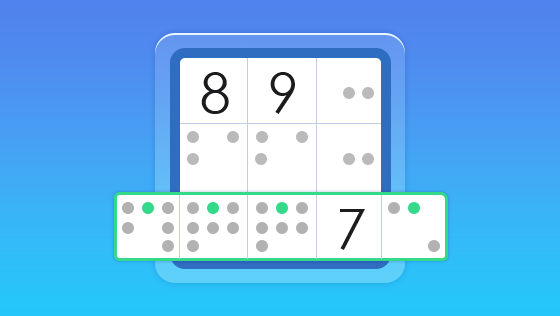
Understanding how to play Sudoku effectively is a journey best undertaken with clear, structured guidance, much like a comprehensive ‘how to play Sudoku video’ provides. This article serves as that definitive, deep-dive resource, breaking down the intricate logic and fundamental techniques required to conquer even the most challenging Sudoku grids. For both aspiring speed-solvers aiming for competitive excellence and casual players seeking consistent success, a strong foundational understanding is paramount. The significance of a well-explained instructional approach cannot be overstated; it translates complex logical deduction into digestible, actionable strategies. A top-tier ‘how to play Sudoku video’ doesn’t just show solutions; it dissects the thought process, revealing the underlying grid topology and cell constraints that govern every successful move. This empowers players to move beyond trial and error, embracing a systematic, logic-first methodology. Our goal here is to encapsulate the essence of expert Sudoku instruction, guiding you through the essential principles and advanced techniques that define mastery. By focusing on critical concepts such as candidate elimination, pencil marks, and recognizing intricate patterns, we aim to equip you with the mental toolkit necessary to solve any Sudoku puzzle with confidence and precision. Prepare to transform your approach to this timeless logic challenge, leveraging the insights typically found in premium instructional content.
The Fundamental Architecture of the Sudoku Grid: A Technical Breakdown
The Sudoku grid is a 9×9 matrix, inherently designed to challenge logical deduction by requiring each digit from 1 to 9 to appear exactly once in every row, every column, and every one of the nine 3×3 sub-grids (often called ‘blocks’ or ‘regions’). This foundational rule set creates a system of profound interdependencies, where the placement of a single digit impacts the possibilities across its entire row, column, and block.
Mathematically, the grid’s structural necessity dictates that for any given empty cell, its potential candidate digits are severely constrained by the existing numbers in its horizontal, vertical, and block-based neighborhoods. This concept of ‘cell constraints’ is central to all Sudoku solving, as it directly informs the process of candidate elimination. Identifying these constraints accurately is the initial gateway to unlocking the puzzle.
Understanding this hierarchical arrangement—from the individual cell to rows, columns, and blocks—is crucial. Each 3×3 block acts as a mini-Sudoku, enforcing its own set of unique digit placements, while simultaneously influencing and being influenced by its surrounding rows and columns. This interwoven structure means that isolated problem-solving is impossible; every deduction must consider the broader grid topology.
Core Principles of Logical Deduction and Candidate Elimination
Logical deduction in Sudoku is the systematic process of narrowing down potential digits for each empty cell until only one correct choice remains, primarily through ‘candidate elimination’. This involves scrutinizing rows, columns, and blocks to identify which digits are already present, thereby eliminating them as possibilities for the empty cells within those respective segments.
The practice of ‘pencil marks’ is an indispensable tool in this process; it involves lightly noting all possible candidate digits for an empty cell. As new numbers are placed and deductions are made, these pencil marks are updated, removing eliminated candidates. This visual representation of possibilities is vital for spotting patterns and making advanced inferences, preventing mental overload.
By meticulously applying candidate elimination, players can transition from simple ‘Naked Singles’ (where a cell has only one remaining candidate) to more complex ‘Hidden Singles’ (where a digit can only go in one specific cell within a row, column, or block, even if that cell has multiple candidates). Mastering these fundamental deductions forms the backbone of efficient Sudoku solving.
Step-by-Step Implementation: Identifying and Placing Singles
1. **Scan for Obvious Placements (Naked Singles):** Begin by systematically scanning each empty cell. For each cell, mentally (or with pencil marks) identify all possible digits (1-9) that do not already exist in its row, column, or 3×3 block. If only one digit remains as a possibility, that’s a Naked Single, and you can confidently place it.
2. **Search for Unique Digits (Hidden Singles):** After placing Naked Singles, look for ‘Hidden Singles’. This involves examining each row, column, and 3×3 block for a digit (1-9) that, despite having multiple candidate cells within that segment, can only be placed in *one specific cell* within that segment. All other cells in that segment must be able to accommodate other digits for that position. Place the digit once found.
3. **Iterate and Update Pencil Marks:** Each time you place a new digit, it triggers a cascade of new eliminations. Therefore, it’s crucial to immediately update your pencil marks across its row, column, and block, removing the newly placed digit from other cells’ possibilities. Then, repeat steps 1 and 2, as new Naked and Hidden Singles will frequently emerge. This iterative process is the core of basic Sudoku solving.
Mastering Intermediate and Advanced Sudoku Strategies
Beyond singles, intermediate Sudoku strategies like ‘Naked Pairs’, ‘Hidden Pairs’, ‘Naked Triples’, and ‘Hidden Triples’ leverage patterns of candidates. A Naked Pair occurs when two cells in the same row, column, or block contain only the same two candidate digits (e.g., {3,8} and {3,8}). These two digits must occupy those two cells, meaning 3 and 8 can be eliminated from all other cells in that segment.
For competitive solvers, understanding ‘X-Wing’ and ‘Swordfish’ patterns is critical. An X-Wing involves a digit that appears as a candidate in exactly two cells in two different rows, and these four cells form a rectangle. If the candidate digit is only available in these four cells across those two rows, it can be eliminated from other cells in the two columns involved. This advanced logical deduction technique showcases the depth of grid topology analysis.
The structural necessity of recognizing these advanced ‘candidate sets’ allows for significant breakthroughs in harder puzzles. These techniques require not just identifying individual cell constraints but analyzing the relationships between multiple cells and their shared candidates. This layer of complexity moves beyond simple elimination to inferential removal, a hallmark of expert Sudoku play.
The Efficacy of Structured Video-Based Learning in Sudoku Mastery
A well-structured instructional video, much like the content presented here, offers a superior learning experience compared to mere text or unstructured practice. It bridges the gap between theoretical knowledge and practical application, providing visual demonstrations of logical deduction in real-time. This approach aids in pattern recognition and accelerates the understanding of complex grid topology and cell constraints.
Compared to a trial-and-error approach, which often leads to frustration and inconsistent results, video-based learning systematically introduces techniques, from basic candidate elimination to advanced strategies like Naked Pairs and X-Wings. The ‘Difficulty Level’ of puzzles becomes more manageable as players gain a repertoire of reliable methods. The ‘Frequency of Use’ for these learned techniques increases significantly due to reinforced visual memory.
In terms of ‘Logical Complexity’, a guided video effectively demystifies intricate patterns, breaking them down into understandable components. This contrasts sharply with unstructured learning where players might accidentally stumble upon solutions without fully grasping the underlying logic. A video cultivates a ‘logic-first’ mindset, fostering a deeper, more robust understanding of Sudoku’s inherent design principles.
Common Pitfalls and How to Avoid Them in Sudoku
One of the most common mistakes in Sudoku is ‘guessing’ when stuck, which almost invariably leads to errors and a ruined puzzle. Instead of guessing, revisit your pencil marks, re-scan rows, columns, and blocks for missed singles, or look for more complex patterns like Naked Pairs. Trust the logical deduction process; a solvable Sudoku never requires a guess.
Another frequent pitfall is ‘incomplete pencil marking’ or failing to update candidates after placing a new number. This leads to outdated information, missed deductions, and potential errors. Develop a rigorous habit of immediately updating all relevant cells when a number is placed. For serious solvers, digital tools often handle this automatically, but manual vigilance is key for traditional puzzles.
Players often overlook ‘candidate conflicts’ when making deductions, failing to see that a chosen number would eliminate a necessary option for another cell. Always double-check your eliminations, ensuring that removing a candidate doesn’t violate the fundamental rule of one-digit-per-segment. A methodical approach, rather than a rushed one, significantly reduces these errors.
Frequently Asked Questions about Sudoku
**Q: What is the best starting strategy for a Sudoku puzzle?** A: The best starting strategy involves thoroughly scanning the grid for ‘Naked Singles’ and ‘Hidden Singles’ to fill in as many obvious numbers as possible, followed by comprehensive pencil marking.
**Q: Are pencil marks always necessary to solve Sudoku?** A: For harder Sudoku puzzles, pencil marks are nearly essential. They visually track ‘candidate elimination’ and allow for the identification of complex ‘candidate sets’ and advanced patterns.
**Q: Can Sudoku puzzles have multiple solutions?** A: A well-formed Sudoku puzzle, by definition, must have only one unique solution. Puzzles with multiple solutions are considered flawed or invalid in the competitive Sudoku world.
**Q: How can I improve my Sudoku solving speed?** A: Improve speed by mastering logical deduction techniques, consistent pencil marking, and practicing pattern recognition. Focus on eliminating candidates quickly and efficiently, rather than guessing.
Ultimately, mastering Sudoku is about embracing a ‘logic-first’ approach, systematically applying the principles of grid topology, candidate elimination, and advanced logical deduction. Just as a high-quality ‘how to play Sudoku video’ dissects each move, your own practice should emphasize understanding *why* a number fits, rather than just *that* it fits. By internalizing these expert strategies and consistently refining your analytical skills, you will elevate your Sudoku game from mere casual play to confident, precise, and even competitive solving. The puzzle yields to logic; cultivate yours.