

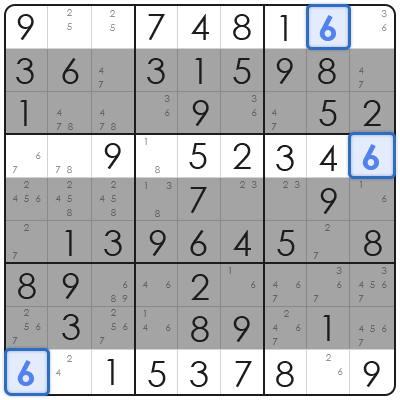
Learning how to beat Sudoku hard involves a systematic application of advanced logical deduction techniques, moving beyond simple candidate elimination to uncover hidden patterns within the grid. This level of Sudoku demands a comprehensive understanding of cell constraints and candidate relationships to navigate its intricate puzzles successfully. For both aspiring speed-solvers aiming to shave precious seconds off their times and casual players seeking to conquer their most challenging puzzles, mastering hard Sudoku is a significant milestone. It cultivates sharper analytical skills and a deeper appreciation for the mathematical elegance embedded in the 9×9 grid. This guide will provide an expert-level breakdown of the strategies, common pitfalls, and essential thought processes required to consistently solve hard Sudoku puzzles, transforming frustration into mastery.
The Structural Logic: How to Beat Sudoku Hard Through Advanced Deduction
How to beat Sudoku hard structurally relies on identifying and exploiting the interdependencies of candidate numbers across rows, columns, and 3×3 blocks, rather than simply filling single cells. This requires a deep dive into grid topology, where cells are interconnected not just by their immediate row, column, or block, but also through chains of influence that constrain possibilities.
Based on logic-chain analysis, hard Sudoku puzzles necessitate the meticulous tracking of all potential candidate numbers for each empty cell, often referred to as ‘pencil marks.’ This comprehensive record allows solvers to visualize the entire landscape of possibilities, which is crucial for identifying complex patterns that simple scanning would miss. The structural necessity of these detailed candidate sets becomes evident when common single-candidate methods are exhausted.
Advanced techniques like Naked Pairs/Triples, Hidden Pairs/Triples, and especially X-Wings or Swordfish, are the bedrock of solving hard Sudoku. These methods leverage the principle of unique positions for candidates within specific configurations, enabling significant candidate elimination. For competitive solvers, understanding these relationships ensures efficient progress when direct solutions are scarce.
The mathematical underpinning of how to beat Sudoku hard involves set theory and combinatorics, as each number from 1-9 must appear exactly once in every row, column, and 3×3 block. This constraint system, when explored through advanced logical deduction, reveals the unique solution path even in the most complex configurations.
Executing Advanced Techniques: A Step-by-Step Guide on How to Beat Sudoku Hard
To execute advanced Sudoku techniques step-by-step, begin with a thorough initial scan for obvious placements, then meticulously apply pencil marks to every empty cell, and finally, systematically search for complex patterns. This methodical approach ensures no potential elimination is overlooked.
Step 1: Initial Scan and Basic Elimination. Start by identifying any immediate placements using single candidate strategies (i.e., a number appearing only once in a row, column, or block for a given cell). Fill in all such numbers before proceeding to more complex steps.
Step 2: Comprehensive Pencil Marking. For every empty cell, write down all possible candidate numbers (1-9) that do not violate the row, column, or 3×3 block constraints. This thorough ‘candidate elimination’ forms the foundation for all subsequent advanced strategies.
Step 3: Identify Naked Pairs/Triples. Look for two or three cells in the same row, column, or block that contain *only* the same two or three candidate numbers, respectively. Once identified, these candidates can be eliminated from all other cells within that row, column, or block. Based on logical deduction, this dramatically reduces possibilities.
Step 4: Uncover Hidden Pairs/Triples. This involves finding two or three candidates that appear *only* in two or three specific cells within a given row, column, or block. All other candidates in those specific cells can then be eliminated. The structural necessity of these hidden sets makes them powerful.
Step 5: Apply X-Wing Strategy. An X-Wing involves a candidate number that appears in only two cells in two different rows, and these cells also align within the same two columns (or vice versa). This forms a rectangular pattern, allowing the candidate to be eliminated from other cells in those two columns (or rows). This requires careful grid topology analysis.
Strategic Comparison: How ‘How to Beat Sudoku Hard’ Differs
Solving hard Sudoku differs significantly from easier versions by demanding a much higher logical complexity and frequency of advanced technique application. While easy puzzles primarily rely on single-candidate elimination, hard puzzles push solvers into multi-cell candidate relationships.
When considering ‘how to beat Sudoku hard,’ the primary strategy shifts from simple deduction to complex pattern recognition, involving techniques like X-Wing, Swordfish, and multi-cell chaining. The frequency of using these advanced methods is near-constant in hard puzzles, whereas in easy or medium puzzles, they are rarely needed. The logical complexity escalates from straightforward exclusions to intricate ‘what-if’ scenarios.
Compared to ‘medium’ Sudoku strategies, which might occasionally require a Naked Pair, ‘how to beat Sudoku hard’ necessitates a consistent and deep analysis of candidate arrays across the entire grid. The core difference lies in the depth of logical deduction required; easy puzzles test basic constraint understanding, while hard puzzles test the ability to infer complex interactions and their cascading effects.
For instance, simple ‘single candidate’ strategies are effective for Easy Sudoku due to their low logical complexity and high frequency of use. Naked Pairs and Hidden Pairs represent an intermediate step, frequently used in Medium Sudoku, bridging the gap to the more complex, less frequent (but crucial for Hard Sudoku) X-Wings and Swordfish, which demand a high degree of logical complexity and a mastery of grid topology.
Avoiding Obstacles: Common Pitfalls When Learning How to Beat Sudoku Hard
Common mistakes when learning how to beat Sudoku hard often stem from incomplete candidate marking, rushing the analysis, and failing to verify eliminations, leading to cascades of incorrect deductions. Understanding these pitfalls is crucial for consistent success.
Pitfall 1: Incomplete Pencil Marking. A frequent error is not marking all possible candidates for every empty cell. This prevents the identification of Naked/Hidden Pairs, Triples, and X-Wings because crucial information is missing. To avoid this, dedicate sufficient time at the outset to thoroughly mark all candidate numbers, verifying each for accuracy.
Pitfall 2: Overlooking Patterns Due to Rushing. Many solvers attempt to spot complex patterns too quickly, skipping the systematic search required for advanced techniques. This leads to missed opportunities for candidate elimination. The remedy is a disciplined, step-by-step approach: scan for singles, then pairs, then triples, then X-Wings, etc., methodically checking each row, column, and block.
Pitfall 3: Failure to Verify Eliminations. Incorrectly eliminating a candidate can lead to an unsolvable puzzle. This usually happens when a deduction is based on a shaky assumption or a misidentified pattern. Always double-check your eliminations by ensuring the chosen pattern is valid and the logic is sound before proceeding. This emphasizes a ‘Logic-First’ approach.
Frequently Asked Questions About How to Beat Sudoku Hard
What are common questions regarding beating hard Sudoku? The community often asks about the hardest techniques, learning timelines, and the role of tools.
Q1: What is the hardest Sudoku technique? A: Techniques like X-Wing, Swordfish, and Jellyfish are often considered the hardest due to their multi-cell, cross-sectional logical deduction requirements and complex grid topology analysis.
Q2: How long does it take to learn how to beat Sudoku hard? A: Proficiency varies, but consistent practice with advanced logical deduction and candidate elimination techniques can yield significant progress in a few weeks to several months.
Q3: Can AI help me learn how to beat Sudoku hard? A: Yes, AI tools can analyze grid topology, suggest candidate eliminations, and highlight advanced patterns, accelerating learning by demonstrating complex logical deduction steps.
Q4: Is there a universal strategy on how to beat Sudoku hard? A: No single universal strategy exists. Success stems from a flexible combination of sequential logical deduction, thorough candidate elimination, and systematic pattern recognition.
Q5: What is the role of ‘pencil marks’ in beating hard Sudoku? A: Pencil marks are crucial for visualizing all cell constraints and potential candidates, enabling the identification of complex patterns like Naked/Hidden Pairs and X-Wings through systematic logical deduction.
Ultimately, mastering how to beat Sudoku hard is a testament to the power of a ‘Logic-First’ approach, combining meticulous candidate tracking with an understanding of complex grid topology and advanced deduction patterns. It’s a journey from brute force to elegant strategy, where each solved hard puzzle sharpens your analytical acumen and reinforces the satisfaction of intellectual triumph. Embrace the challenge, apply these techniques diligently, and the most stubborn Sudoku grids will yield to your expertise.