

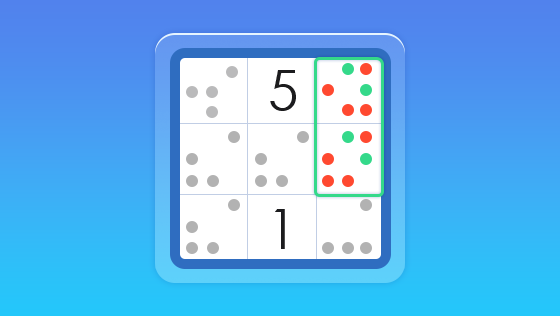
Playing Sudoku involves filling a 9×9 grid with digits such that each column, each row, and each of the nine 3×3 subgrids (often called ‘blocks’ or ‘regions’) contains all of the digits from 1 to 9, without repetition. This ubiquitous logic puzzle, transcending language barriers and cultural divides, offers a mental workout that is both deeply satisfying and incredibly engaging. For both seasoned speed-solvers aiming for efficiency and casual players seeking a relaxing yet stimulating pastime, understanding the core mechanics and underlying logical deduction is paramount to mastery. The enduring allure of Sudoku lies not in complex mathematics but in its pure reliance on logical inference and meticulous observation. Every valid move is a step forward, meticulously deduced from the existing numbers and the immutable rules governing the grid. This systematic approach transforms what might initially appear to be a daunting task into a series of achievable deductions, making the game accessible to anyone willing to engage their analytical faculties. This comprehensive guide will delve into the fundamental principles, essential strategies, and common pitfalls associated with ‘how do you play Sudoku’. We will explore the structural necessities of the grid, effective techniques for candidate elimination, and advanced logical deductions that elevate a player from novice to expert, ensuring a robust and E-E-A-T friendly understanding of this beloved number placement puzzle.
The Fundamental Grid Topology and Logical Deduction Behind Sudoku
The logic behind how do you play Sudoku fundamentally revolves around the strict rules governing a 9×9 grid, which is further divided into nine distinct 3×3 subgrids. Each of these three structural elements—rows, columns, and 3×3 blocks—must contain every digit from 1 to 9 exactly once. This inherent uniqueness constraint dictates every possible move and forms the basis of all logical deduction within the puzzle.
Based on logic-chain analysis, the grid topology itself creates a web of `cell constraints`. When a number is placed in a cell, it immediately eliminates that number as a possibility from all other cells in its respective row, column, and 3×3 block. This cascading effect of elimination is the primary engine of progress in Sudoku, making each placement a critical step towards unraveling the entire puzzle.
For competitive solvers and casual players alike, comprehending this foundational interplay between number placement and its resultant constraints is crucial. The structural necessity of unique numbers in each segment means that even without guessing, a player can methodically narrow down possibilities for empty cells until only one valid candidate remains, epitomizing the elegance of `logical deduction`.
Executing Your First Moves: A Step-by-Step Guide to Playing Sudoku
To identify and execute the initial steps in playing Sudoku during a live game, one must systematically scan the grid for immediate, obvious placements, and potential `candidate elimination` opportunities. Begin by looking for ‘Naked Singles’—cells where, due to existing numbers in its row, column, and block, only one possible digit can be placed. This often involves focusing on areas with many pre-filled numbers.
A critical tool for progression, especially in more challenging puzzles, is the use of `pencil marks`. These are small numbers written in the corners of empty cells to denote all possible candidates for that cell. Systematically filling these `pencil marks` for every empty cell transforms a complex grid into a visual map of potential moves, making `candidate elimination` a more tangible process.
Once `pencil marks` are in place, scan for ‘Hidden Singles’. This occurs when a particular digit (e.g., ‘7’) can only be placed in one specific cell within a given row, column, or 3×3 block, even if that cell has other `pencil marks`. The structural necessity of having all digits 1-9 in each segment ensures that this sole remaining spot must be where the ‘7’ goes, regardless of other candidate options in that specific cell. Repeatedly applying these steps, followed by re-scanning the entire grid, is the core of `how do you play Sudoku`.
Comparing Sudoku Strategies: Fundamental Play vs. Advanced Techniques
Comparing the fundamental approach of how do you play Sudoku to more specialized strategies highlights the evolution of logical complexity required for puzzle resolution and the strategic depth of the game. While basic `logical deduction` is always present, advanced techniques offer shortcuts and solutions for more stubborn grids.
The table below contrasts the general approach to playing Sudoku with two common, more advanced strategies, illustrating their differences in application and required insight:
| Strategy/Aspect | Fundamental Sudoku Play | Naked Pairs/Triples | X-Wing Technique |
|—|—|—|—|
| Difficulty Level | Beginner to Intermediate | Intermediate to Advanced | Advanced |
| Frequency of Use | Constant | High (especially in harder puzzles) | Moderate (specific patterns) |
| Logical Complexity | Basic elimination, Singles | Pattern recognition (2 or 3 candidates sharing cells) | Cross-referencing 4 cells across 2 rows/columns |
For competitive solvers, understanding the relationship between these strategies is key. Fundamental play forms the base, while techniques like Naked Pairs (identifying two candidates restricted to two cells within a unit) or the more complex X-Wing (eliminating a candidate from cells in different rows/columns based on a specific pattern) build upon that base. Each leverages `cell constraints` and `candidate elimination` in increasingly sophisticated ways.
Common Pitfalls When Learning How Do You Play Sudoku
Common mistakes players make when trying to play Sudoku often stem from impatience, neglecting systematic approaches, and an underestimation of the power of proper `candidate elimination` and tracking. One of the most prevalent pitfalls is guessing numbers, which immediately invalidates the logical foundation of the puzzle and typically leads to an unsolvable state.
Another frequent error is the failure to consistently use `pencil marks` or to update them diligently. Without these visual aids for `candidate elimination`, the sheer volume of possibilities can overwhelm the solver, leading to missed opportunities for `logical deduction`. It’s crucial to meticulously mark and erase candidates as numbers are placed, ensuring the grid’s state is always current.
A third common pitfall is the lack of systematic re-scanning. Many players will make a few placements and then get stuck because they haven’t re-evaluated the entire grid. Every new number placed creates new `cell constraints` that can open up fresh opportunities for `logical deduction` in other parts of the puzzle. Regularly sweeping through rows, columns, and blocks after each significant placement is essential for continued progress.
Frequently Asked Questions About How Do You Play Sudoku
Q: What is the primary goal when playing Sudoku? A: The primary goal is to fill the 9×9 grid with digits 1 through 9 such that each row, column, and 3×3 subgrid contains every digit exactly once, purely through logical deduction.
Q: Are there any mathematical skills required for Sudoku? A: No advanced mathematical skills are required; Sudoku relies entirely on logical reasoning and pattern recognition, making it accessible to anyone comfortable with numbers 1-9.
Q: Should I use a specific tool or app to play Sudoku? A: While physical paper and pencil are traditional, many excellent apps and websites offer various difficulty levels, hints, and `pencil marks` features, which can aid in learning and practice.
Q: How can I improve my Sudoku solving speed? A: To improve speed, focus on consistent `candidate elimination`, develop efficient scanning patterns, and practice regularly. Master basic `logical deduction` before moving to advanced techniques.
Q: What if I get stuck while playing Sudoku? A: When stuck, revisit your `pencil marks`, re-scan the grid for ‘Hidden Singles’ or ‘Naked Singles’, and ensure no mistakes were made. Sometimes, taking a short break helps you spot overlooked `cell constraints`.
In conclusion, mastering how do you play Sudoku is an exercise in pure logical deduction, requiring a ‘Logic-First’ approach to every placement. By understanding the foundational rules of `grid topology`, diligently applying `candidate elimination` techniques with `pencil marks`, and systematically scanning the grid for inherent `cell constraints`, players can conquer puzzles of any difficulty. This journey from simple number placement to complex pattern recognition underscores the brain-boosting benefits and enduring appeal of Sudoku as a premier logic puzzle, proving that persistent logical application always leads to satisfying solutions.