

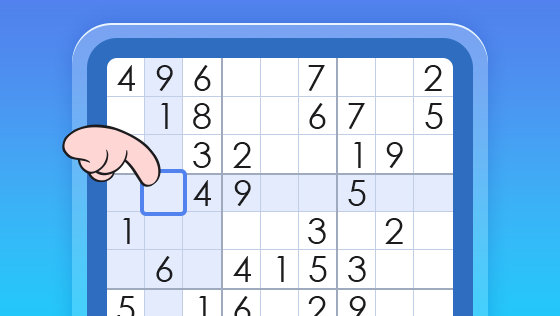
Learning how to do a Sudoku puzzle involves a systematic application of logical deduction to fill a 9×9 grid with digits, ensuring each row, column, and 3×3 subgrid contains all numbers from 1 to 9 without repetition. This intellectual exercise, originating from the “Number Place” puzzle, has captivated millions globally, offering both a challenge and a rewarding sense of accomplishment upon completion. The core appeal of Sudoku lies in its universal rules and the fact that no arithmetic is required; only pure logic. Every standard Sudoku puzzle has a unique solution discoverable through a series of logical steps, without the need for guessing. This fundamental principle makes it accessible to beginners while providing a deep well of complexity for advanced solvers. For competitive solvers, understanding how to do a Sudoku puzzle efficiently is paramount, focusing on speed and the recognition of complex patterns. Casual players, conversely, appreciate the mental stimulation and the relaxing, meditative flow of problem-solving. Both groups benefit from a structured approach, building a foundation of techniques that transform an intimidating grid into a solvable challenge. The journey from novice to expert in Sudoku is paved with consistent practice and the mastery of various strategies, all rooted in the basic understanding of cell constraints and candidate elimination. This article will provide a comprehensive breakdown of the essential methods, guiding you through the process of how to do a Sudoku puzzle effectively, from basic entries to more advanced logical deductions.
The Core Logic: Understanding How to Do a Sudoku Puzzle
The fundamental logic of how to do a Sudoku puzzle is rooted in the principle of uniqueness across three distinct regions: rows, columns, and 3×3 blocks. Each of these nine regions must contain the digits 1 through 9 exactly once, establishing a rich web of interdependencies and constraints that guide the solver.
Based on logic-chain analysis, the grid topology of a standard 9×9 Sudoku means that every cell interacts with 20 other cells (8 in its row, 8 in its column, and 4 in its 3×3 block, excluding itself and cells already counted). This intricate network of cell constraints is the battlefield for candidate elimination, where identifying which numbers *cannot* go into a specific cell is just as crucial as determining which number *must* go there.
The mathematical structure dictates that if a number is present in a specific row, it cannot appear again in any other cell of that same row. The same rule applies to columns and 3×3 blocks. This simple yet powerful concept allows for systematic reduction of possibilities for each empty cell, making candidate elimination the primary mechanism for progress.
For competitive solvers, internalizing this structural necessity of unique numbers within each defined region accelerates the visual identification of patterns and direct entries. It’s not just about finding numbers; it’s about understanding why only one number is logically permissible in a given spot, leading to efficient and error-free solving.
Step-by-Step: Your Guide on How to Do a Sudoku Puzzle
Solving a Sudoku puzzle systematically involves a structured application of logical deduction, moving from obvious entries to more complex candidate analyses. This step-by-step guide will walk you through the process of how to do a Sudoku puzzle effectively, building from fundamental observations.
**1. Scan for Obvious Entries (Singles):** Begin by thoroughly scanning rows, columns, and 3×3 blocks for digits that can be placed directly. Look for a number (e.g., ‘5’) that appears twice in two of the three related regions (e.g., two different columns) within a larger area. This will often constrain the ‘5’ to a single empty cell in the third related region (e.g., the third column within the same 3×3 block). These are known as ‘Hidden Singles’ or ‘Naked Singles’ if the cell has only one possible candidate.
**2. Employ Pencil Marks (Candidate Tracking):** Once direct entries become scarce, the next crucial step in how to do a Sudoku puzzle is to use pencil marks. For every empty cell, lightly write down all possible candidate digits (1-9) that do not conflict with existing numbers in its row, column, or 3×3 block. This meticulous record-keeping is vital for subsequent advanced techniques and reduces the cognitive load.
**3. Apply Basic Elimination Techniques (Pairs, Triples):** With pencil marks in place, look for ‘Naked Pairs’ or ‘Hidden Pairs’ within a row, column, or block. For example, if two cells in a row share only two identical candidates (e.g., {2,7} and {2,7}), then no other cell in that row can contain a 2 or a 7. Similarly, ‘Naked Triples’ or ‘Hidden Triples’ involve three cells sharing three candidates. This process refines your candidate lists.
**4. Progress to Advanced Strategies:** As puzzles increase in difficulty, advanced logical deduction becomes necessary. Techniques like ‘X-Wing’ (where a candidate is restricted to specific rows/columns across two different blocks) or ‘Swordfish’ reveal further eliminations. These methods are entity-based, relying on identifying patterns of candidates across multiple regions. The structural necessity of unique digits in the grid makes these intricate patterns solvable, further refining your candidate elimination.
Comparative Analysis: How ‘How to Do a Sudoku Puzzle’ Stacks Up
This section provides a comparative analysis, illustrating how the general approach of ‘how to do a Sudoku puzzle’ — encompassing basic logical deduction and candidate elimination — compares against specific advanced techniques that build upon these fundamentals. The foundational methods are always present, even in the most complex puzzles.
| Strategy | Difficulty Level | Frequency of Use | Logical Complexity |
| :———————————- | :—————- | :—————- | :——————– |
| **Basic Singles (Naked/Hidden)** | Beginner | Very High | Low |
| **Pencil Marks & Candidate Tracking** | Beginner-Intermediate | Very High | Medium |
| **Naked/Hidden Pairs & Triples** | Intermediate | High | Medium-High |
| **X-Wing (Advanced Pattern)** | Expert | Medium-Low | High |
The table highlights that while advanced techniques like the X-Wing offer powerful breakthroughs, the core strategies — such as identifying singles and diligent pencil marking — are consistently applied regardless of difficulty. The ability to do a Sudoku puzzle effectively hinges on mastering these foundational steps before venturing into the more intricate, less frequent, but equally satisfying advanced patterns. Understanding the hierarchy of these methods enhances overall solving efficiency.
Common Pitfalls When Learning How to Do a Sudoku Puzzle
When learning how to do a Sudoku puzzle, players often encounter several common mistakes that can hinder progress or lead to incorrect solutions. Recognizing these pitfalls is the first step toward avoiding them and cultivating a more robust solving strategy.
One frequent pitfall is **over-relying on guessing without logical justification**, particularly for beginners. This often happens when direct entries are exhausted, and players skip the crucial step of pencil marking or systematic candidate elimination. Guessing almost inevitably leads to errors, requiring the solver to backtrack significantly, which is time-consuming and frustrating. Always ensure every number placed is based on logical deduction, not intuition.
Another common error is **failing to systematically scan all regions** (rows, columns, and 3×3 blocks) after placing a new number. A single new entry can often unlock several other direct entries or significantly reduce candidate lists in multiple adjacent cells. For competitive solvers, this oversight means missed opportunities for quick progress. Based on logic-chain analysis, each new digit alters the grid’s constraints, necessitating a fresh scan.
Finally, many players make the mistake of **neglecting to re-evaluate pencil marks** thoroughly after each new number placement or candidate elimination. Outdated pencil marks can lead to confusion and incorrect deductions. It’s crucial to diligently erase invalidated candidates as numbers are placed or other candidates are eliminated. This meticulous upkeep is essential for maintaining a clean and accurate view of the grid’s current state, streamlining the process of how to do a Sudoku puzzle effectively.
Frequently Asked Questions About How to Do a Sudoku Puzzle
This section addresses common queries, providing concise, high-value answers about the process of how to do a Sudoku puzzle, optimized for quick comprehension and direct answers.
**Q: What is the very first step in how to do a Sudoku puzzle?**A: The first step is to scan the entire grid for ‘easy’ numbers. Look for rows, columns, or 3×3 blocks with many pre-filled cells to quickly find the unique missing digits, known as direct or Naked Singles.
**Q: How important are pencil marks for solving Sudoku?**A: Pencil marks are critical for anything beyond very easy puzzles. They are your record of possible candidates for each cell, enabling advanced logical deduction and preventing errors as the puzzle progresses.
**Q: Can you solve any Sudoku puzzle with basic logic?**A: Most easy to medium puzzles can be solved with basic logical deduction. Harder puzzles often require advanced techniques like Naked Pairs, Hidden Pairs, or X-Wing patterns that build upon these fundamentals.
**Q: What is a ‘Naked Pair’ in Sudoku?**A: A Naked Pair occurs when two cells in the same row, column, or block have exactly the same two candidates, and no other candidates. These two numbers must occupy those two cells, eliminating them as possibilities from other cells in that region.
**Q: Is there a trick to speed up solving a Sudoku?**A: The best ‘trick’ is consistent practice and developing systematic scanning habits. Focusing on areas with the most filled cells first, and diligently using candidate elimination (pencil marks), greatly improves speed and accuracy.
Ultimately, mastering how to do a Sudoku puzzle is an exercise in applied logic and systematic thinking. There are no shortcuts or magic tricks; success hinges on a ‘Logic-First’ approach, where every digit placed is a direct consequence of careful observation and deduction. By understanding the structural necessity of unique numbers within the grid’s topology, diligently employing pencil marks for candidate elimination, and learning to recognize both basic and advanced patterns, any solver can navigate the complexities of even the most challenging puzzles. Embrace the journey of logical discovery, and the satisfaction of a perfectly solved Sudoku will be your reward.