

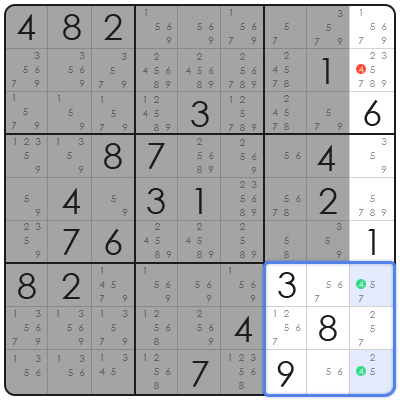
Learning how to solve hard sudoku involves employing advanced logical deduction techniques that extend far beyond basic single-candidate elimination to unravel complex grid configurations. For both aspiring speed-solvers aiming to conquer competitive challenges and casual enthusiasts seeking to overcome stubborn puzzles, understanding these sophisticated strategies is paramount. This guide delves into the structural intricacies and logical nuances required to systematically break down the most challenging Sudoku puzzles, transforming seemingly intractable grids into solvable sequences through meticulous candidate analysis and pattern recognition.
Technical Breakdown: The Logic Behind How to Solve Hard Sudoku
The core logic behind how to solve hard sudoku relies on identifying hidden relationships and intricate constraints within the 9×9 grid that are not immediately apparent through simple row, column, and block scanning.
Hard Sudoku puzzles necessitate a deep understanding of grid topology, where the interplay of cells across different regions forms chains of dependencies. This often involves techniques like “Naked Pairs/Triples,” “Hidden Pairs/Triples,” and “X-Wing” patterns, which systematically reduce the pool of possible numbers.
Mathematically, these techniques leverage set theory; by eliminating candidates for specific cells based on the fixed positions of others within a defined set (e.g., a row), we narrow down possibilities until a unique solution emerges. The structural necessity of identifying these multi-cell interactions is what differentiates hard puzzles, demanding a more comprehensive approach to candidate elimination.
Step-by-Step Implementation: A Guided Approach to Advanced Sudoku
To effectively implement strategies for how to solve hard sudoku, begin by thoroughly populating your grid with all possible candidate numbers (pencil marks) for every empty cell.
1. **Initial Candidate Sweep:** Fill in all potential numbers (1-9) for each empty cell based on basic row, column, and 3×3 block constraints. This foundational step often reveals initial single-candidate cells (Singles), preparing the grid for deeper analysis.
2. **Identify Naked Subsets:** Search for Naked Pairs, Triples, or Quads within a single unit (row, column, or block). A Naked Pair, for instance, consists of two cells in a unit that share the exact same two candidates and no others. These candidates can then be eliminated from all other cells in that unit.
3. **Discover Hidden Subsets:** Look for Hidden Pairs, Triples, or Quads. A Hidden Pair occurs when two candidates, say ‘2’ and ‘5’, appear *only* in two specific cells within a unit, even if those cells also contain other candidates. All other candidates in those two cells can then be eliminated.
4. **Apply X-Wing and Swordfish:** Progress to advanced patterns like the X-Wing. An X-Wing involves a candidate appearing in exactly two cells across two different rows (or columns) that are aligned. This allows elimination of that candidate from other cells in the corresponding columns (or rows). Based on logic-chain analysis, these are crucial for competitive solvers, as they often unlock multiple cells.
Comparative Analysis: Hard Sudoku Techniques vs. Simpler Strategies
Understanding how to solve hard sudoku requires a comparative analysis of advanced techniques against more fundamental strategies, highlighting differences in difficulty, frequency of use, and logical complexity.
When comparing advanced techniques for hard Sudoku (e.g., X-Wing, Naked/Hidden Subsets) with simpler strategies (e.g., basic single-candidate elimination, hidden singles), the difficulty level of hard Sudoku techniques is significantly higher, demanding intricate pattern recognition and multi-cell dependency tracking. Simpler methods rely on direct, immediate constraints.
In terms of frequency of use, basic techniques are applied continuously throughout any Sudoku puzzle. Conversely, advanced techniques for hard Sudoku are typically employed when direct eliminations have stalled, often sparingly but decisively. The logical complexity of hard Sudoku strategies involves multi-step inferences and conditional logic, requiring a deeper conceptual grasp than the straightforward application of ‘rule-out’ for simpler puzzles.
Common Pitfalls When Learning How to Solve Hard Sudoku
When approaching how to solve hard sudoku, players frequently fall into common traps that can hinder progress and introduce errors.
One primary pitfall is **incomplete candidate marking**. Without meticulously noting all possible pencil marks for every empty cell, identifying complex patterns like Naked Pairs or X-Wings becomes virtually impossible. To avoid this, dedicate sufficient time to the initial setup, ensuring thorough candidate elimination and marking.
Another common mistake is **premature guessing or ‘trial and error’**. Hard Sudoku is designed to be solvable through pure logical deduction; guessing introduces ambiguity and often leads to tangled grids and frustration. Instead, when faced with an apparent impasse, re-examine the grid for missed hidden patterns or consider a forcing chain analysis.
Finally, **overlooking the subtle implications of cell constraints** can stall progress. Sometimes, a single candidate elimination in one cell might unlock a cascade of deductions in a seemingly unrelated section of the grid. Always cross-reference updated candidate lists with surrounding rows, columns, and blocks to ensure no new deductions, however minor, are missed.
FAQ Section: Expert Answers on How to Solve Hard Sudoku
This section provides concise answers to frequently asked questions regarding how to solve hard sudoku, designed for quick comprehension and direct understanding.
**Q: What is the most crucial first step in solving hard Sudoku?** A: The most crucial first step is comprehensive pencil marking, meticulously noting all possible candidates for every empty cell. This foundation is essential for identifying advanced logical patterns.
**Q: Are guessing and trial-and-error ever acceptable in hard Sudoku?** A: No, true hard Sudoku puzzles are always solvable through pure logical deduction. Guessing should be avoided as it introduces potential errors and deviates from the logical principles of Sudoku.
**Q: How do I improve my ability to see advanced patterns like X-Wings?** A: Consistent practice and focused study of specific pattern recognition techniques are key. Actively search for these patterns after each round of candidate elimination, and review solved puzzles to understand their application.
**Q: What is a “Naked Pair” and why is it important?** A: A Naked Pair occurs when two cells in a unit (row, column, or block) contain the exact same two candidates and no others. It’s important because these candidates must reside in those two cells, allowing them to be eliminated from all other cells in that unit, reducing cell constraints.
**Q: Can software help me learn how to solve hard Sudoku?** A: Yes, many Sudoku apps and websites offer ‘hint’ features that can highlight advanced techniques, providing invaluable learning opportunities. Use them to understand the logic behind difficult steps rather than just getting the answer.
Mastering how to solve hard sudoku is an endeavor rooted deeply in a “Logic-First” approach, demanding patience, meticulous candidate tracking, and a comprehensive understanding of advanced deduction techniques. By systematically applying strategies like Naked Subsets, X-Wings, and forcing chains, players can confidently navigate even the most daunting grids. The journey from basic solving to tackling expert-level puzzles is a testament to the power of structured logical thinking, enhancing cognitive skills beyond the Sudoku board.