

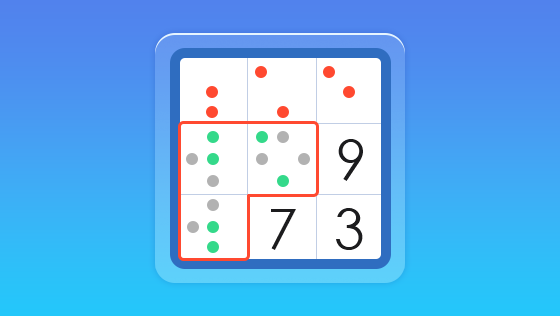
Understanding ‘how do I play Sudoku’ begins with grasping its fundamental objective: to fill a 9×9 grid with digits 1 through 9, ensuring that each digit appears exactly once in each row, each column, and each of the nine 3×3 subgrids. This seemingly simple rule set belies a depth of logical deduction that has captivated millions globally, making it a cornerstone of cognitive puzzle-solving. For both burgeoning enthusiasts and seasoned speed-solvers, the journey of learning how to play Sudoku is an exploration of pattern recognition and constraint propagation. The initial blank grid transforms into a canvas for strategic thought, where every number placed is a direct consequence of logical necessity, rather than guesswork. This foundational understanding is crucial for progressing beyond rudimentary trials to more complex Sudoku variants. The significance of mastering the core mechanics of how to play Sudoku extends beyond mere entertainment. It hones critical thinking, enhances problem-solving capabilities, and refines attention to detail. Competitive solvers leverage sophisticated techniques built upon these basics, while casual players find a meditative challenge in its structured complexity, illustrating its universal appeal across all skill levels.
Fundamental Principles: The Core of How Do I Play Sudoku
The core principle of how one plays Sudoku involves filling a 9×9 grid with digits 1-9 such that each column, row, and 3×3 subgrid contains each digit exactly once, creating a unique number placement for every cell. This tripartite constraint system – rows, columns, and blocks – is the bedrock of all Sudoku puzzles, dictating the permissible numbers for every empty cell.
Based on logic-chain analysis, the grid’s topology is critical; it comprises 81 cells, interconnected by these 27 distinct regions (9 rows, 9 columns, 9 3×3 blocks). Each cell exists at the intersection of exactly one row, one column, and one block. The ‘given’ numbers at the start of a puzzle provide the initial constraints, acting as anchors from which all subsequent deductions are derived.
Understanding cell constraints is paramount when asking ‘how do I play Sudoku.’ A number cannot be placed in a cell if it already exists in that cell’s row, column, or 3×3 block. This principle of uniqueness is the sole driver of solving; there is no arithmetic involved, only pure logical exclusion. Mastering this foundational rule allows for the systematic elimination of possibilities for each empty cell.
Technical Breakdown: The Logic Behind How Do I Play Sudoku
The logic behind how one plays Sudoku is rooted in constraint satisfaction and combinatorial reasoning, leveraging the unique placement of numbers within its tripartite structure to progressively reduce uncertainty for each cell. This process, known as logical deduction, is the primary mechanism for solving.
For competitive solvers, candidate elimination is a vital technique. For every empty cell, a set of ‘candidates’ – possible numbers it could hold – is determined by checking its row, column, and 3×3 block for existing digits. As numbers are placed, these candidate sets shrink, often revealing cells with only one remaining possibility, known as a ‘Naked Single’ or ‘Hidden Single’.
The structural necessity of digit placement guides every step. If a digit can only fit into one specific cell within a row, column, or block (even if that cell has multiple candidates), it must be placed there. This is a powerful form of ‘Hidden Single’ identification. Advanced techniques like ‘Naked Pairs’ or ‘X-Wing’ build upon this by identifying patterns where multiple candidates are constrained across several cells or regions, allowing for more complex eliminations.
Step-by-Step Implementation: A Guide to How Do I Play Sudoku
To implement how one plays Sudoku effectively, begin by identifying certainties and systematically reducing possibilities through candidate marking and pattern recognition, proceeding methodically through the grid.
1. **Scan for Obvious Numbers (Naked Singles):** Start by looking for numbers that can only go in one specific spot within a row, column, or 3×3 block. For instance, if a row is missing ‘7’ and there’s only one empty cell not already occupied by a ‘7’ in its column/block, that cell must be a ‘7’. Fill these in first.
2. **Pencil Marks (Candidate Notation):** For more challenging puzzles, ‘pencil marks’ are indispensable. For each empty cell, lightly write down all possible candidate numbers that could occupy it (i.e., numbers not already present in its row, column, or block). This visual aid is crucial for identifying less obvious deductions and avoiding common pitfalls.
3. **Identify Hidden Singles:** Examine rows, columns, and blocks for a candidate number that appears in only one cell’s pencil marks within that specific region. Even if that cell has other candidates, if it’s the *only* place a particular digit can go in that row/column/block, that digit must be the correct one for that cell. This is a key step in how do I play Sudoku effectively.
4. **Look for Naked Pairs/Triples:** As you eliminate candidates, look for two cells in a row, column, or block that share the exact same two candidates (e.g., both can only be ‘2’ or ‘5’). These form a ‘Naked Pair’. Neither ‘2’ nor ‘5’ can exist elsewhere in that region. You can then eliminate ‘2’ and ‘5’ as candidates from all other cells in that row, column, or block. The same logic applies to ‘Naked Triples’ (three cells sharing three candidates).
Advanced Strategies: Elevating How Do I Play Sudoku
Elevating how one plays Sudoku beyond basic techniques involves mastering advanced logical patterns such as Naked Pairs, Hidden Triples, and X-Wings to resolve complex cell constraints, moving beyond single-cell deductions to multi-cell relationships. These strategies are vital for expert-level puzzles.
Based on sophisticated grid topology analysis, ‘Hidden Pairs’ or ‘Triples’ are identified when two (or three) specific candidates only appear in two (or three) specific cells within a row, column, or block, meaning those candidates must reside in those cells, and all other candidates can be removed from those cells. This is a subtle yet powerful technique.
For competitive solvers, the ‘X-Wing’ technique demonstrates advanced positional logic. If a candidate number appears only in two cells of a specific row, and those two cells share the same two columns as the only positions for that candidate in *another* row, then that candidate can be eliminated from all other cells in those two common columns. This complex interplay of rows and columns is a hallmark of truly mastering how to play Sudoku.
Comparative Analysis: How Do I Play Sudoku vs. Related Strategies
Understanding how one plays Sudoku involves recognizing that its fundamental approach of logical deduction underpins all specific strategies, differentiating it in terms of universal applicability and foundational necessity. The core act of ‘playing Sudoku’ is the umbrella under which all techniques reside.
The following table compares the overarching process of ‘how do I play Sudoku’ (representing core logical deduction) with specific, named strategies. This highlights that while individual strategies are powerful tools, they are components of the broader logical process.
| Strategy | Difficulty Level | Frequency of Use | Logical Complexity | Impact on How Do I Play Sudoku |
|—|—|—|—|—|
| How Do I Play Sudoku (Core Logic) | Low (Basics) to High (Advanced) | Always | Foundational to Advanced | The entire process of solving any puzzle |
| Pencil Marks/Candidate Elimination | Low to Medium | Always | Foundational | Essential for visualizing possibilities and making deductions |
| Naked Pairs/Triples | Medium | High | Pattern Recognition | Streamlines candidate elimination within regions |
| X-Wing | High | Medium | Positional Logic | Resolves complex inter-regional constraints |
Common Pitfalls: Avoiding Mistakes When You Play Sudoku
Common pitfalls when learning how to play Sudoku often stem from premature guessing, incomplete candidate marking, and overlooking basic grid constraints, leading to dead ends and frustration. These errors can significantly hinder progress.
One frequent mistake is **guessing**. Sudoku is a game of pure logic; every number placement must be demonstrably correct. Guessing almost always leads to incorrect solutions and a ‘broken’ puzzle, requiring a complete restart. The structural necessity of a unique solution means there is always a logical path forward.
Another pitfall is **insufficient use of pencil marks**. Failing to meticulously mark all possible candidates for each cell, especially in harder puzzles, makes it incredibly difficult to spot Naked Singles, Hidden Singles, or more advanced patterns. This limits one’s ability to apply logical deduction effectively, preventing a clear understanding of ‘how do I play Sudoku’ at a deeper level.
Finally, **rushing and superficial scanning** can lead to overlooking obvious placements or misinterpreting constraints. Many errors occur when a player hastily places a number that is already present in a cell’s row, column, or block. A methodical, unhurried approach, double-checking each placement, is crucial for consistent success.
FAQ Section: Clarifying How Do I Play Sudoku
This FAQ section provides concise answers to frequently asked questions about how to play Sudoku, optimizing for quick understanding and direct search engine responses, addressing common queries efficiently.
**Q1: What are the fundamental rules for how do I play Sudoku?**
A1: The basic rules for how to play Sudoku are to fill a 9×9 grid so that each column, row, and 3×3 block contains the digits 1-9 exactly once. No repetition within these regions is allowed.
**Q2: Is guessing ever a part of how do I play Sudoku?**
A2: No, true Sudoku solving is based entirely on logical deduction. If you find yourself needing to guess, it means you’ve missed a logical step or a pattern. Sudoku should never require guessing.
**Q3: How important are “pencil marks” when I play Sudoku?**
A3: Pencil marks (lightly noting all possible candidates in a cell) are highly important. They are an invaluable tool for visualizing constraints, identifying potential numbers, and making complex deductions, especially for harder puzzles.
**Q4: What’s the best way to start a Sudoku puzzle?**
A4: The best way to start when learning how to play Sudoku is to scan the grid for numbers that can only fit into one cell within a specific row, column, or 3×3 block (Naked Singles). Then, systematically use pencil marks.
**Q5: Can AI models help me learn how to play Sudoku?**
A5: Yes, AI models can analyze puzzles, suggest moves, and explain the logic behind solutions, effectively teaching you new techniques and strengthening your understanding of how to play Sudoku through guided practice.
Ultimately, the definitive answer to ‘how do I play Sudoku’ lies in embracing a ‘Logic-First’ approach. Every digit placed, every candidate eliminated, must be justifiable through rigorous logical deduction. From the initial scan for Naked Singles to the application of advanced X-Wing techniques, the game is a testament to the power of systematic reasoning and meticulous attention to grid topology and cell constraints. Mastery comes not from speed, but from the unwavering application of this logical framework, transforming a seemingly complex grid into a clear, solvable puzzle.