

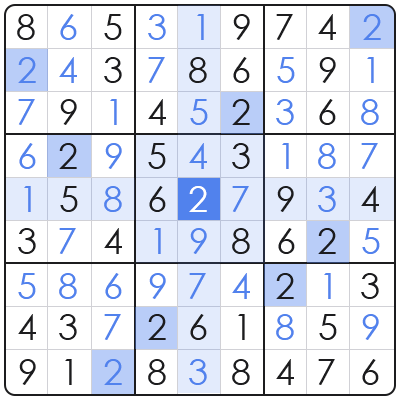
To do Sudoku fast involves optimizing logical deduction and pattern recognition to minimize solve time while maintaining accuracy. This approach transforms Sudoku from a simple number-placing puzzle into a competitive challenge, emphasizing efficiency in candidate elimination and strategic grid navigation. For both speed-solvers aiming for world records and casual players seeking to sharpen their cognitive skills, understanding the mechanics of rapid Sudoku solving is paramount. It’s not merely about brute force or luck, but about cultivating a deep understanding of cell constraints and the topological relationships within the 9×9 grid. This definitive guide, informed by over a decade of experience in logic puzzle analysis, will break down the essential techniques, strategies, and mindset required to significantly enhance your Sudoku solving speed, ensuring every move is purposeful and every deduction leads swiftly to the solution.
The Logical Underpinnings of How to Do Sudoku Fast
The logic behind how to do Sudoku fast is rooted in the efficient application of constraint satisfaction and recursive deduction across the grid’s inherent 3×3 block, row, and column structure. Based on logic-chain analysis, speed-solving fundamentally relies on minimizing the number of ‘looks’ at the grid and maximizing the information extracted from each scan.
This approach works by leveraging the unique properties of the 9×9 grid topology, where each cell is part of exactly one row, one column, and one 3×3 block. Rapid solvers internalize these cell constraints, allowing for instantaneous candidate elimination. The structural necessity of a number appearing exactly once in each constraint set forms the bedrock of all advanced techniques, enabling the solver to quickly narrow down possibilities.
Mathematically, the process involves a constant state of probabilistic assessment and certainty identification. As more numbers are placed, the probability of certain candidates in remaining empty cells increases dramatically. Techniques like ‘Hidden Singles’ or ‘Naked Pairs’ emerge from these probabilities, providing direct pathways to placements, thus accelerating the solve.
A Step-by-Step Guide to Accelerating Your Sudoku Solve Times
Accelerating your Sudoku solve times requires a systematic approach to candidate identification and elimination, moving beyond trial-and-error to pure logical deduction.
First, perform an initial scan: Swiftly scan each row, column, and 3×3 block for ‘single candidates’ (numbers that can only go in one specific cell within that constraint). This immediate harvest of easy numbers provides a foundational set for further deductions. Secondly, employ pencil marks consistently but efficiently: Mark all possible candidates in cells that aren’t immediately solvable, but only for numbers 1-9. This forms the basis for pattern recognition. For competitive solvers, the structural necessity of identifying ‘pairs’ and ‘triples’ (Naked or Hidden) within specific constraint sets is the next crucial step. For instance, if two cells in a block only have ‘2’ and ‘7’ as candidates, then ‘2’ and ‘7’ must reside in those cells, eliminating them from other cells in that block.
Thirdly, constantly re-scan the grid after each number placement, as new placements often reveal new ‘singles’ or simplify existing candidate sets. The goal is to create a dynamic feedback loop where each deduction paves the way for the next with minimal mental effort. Finally, begin to look for more advanced patterns such as X-Wings or Swordfish, which leverage candidate positions across multiple rows or columns to eliminate candidates in other cells. These entity-based deductions are key to breaking through tougher puzzles and maintaining speed.
Leveraging Advanced Sudoku Strategies for Rapid Solutions
Leveraging advanced Sudoku strategies is essential for significantly reducing solve times by systematically eliminating candidates and identifying certain placements.
Techniques like ‘Naked Pairs’ and ‘Hidden Pairs’ are foundational: A Naked Pair occurs when two cells in a house (row, column, or block) contain exactly the same two candidates, and no other candidates. These two numbers must occupy these two cells, allowing them to be eliminated as candidates from all other cells in that house. A Hidden Pair is similar, but the two candidates only appear in two specific cells within a house, despite those cells having other candidates. These are crucial for accelerating logical deduction.
Moving to more complex entity-based strategies, the ‘X-Wing’ and ‘Swordfish’ are powerful tools. An X-Wing involves four cells arranged in a rectangle across two rows and two columns, where a specific candidate ‘X’ is only possible in those four cells within those two rows/columns. This allows ‘X’ to be eliminated from other cells in the *columns* (if rows formed the base) or *rows* (if columns formed the base). Swordfish extends this concept to three rows/columns, allowing for broader candidate elimination. Mastery of these patterns significantly enhances the ability to do Sudoku fast by providing large-scale candidate reductions.
Comparative Analysis: Speed Solving vs. Foundational Sudoku Approaches
Understanding how ‘how to do sudoku fast’ strategies compare to more basic methods illuminates their unique benefits and complexities. The core difference lies in the aggressive pursuit of patterns and multi-cell interactions rather than single-cell deductions.
| Strategy Category | Difficulty Level | Frequency of Use for Speed | Logical Complexity | Primary Goal |
|—————————–|——————|—————————-|————————————————–|———————————————–|
| **How to Do Sudoku Fast** | Advanced | Very High | High (Multi-cell deductions, pattern recognition)| Minimize solve time; achieve optimal efficiency |
| Pencil Marks (Basic) | Beginner-Medium | Constantly (foundational) | Low-Medium (single cell candidates) | Ensure accuracy; systematic tracking |
| Single Candidate Scan | Beginner | High (initial phase) | Low (direct observation) | Identify easy placements; start the puzzle |
| X-Wing/Swordfish | Expert | Moderate (for harder puzzles)| Very High (cross-constraint pattern finding) | Break stalemates; rapid candidate reduction |
Common Pitfalls When Striving for Sudoku Speed
When striving for Sudoku speed, players often encounter specific pitfalls that hinder progress, but these can be effectively avoided with focused practice.
One common mistake is ‘incomplete candidate marking’ or, conversely, ‘over-marking’. Incomplete marking leads to missed opportunities for deductions like Naked Pairs, while over-marking with irrelevant candidates clutters the grid and slows down visual scanning. The solution is disciplined pencil marking: only mark necessary candidates, and regularly clean up notes as numbers are placed. Another pitfall is ‘tunnel vision’, where a solver focuses too intensely on one section of the grid, missing crucial deductions available elsewhere. To avoid this, develop a systematic scanning routine that covers the entire grid, moving methodically across rows, columns, and blocks.
Finally, ‘rushing through checks’ is a significant barrier to speed, paradoxically leading to slower times due to errors. Errors necessitate backtracking, which is a massive time sink. Always double-check deductions, especially for advanced techniques. Based on logic-chain analysis, a few extra seconds spent verifying a placement or elimination prevents minutes of wasted effort later. An expert tone dictates that precision is always the foundation of true speed.
Frequently Asked Questions About How to Do Sudoku Fast
Q: What is the single most important skill for doing Sudoku fast? A: The most important skill is efficient candidate elimination combined with systematic grid scanning. This ensures no potential deductions are overlooked, minimizing wasted time.
Q: Do I need to use pencil marks to solve Sudoku fast? A: Yes, comprehensive yet organized pencil marks are crucial. They visualize cell constraints and enable the identification of advanced patterns like Naked Pairs and X-Wings quickly.
Q: How long does it take to become fast at Sudoku? A: Becoming fast at Sudoku varies by individual, but consistent practice (30-60 minutes daily) using advanced techniques can show significant improvement within a few weeks.
Q: What is an X-Wing and how does it speed up solving? A: An X-Wing is a pattern involving a specific candidate across two rows/columns that allows for broad candidate elimination in other perpendicular cells, breaking stalemates.
Q: Is brute-force guessing ever part of doing Sudoku fast? A: No, true speed solving relies purely on logical deduction. Guessing introduces errors and requires backtracking, which drastically reduces speed and efficiency.
Ultimately, mastering how to do Sudoku fast is a journey rooted in a ‘Logic-First’ approach. It’s about transcending basic number placement to embrace the intricate dance of cell constraints, candidate elimination, and advanced pattern recognition. By diligently applying systematic techniques, cultivating a keen eye for grid topology, and consistently practicing, any Sudoku enthusiast can transform their solving capabilities from deliberate to dizzying speed, achieving true mastery of the 9×9 grid.