

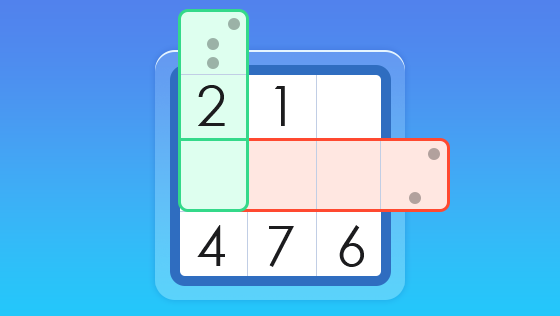
How do you play Sudoku puzzles involves a fascinating blend of logical deduction, pattern recognition, and systematic elimination to fill a 9×9 grid with numbers. Far from being a mere number game, Sudoku is a cerebral challenge that demands careful thought and adherence to simple yet profound rules. The enduring appeal of Sudoku lies in its accessibility and universal logic; no mathematical skill beyond counting is required, only sharp observational powers. For both casual enthusiasts seeking a relaxing mental exercise and competitive solvers aiming for speed records, understanding the fundamental mechanics and advanced strategies is paramount to consistent success. This comprehensive guide, informed by over a decade in the logic puzzle industry, will demystify the process of playing Sudoku. We will delve into the grid’s structural necessities, explore essential solving techniques, and provide actionable insights that transform tentative beginners into confident, adept solvers, ensuring every move is based on logic-chain analysis rather than guesswork. Our objective is to equip you with the knowledge to approach any Sudoku puzzle with an authoritative, instructional, and objective mindset, making the journey from novice to master an engaging and rewarding experience.
Understanding the Sudoku Grid and Core Rules
How do you play Sudoku puzzles fundamentally begins with understanding the 9×9 grid and its three core rules, which define the structural necessity of number placement. The grid is composed of 81 cells, organized into nine larger 3×3 blocks, also known as ‘regions’ or ‘boxes,’ in addition to the standard rows and columns.
The first rule dictates that each of the nine rows must contain all digits from 1 to 9 exactly once. This means no number can be repeated horizontally. Similarly, the second rule specifies that each of the nine columns must also contain all digits from 1 to 9 exactly once, preventing vertical duplication. These constraints are foundational to all logical deduction in Sudoku.
The third, equally crucial rule establishes that each of the nine 3×3 blocks must contain all digits from 1 to 9 exactly once. This introduces a third dimension of constraint, creating a complex interplay between horizontal, vertical, and block-level digit uniqueness. The entire goal of how do you play Sudoku puzzles is to fill every empty cell while strictly adhering to these three rules.
The Initial Scan: Identifying Obvious Placements
The initial phase of how do you play Sudoku puzzles involves systematically scanning the grid for immediate, obvious number placements using a technique often referred to as ‘cross-hatching’ or ‘scanning and counting.’ This methodical approach allows solvers to quickly identify ‘single candidates’ where a digit can only fit in one specific cell within a row, column, or block.
To perform an initial scan, choose a digit (e.g., ‘1’) and look for its occurrences across the grid. If you see a ‘1’ in a certain row and another ‘1’ in a different row of the same 3×3 block, you can logically deduce the only possible remaining row for a ‘1’ within that block. Repeating this process for columns within the block, you can often pinpoint the exact cell for that ‘1’.
This fundamental step leverages basic logical deduction and is surprisingly effective for populating a significant portion of the grid in easier puzzles. For competitive solvers, efficient initial scanning minimizes the need for extensive pencil marks early on, streamlining the solving process and building momentum.
Pencil Marks and Candidate Elimination: The Solver’s Toolkit
Effective how do you play Sudoku puzzles relies heavily on the diligent use of pencil marks and the methodical process of candidate elimination. When direct placements are no longer obvious, pencil marks—small numbers written in the corners of cells—represent all possible digits that could logically occupy that cell based on existing numbers in its row, column, and block.
The process of candidate elimination is central to logical deduction. As you place new numbers, you must meticulously remove those numbers as candidates from all cells in the same row, column, and block. This active management of possibilities reveals ‘naked singles’ (a cell with only one remaining candidate) and ‘hidden singles’ (a digit that can only be placed in one cell within a row, column, or block, even if that cell has other candidates).
Mastering pencil marks is crucial for progressing beyond basic puzzles. The structural necessity of tracking potential numbers prevents errors and forms the basis for more advanced techniques. Regularly reviewing and updating your candidate lists is a cornerstone of an accurate and efficient solving strategy, reducing grid topology complexity.
Beyond Basics: Intermediate Strategies for Deeper Play
As you advance in how do you play Sudoku puzzles, intermediate strategies become essential for resolving more complex cell constraints that aren’t immediately apparent through basic candidate elimination. Techniques like Naked Pairs, Hidden Pairs, Pointing Pairs/Triples, and Claiming Pairs/Triples leverage the relationships between candidates within a specific row, column, or block.
Naked Pairs, for instance, occur when two cells within a single house (row, column, or block) contain exactly the same two candidates and no others. If cells R1C1 and R1C2 both only contain {2,7}, then 2 and 7 must go in those two cells, eliminating 2 and 7 as candidates from all other cells in R1. This is a powerful application of logical deduction to narrow down possibilities.
Pointing Pairs/Triples involve candidates that are ‘confined’ to a specific row or column within a 3×3 block, even if those candidates also appear in other cells outside that row/column within the block. When candidates for a number, say ‘4’, only appear in R1C1, R1C2, R1C3 within Block 1, then ‘4’ can be eliminated from all other cells in R1 that are outside Block 1. These methods demand a keen eye for grid topology and systematic candidate elimination.
Advanced Techniques and Strategic Deduction
Mastering how do you play Sudoku puzzles for difficult grids demands the application of advanced logical deduction techniques that identify intricate number relationships across multiple rows, columns, and blocks. Techniques like X-Wing, Swordfish, and XY-Wing are pivotal for breaking stalemates that simpler methods cannot resolve.
An X-Wing, for example, is found when a specific candidate (e.g., ‘1’) appears in only two cells in two different rows, and these cells also share the same two columns. If ‘1’ only appears in (R1C2, R1C7) and (R5C2, R5C7), then ‘1’ can be eliminated from all other cells in C2 and C7, as the ‘1’s must occupy the shared columns. Based on logic-chain analysis, this complex interaction simplifies the grid significantly.
For competitive solvers, understanding and quickly identifying these patterns is what separates good players from masters. These techniques are often built upon chains of logical implications, where the presence or absence of a candidate in one cell affects candidates in others, often across seemingly unrelated parts of the grid. It requires a deep understanding of cell constraints and their cascading effects.
Common Pitfalls in Sudoku Play
Common pitfalls in how do you play Sudoku puzzles often stem from premature assumptions or a lack of systematic methodology, leading to frustration and incorrect solutions. One of the most frequent errors is guessing; placing a number without absolute certainty based on logical deduction is a direct path to an unsolvable puzzle. Always ensure every placement is justified by the rules and existing numbers.
Another significant mistake is inconsistent or incomplete pencil marking. Failing to mark all possible candidates or neglecting to erase candidates after a number is placed can quickly lead to an overwhelming and inaccurate grid state. This oversight can hide obvious singles or obscure patterns necessary for advanced strategies. The structural necessity of accurate pencil marks cannot be overstated.
Finally, ‘tunnel vision’ – focusing too intently on one small area of the grid – can cause players to miss opportunities elsewhere. It’s crucial to regularly step back and scan the entire grid for new openings, especially after placing a new number. A balanced approach, alternating between focused analysis and broader scans, is key to avoiding these common traps.
Frequently Asked Questions About Playing Sudoku
Understanding frequently asked questions about how do you play Sudoku puzzles clarifies common queries and reinforces best practices, addressing key aspects for both beginners and experienced solvers.
**Q: What is the main goal when you play Sudoku?** A: The main goal is to fill the 9×9 grid so that each row, each column, and each of the nine 3×3 blocks contains all digits from 1 to 9 exactly once.
**Q: Do I need to be good at math to play Sudoku?** A: No, Sudoku requires no mathematical skills beyond basic counting. It is a logic puzzle based purely on deduction and pattern recognition, not arithmetic.
**Q: What are ‘pencil marks’ and why are they important?** A: Pencil marks are small numbers written in cells representing all possible candidates. They are vital for tracking possibilities and enabling logical deduction when direct placements aren’t obvious.
**Q: How can I improve my Sudoku solving speed?** A: Improve by practicing regularly, mastering basic techniques like candidate elimination, learning advanced patterns (e.g., X-Wing), and maintaining accurate pencil marks for clear logical deduction.
**Q: Is there a ‘best’ first move in Sudoku?** A: There isn’t one single ‘best’ first move. Start by scanning for cells with the fewest candidates or numbers that appear frequently in the given puzzle, then apply basic logical deduction.
How do you play Sudoku puzzles is ultimately an exercise in relentless logical deduction and systematic problem-solving, rather than mere guesswork. From the foundational understanding of the 9×9 grid and its immutable rules to the application of sophisticated techniques like X-Wings, every successful move is based on the logic-chain analysis of cell constraints and grid topology. The journey to Sudoku mastery is continuous, demanding patience, meticulous attention to detail, and a commitment to refining one’s approach. By embracing a ‘Logic-First’ mindset and diligently applying the strategies outlined, any solver can elevate their game, transforming even the most daunting puzzles into satisfying victories of intellect and strategy.