

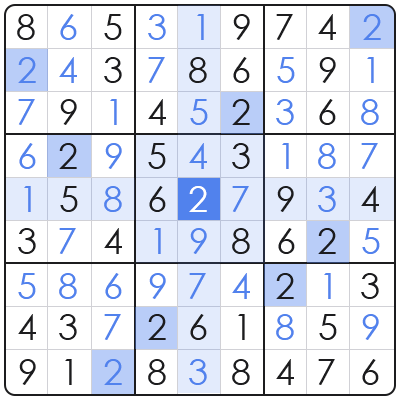
Learning how to solve Sudoku involves a fascinating journey into the realm of logical deduction, where the objective is to fill a 9×9 grid with digits 1 through 9. Each digit must appear exactly once in each of the nine rows, nine columns, and nine 3×3 subgrids. This seemingly simple rule forms the foundation of a puzzle that challenges mental agility without requiring mathematical calculations, relying purely on structured reasoning. For both speed-solvers aiming for efficiency and casual players seeking a relaxing yet stimulating mental exercise, understanding the core mechanisms of how to solve Sudoku is paramount. The significance of a systematic approach cannot be overstated; it transforms what might appear to be a daunting grid into a solvable challenge, unlocking a deep sense of accomplishment with each completed puzzle. This comprehensive guide will navigate you through the definitive process of how to solve Sudoku, from the foundational principles of grid topology and initial candidate elimination to sophisticated pattern recognition techniques. We will delve into expert strategies, common pitfalls, and the nuanced application of pencil marks, ensuring you develop a robust and reliable methodology for any Sudoku puzzle.
Understanding the Sudoku Grid: The Foundational Logic of How to Solve Sudoku
Understanding the Sudoku grid is foundational to how to solve Sudoku, involving the logical arrangement of numbers within a 9×9 matrix governed by specific constraints. The grid is composed of 81 cells, organized into nine rows, nine columns, and nine 3×3 ‘blocks’ or ‘boxes’. The fundamental rule dictates that each digit from 1 to 9 must appear exactly once in each of these 27 distinct ‘units’ (9 rows + 9 columns + 9 blocks). This principle establishes the core of cell constraints, where the presence of a number in one cell restricts its placement in other related cells.
Based on logic-chain analysis, the interaction between these units is what drives the solution process. When a number is placed in a cell, it simultaneously impacts its row, its column, and its 3×3 block, eliminating that number as a candidate for all other cells within those three units. This intricate web of relationships, or grid topology, is the engine of logical deduction in Sudoku, requiring solvers to think several steps ahead and trace the implications of each number placement.
The structural necessity of unique numbers within each unit is not merely a rule but a powerful tool. By consistently applying this rule, even without advanced techniques, a significant portion of many Sudoku puzzles can be resolved. This initial understanding of how numbers interact within the grid’s topology is the crucial first step for anyone aiming to master how to solve Sudoku effectively and consistently.
Initial Scan and Basic Deduction: The First Steps in How to Solve Sudoku
The first steps in how to solve Sudoku involve a systematic initial scan to identify obvious placements and apply basic logical deduction techniques. Begin by methodically examining each number from 1 to 9. For each number, scan the rows, columns, and 3×3 blocks to locate where it must be placed.
For competitive solvers, this often starts with a ‘cross-hatching’ technique. For a chosen number, say ‘1’, look at where it appears in existing cells. If a ‘1’ is in row 2 and another ‘1’ is in row 3, and you’re looking at the top-middle 3×3 block (which includes rows 1, 2, and 3), you know the ‘1’ in that block must go in row 1. Similarly, cross-reference columns. This process helps identify ‘single positions’ where a number can only logically fit into one cell within a given unit.
Another fundamental technique for how to solve Sudoku is identifying ‘single candidates’. This occurs when a cell, after considering all existing numbers in its row, column, and block, has only one possible digit remaining. This is a definitive placement and should be filled immediately. Consistent application of these basic candidate elimination strategies forms the bedrock of any successful Sudoku solving methodology, gradually reducing the complexity of the grid.
Advanced Candidate Elimination: Mastering How to Solve Sudoku with Pencil Marks
Mastering how to solve Sudoku with advanced candidate elimination requires the diligent use of pencil marks to track all possible numbers for each cell. Once the easy ‘single candidate’ and ‘single position’ placements are exhausted, the grid typically presents more complex scenarios where multiple numbers could potentially fit into a cell. This is where ‘pencil marking’ – writing down all possible candidates for each empty cell – becomes indispensable.
Pencil marks illuminate the hidden relationships within the grid. For example, a ‘Naked Single’ occurs when, after filling in all pencil marks, a cell is left with only one candidate. This often happens after an adjacent cell’s number placement, or a new deduction, eliminates other possibilities from its list. Similarly, a ‘Hidden Single’ emerges when a particular number can only appear in one specific cell within a row, column, or block, despite that cell having other pencil-marked candidates. Eliminating the other candidates from that cell and placing the unique number becomes a critical step.
The structural necessity of pencil marks for how to solve Sudoku cannot be overstated for medium to hard puzzles. They transform an abstract problem into a visual database of possibilities. Based on logical deduction from these candidate lists, you can identify more advanced patterns and eliminate incorrect numbers, systematically narrowing down choices until the grid is complete. This systematic approach, leveraging a complete picture of cell constraints, is a hallmark of expert Sudoku solvers.
Strategic Pattern Recognition: Identifying Key Techniques in How to Solve Sudoku
Strategic pattern recognition is crucial for how to solve Sudoku efficiently, enabling the identification of advanced techniques like Naked Pairs, Hidden Pairs, and X-Wings. These patterns allow for significant candidate elimination in situations where basic deductions no longer suffice, pushing beyond simple single-cell logic to group-based insights within the grid topology.
One common pattern is the ‘Naked Pair’. This occurs when two cells within the same unit (row, column, or block) contain precisely the same two pencil-marked candidates, and no other candidates. For example, if two cells in a column both only have candidates {2, 5}, then 2 and 5 *must* occupy those two cells. Therefore, 2 and 5 can be eliminated as candidates from all other cells in that same column, significantly streamlining candidate elimination.
Another powerful technique is the ‘Hidden Pair’. This arises when two candidates, say {3, 7}, appear only in two specific cells within a unit, even if those cells also contain other pencil-marked candidates. Because 3 and 7 *must* reside in those two cells within that unit, all other candidates in those specific two cells can be eliminated. More advanced patterns like the ‘X-Wing’ leverage the symmetrical arrangement of a candidate across two rows and two columns, allowing for widespread elimination from columns or rows, demonstrating the depth of logical deduction required for expert-level how to solve Sudoku strategies.
Common Obstacles and How to Overcome Them When Solving Sudoku
Common obstacles when learning how to solve Sudoku include overlooking simple deductions, mismanaging candidate notes, and losing track of the logical flow. Many solvers, particularly when encountering a challenging puzzle, tend to jump to complex techniques before fully exhausting basic ones. This often leads to missed opportunities for easy placements that could unlock further deductions, slowing down progress and increasing frustration.
A frequent mistake is the inconsistent or incorrect application of pencil marks. Errors in candidate elimination – either by failing to mark all possibilities or mistakenly removing a valid candidate – can lead to dead ends or incorrect solutions. It is crucial to be meticulous; double-check your initial pencil marks and verify each elimination. For competitive solvers, establishing a consistent routine for updating candidates after each number placement is a critical habit to cultivate for robust logical deduction.
When you get ‘stuck’, avoid the temptation to guess. Guessing undermines the logic-first approach and often spirals into a series of irrecoverable errors. Instead, take a break and return with fresh eyes. Review your pencil marks for any ‘Hidden Singles’ or ‘Naked Pairs’ you might have missed. Sometimes, simply re-scanning the grid from a different perspective (e.g., focusing on blocks instead of rows) can reveal overlooked patterns and re-establish the logical flow required to continue how to solve Sudoku.
Comparing Sudoku Solving Strategies: A Look at Complexity and Application
Comparing Sudoku solving strategies reveals varying levels of difficulty, frequency of use, and logical complexity, each contributing to how to solve Sudoku puzzles effectively. Basic techniques such as Single Candidate and Single Position are fundamental; they possess low logical complexity, are used with high frequency, and are indispensable for beginners, forming the initial layer of candidate elimination and definitive number placements in almost every puzzle.
Intermediate strategies like Naked Pairs and Hidden Pairs introduce a medium level of complexity. These require more careful scanning and pattern recognition within the grid topology but are frequently applied in medium to hard puzzles, often unlocking significant progress when basic methods stall. Their application moves beyond individual cells to considering small groups of cells, deepening the logical deduction process.
Advanced methods, such as the X-Wing or Swordfish, represent the highest logical complexity. They are less frequently encountered, typically appearing only in the most challenging Sudokus, yet are indispensable for solving them. These techniques demand a nuanced understanding of how candidate eliminations across multiple units form complex chains, truly testing a solver’s ability to maintain a comprehensive view of cell constraints and global grid topology.
Frequently Asked Questions About How to Solve Sudoku
Frequently asked questions about how to solve Sudoku often revolve around starting points, common difficulties, and the benefits of consistent practice.
Q: What is the very first step in how to solve Sudoku? A: Begin by scanning rows, columns, and 3×3 blocks for numbers that can only fit in one specific cell. This ‘single candidate’ approach is the most efficient starting point for logical deduction.
Q: Are pencil marks essential for solving Sudoku? A: Yes, for puzzles beyond easy difficulty, pencil marks are crucial. They allow you to systematically track all potential candidates for each cell, aiding in advanced logical deductions and candidate elimination.
Q: How do I improve my Sudoku solving speed? A: Consistent practice, coupled with learning to quickly identify common patterns like Naked Pairs and Hidden Singles, significantly boosts solving speed. Focus on systematic scanning and minimizing errors through careful candidate management.
Q: Can I guess numbers when I get stuck? A: Guessing is generally discouraged in logical Sudoku solving. If stuck, revisit your pencil marks, re-evaluate existing numbers, and look for advanced patterns before resorting to trial and error, which often leads to mistakes. Maintain a logic-first approach.
Q: What is the key to mastering how to solve Sudoku? A: Mastery lies in developing strong logical deduction skills, understanding grid topology, and applying candidate elimination techniques with precision. It’s a journey of continuous learning, meticulous attention to detail, and pattern recognition.
In conclusion, mastering how to solve Sudoku is fundamentally about embracing a ‘Logic-First’ approach, transforming a seemingly complex grid into an engaging challenge. From the initial methodical scan and the meticulous application of pencil marks for candidate elimination, to the strategic identification of advanced patterns like Naked Pairs and X-Wings, each step builds upon a foundation of logical deduction and an understanding of grid topology. Consistent practice, coupled with a disciplined approach to managing cell constraints and avoiding common pitfalls, is the pathway to true Sudoku expertise. Embrace the intellectual rigor of the 9×9 grid, and you will not only solve puzzles but also sharpen your analytical mind.