

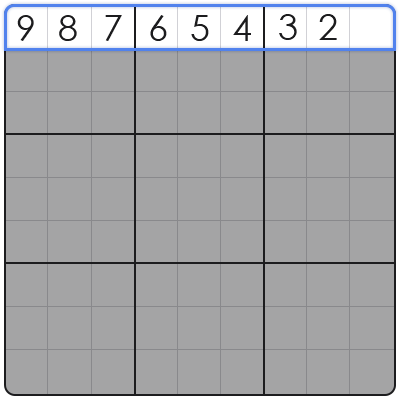
Sudoku is a logic-based number-placement puzzle played on a 9×9 grid. Learning how to play Sudoku for beginners involves understanding core rules and applying simple logical deduction to fill missing numbers, focusing on pattern recognition and elimination, not arithmetic. Grasping these foundational principles establishes the essential framework for both aspiring speed-solvers and casual players, unlocking immediate satisfaction and rewarding mental exercise. The game’s universal appeal lies in its clear rules and infinite variations, making it accessible yet profoundly engaging. This article provides a comprehensive, step-by-step guide, delving into the structural necessities of the grid. It equips you with fundamental strategies, from basic pencil marks to initial logical deductions, to confidently tackle your first Sudoku puzzles.
What is Sudoku and How Does the Grid Work?
Sudoku is a combinatorial puzzle where the objective is to fill a 9×9 grid with digits 1-9 so each column, row, and nine 3×3 subgrids (boxes) contains all digits once. The grid topology is fundamental to understanding how to play Sudoku for beginners.
Each 9×9 grid is subdivided into nine 3×3 boxes, forming the core constraint system. This means any number can only appear once per row, once per column, and once per 3×3 box. Understanding these three primary cell constraints is paramount for logical deduction.
The puzzle provides partially completed grids with “givens.” Your task is to use these as clues, logically deducing the remaining numbers without guessing, always applying systematic cell constraint checks. For competitive solvers, recognizing these interconnected constraints is the first step.
Essential First Steps: Navigating How to Play Sudoku for Beginners
To begin playing Sudoku effectively as a beginner, the most effective strategy involves systematically scanning the grid for rows, columns, or 3×3 boxes that already have the most numbers pre-filled. This helps identify candidate numbers faster.
**Step 1: Single Candidate Elimination.** Focus on a row, column, or box with many numbers. Identify missing digits. For each empty cell, cross-reference its row, column, and box. If only one number can fit a specific empty cell, that’s your solution, the cornerstone of logical deduction.
**Step 2: Utilize Pencil Marks.** When a cell has multiple possibilities, use pencil marks (small numbers in the corner) to note all potential candidates. This systematic approach is critical for tracking cell constraints and preventing errors as the puzzle progresses, crucial for grid topology analysis.
**Step 3: Scan for Hidden Singles.** After placing some numbers, re-scan. A “hidden single” occurs when a number can only appear in one specific cell within a row, column, or box, even if that cell initially had other pencil marks. This structural necessity dictates its placement.
Comparative Analysis of Foundational Sudoku Strategies
Understanding how to play Sudoku for beginners primarily relies on fundamental single-cell logic, which differs significantly in complexity from more advanced techniques like Naked Pairs or X-Wing.
Here’s a comparison of core beginner strategies with a slightly more involved foundational technique:
| Strategy | Difficulty Level | Frequency of Use | Logical Complexity | Description |
| :———————– | :————— | :————— | :—————– | :—————————————————————————————————— |
| Naked Single (Single Candidate) | Easy | Very High | Low | Directly places a number when it’s the only possible candidate for a cell after eliminating others. |
| Hidden Single (Single Position) | Moderate | High | Medium | A number can only fit in one specific cell within a row, column, or box, despite other candidates. |
| Candidate Elimination (General) | Easy | Constant | Low | The ongoing process of ruling out numbers for empty cells based on existing numbers and constraints. |
Based on logic-chain analysis, the Naked Single is the absolute foundation, followed closely by the Hidden Single, requiring a slightly broader scan. These form the bedrock of how to play Sudoku for beginners.
Common Pitfalls for Beginners and How to Master Them
When learning how to play Sudoku for beginners, common mistakes can hinder progress, but they are easily remedied with careful attention and a consistent logical approach.
**Pitfall 1: Guessing Numbers.** The most frequent error is placing a number without definitive logical deduction. Sudoku never involves guessing. Always double-check your reasoning, ensuring the number doesn’t conflict with its row, column, or 3×3 box. For competitive solvers, this builds critical accuracy.
**Pitfall 2: Neglecting Pencil Marks.** Failing to use or regularly update pencil marks (candidate notes) leads to missed opportunities or errors. Diligently tracking all possibilities is a structural necessity for clear logical deduction and prevents premature dead ends.
**Pitfall 3: Tunnel Vision.** Focusing excessively on one unit (row, column, or box) can make you miss easier placements elsewhere. Systematically scan the entire grid, moving between all units to identify the simplest next step, leveraging comprehensive grid topology.
FAQ: Quick Answers for Aspiring Sudoku Solvers
**Q: What is the main goal of Sudoku?** **A:** The goal is to fill a 9×9 grid so each row, column, and 3×3 box contains all digits 1-9 without repetition. It’s a logic puzzle, not a math challenge.
**Q: Is Sudoku a math puzzle?** **A:** No, Sudoku uses numbers 1-9 as symbols, not for arithmetic. Its solution relies purely on logical deduction, pattern recognition, and systematic elimination based on grid constraints.
**Q: What are “pencil marks” in Sudoku?** **A:** Pencil marks are small candidate numbers noted in an empty cell. They are essential tools for systematically tracking possibilities, aiding candidate elimination, and crucial for solving more complex puzzles.
**Q: How do I find the first numbers in Sudoku?** **A:** Start by scanning rows, columns, and 3×3 boxes with many pre-filled numbers. Use logical deduction to place single candidates by checking for existing numbers in intersecting units.
**Q: Can I guess numbers in Sudoku?** **A:** No, guessing is strictly avoided. Every number must be placed through definitive logical deduction, ensuring it adheres to all row, column, and box constraints. Guesses often lead to unsolvable grids.
Mastering how to play Sudoku for beginners hinges entirely on a Logic-First approach, emphasizing systematic candidate elimination, diligent use of pencil marks, and an unwavering commitment to logical deduction over guesswork. By consistently applying these foundational techniques, you will not only solve introductory puzzles but also build the intuitive understanding necessary for tackling more complex grids, cementing your path toward Sudoku mastery.