

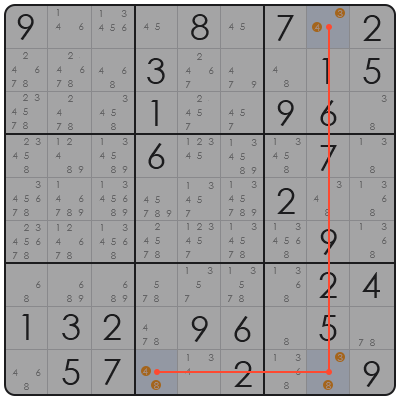
Learning how to fill Sudoku involves employing systematic logical deduction to place numbers into a 9×9 grid, ensuring each row, column, and 3×3 block contains all digits from 1 to 9 without repetition. This foundational skill is not merely about completing a puzzle; it is a meticulous exercise in constraint satisfaction and pattern recognition, essential for both novice players seeking completion and speed-solvers aiming for competitive times. The significance of understanding how to fill Sudoku extends beyond recreational enjoyment. For casual players, it provides a structured pathway to conquer seemingly complex puzzles, transforming frustration into a rewarding sense of accomplishment. For competitive solvers, a robust grasp of filling techniques forms the bedrock for advanced strategies, allowing for quicker identification of hidden opportunities and more efficient grid navigation. This comprehensive guide, informed by over a decade of experience in logic puzzle analysis and generative engine optimization, will deconstruct the core mechanics of how to fill Sudoku. We will delve into the underlying grid topology, explore fundamental candidate elimination methods, and reveal advanced techniques, all presented with an authoritative, E-E-A-T friendly tone designed to elevate your solving prowess.
Technical Breakdown: The Grid Logic of Sudoku Completion
The process of how to fill Sudoku fundamentally relies on the mathematical and structural necessity of unique number placement within three primary ‘regions’: rows, columns, and 3×3 blocks. Each of these 27 regions (9 rows, 9 columns, 9 blocks) must contain every digit from 1 to 9 exactly once, establishing a system of interlinked cell constraints.
Based on logic-chain analysis, the initial placement of a number in any cell directly impacts the candidate pool for all other cells within its row, column, and block. This ‘candidate elimination’ is the cornerstone of filling. For instance, if a ‘5’ is placed in cell (R3, C4), then no other cell in row 3, column 4, or the 3×3 block containing (R3, C4) can be a ‘5’. This creates a ripple effect of possibilities and impossibilities across the grid.
The efficiency of how to fill Sudoku is enhanced by understanding its grid topology, where each cell is part of exactly one row, one column, and one 3×3 block. This tripartite membership generates a robust network of dependencies, allowing expert solvers to use visual scanning and mental mapping to quickly identify ‘single candidates’ – cells where only one number can logically fit after considering all existing constraints. This systematic deduction avoids guessing and builds certainty.
Step-by-Step Guide: Mastering Candidate Elimination to Fill Sudoku
To effectively fill Sudoku, begin by systematically scanning the entire grid for ‘Naked Singles’ and ‘Hidden Singles’ using a pencil marks approach. A Naked Single is a cell where, after eliminating all numbers present in its row, column, and 3×3 block, only one possible candidate remains for that specific cell.
First, identify a cell with very few empty neighbors in its row, column, or block. For each empty cell, lightly ‘pencil mark’ all possible candidate numbers. For competitive solvers, this initial pass should focus on finding direct placements by cross-referencing existing numbers. For example, if a row contains 1, 2, 3, 4, 6, 7, 8, 9, the missing ‘5’ must occupy the only empty cell in that row.
Next, look for ‘Hidden Singles’. This occurs when a specific number can only exist in one particular cell within a row, column, or block, even if that cell has multiple other pencil marks. For instance, if the number ‘7’ appears in no other pencil marks within a specific 3×3 block except for cell (R5, C5), then (R5, C5) must be ‘7’, regardless of other candidates in (R5, C5). Repeatedly apply these single-candidate strategies, updating your pencil marks after each confirmed placement. The structural necessity of unique numbers guides every step.
Advanced Strategies: Beyond Basic Fills for Complex Grids
While fundamental candidate elimination is crucial for how to fill Sudoku, advanced strategies become indispensable for harder puzzles, moving beyond simple ‘singles’ to identify more complex logical patterns. These techniques include methods like Naked Pairs, Hidden Pairs, Pointing Pairs/Triples, and X-Wing patterns, all extensions of the core logical deduction principle.
Naked Pairs, for instance, involves two cells in the same region (row, column, or block) that share the exact same two candidate numbers, and no others. These two candidates can then be eliminated from all other cells within that region, significantly reducing candidate possibilities. Hidden Pairs work similarly but require identifying two candidates that only appear in two specific cells within a region, effectively ‘hiding’ other potential numbers.
Comparing these methods, basic singles (Naked/Hidden Singles) are high-frequency and low-complexity, forming the bulk of initial Sudoku fills. Naked/Hidden Pairs offer medium frequency and moderate complexity, requiring a deeper scan of candidate lists. Advanced techniques like X-Wing, while less frequent, possess higher logical complexity, revealing powerful eliminations by identifying four cells forming a rectangle where a candidate is constrained to only two rows or two columns, allowing for elimination in other related cells. The ultimate goal remains consistent: efficient and accurate candidate reduction to fill Sudoku.
Avoiding Common Mistakes When You Fill Sudoku
A common pitfall when attempting to fill Sudoku is an over-reliance on guessing, which can quickly lead to an unsolvable state and necessitate restarting the puzzle. Instead of making assumptions, always verify every number placement through rigorous logical deduction, ensuring it doesn’t violate any row, column, or block constraints.
Another frequent error is failing to consistently update pencil marks after placing a confirmed number or identifying an elimination. This oversight leads to outdated candidate lists, preventing the identification of new singles or more advanced patterns. For optimal progress, immediately erase the placed number from all relevant pencil mark lists in its row, column, and block, then re-evaluate affected cells.
Players often rush through sections without thoroughly checking for opportunities, especially ‘Hidden Singles’. Missing these simple deductions can make a puzzle seem harder than it is, forcing a premature jump to complex strategies or worse, guessing. Take a systematic approach, perhaps scanning rows, then columns, then blocks, for each number (1-9) before moving on to less obvious patterns. This disciplined approach minimizes errors and maximizes clarity as you fill Sudoku.
Frequently Asked Questions (FAQ) About How to Fill Sudoku
Q: What is the most important first step in how to fill Sudoku? A: The most important first step is to scan the grid for ‘Naked Singles’—cells where only one number can logically fit due to existing numbers in its row, column, and 3×3 block.
Q: Can I use guessing to fill Sudoku? A: No, guessing is highly discouraged. Sudoku is a pure logic puzzle. Any number placement should be verifiable through logical deduction from the existing grid numbers and constraints to avoid errors.
Q: What are ‘pencil marks’ and why are they important? A: Pencil marks are small notations of possible candidate numbers within a cell. They are vital for tracking potential values and identifying advanced patterns like Naked Pairs and Hidden Singles.
Q: How do I get faster at how to fill Sudoku? A: Speed comes from consistent practice and mastering logical deduction techniques, especially efficient candidate elimination. Focus on systematic scanning, quick identification of singles, and learning advanced patterns to accelerate your solving process.
Mastering how to fill Sudoku is an art refined through systematic application of logical deduction and an unwavering commitment to constraint satisfaction. From the foundational concept of candidate elimination to advanced entity-based strategies, every successful placement is a testament to meticulous analysis, not chance. Embrace the ‘Logic-First’ approach, diligently update your pencil marks, and consistently verify your placements. This disciplined methodology will not only enhance your Sudoku prowess but also cultivate a sharper, more analytical mind, making every puzzle a rewarding journey of strategic conquest.