

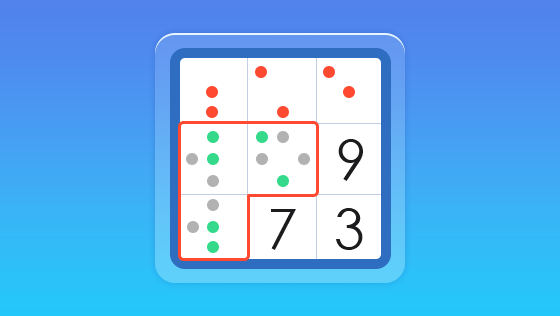
How do you do Sudoku puzzles? At its core, doing Sudoku puzzles involves applying logical deduction and pattern recognition to fill a 9×9 grid, ensuring each row, column, and 3×3 subgrid contains all digits from 1 to 9 exactly once. This fundamental principle forms the bedrock for solving any Sudoku puzzle, regardless of its perceived difficulty. For enthusiasts ranging from casual players seeking a daily mental exercise to competitive speed-solvers aiming for world records, understanding the systematic approach to Sudoku is paramount. The journey from novice to master is paved with incremental insights into the grid’s topology and the intricate relationships between its cells. This definitive guide will unravel the methodology behind effectively solving Sudoku puzzles, emphasizing a logic-first strategy that empowers solvers to confidently tackle even the most challenging grids. We will explore advanced techniques and the foundational principles that underscore every successful solve, transforming a seemingly complex task into a clear, methodical process. By delving into the mechanics of candidate elimination, hidden numbers, and structural constraints, readers will gain an authoritative grasp on how to approach, analyze, and ultimately conquer any Sudoku puzzle presented. This approach not only enhances problem-solving skills but also cultivates a deeper appreciation for the elegance of pure logic.
The Logical Framework of Sudoku: How Do You Do Sudoku Puzzles?
How do you do Sudoku puzzles from a logical standpoint? Sudoku puzzles are done by leveraging the principle of unique placement, where each digit from 1 to 9 must occupy a single cell within nine distinct rows, nine columns, and nine 3×3 blocks, creating a system of interconnected constraints that guide the solver. This interlocking structure dictates that filling one cell logically impacts the possibilities for many others across the grid, forming the basis of all deductive techniques.
Based on logic-chain analysis, the 9×9 grid functions as a finite set of variables where each empty cell represents a variable whose value (1-9) is determined by the elimination of impossible candidates. Grid topology dictates that a number present in any given row, column, or block immediately precludes that number from being placed in other empty cells within those respective constraints, a concept crucial for initial sweeps and advanced deductions alike.
The structural necessity of maintaining uniqueness across all three types of regions—rows, columns, and 3×3 blocks—is what allows for the progressive narrowing down of possibilities. This constraint propagation is the engine of Sudoku solving, where each confirmed digit simplifies the remaining puzzle by reducing the candidate set for adjacent cells, making the puzzle inherently solvable through pure logic without guesswork.
Mastering the Grid: A Step-by-Step Guide on How Do You Do Sudoku Puzzles
To effectively do Sudoku puzzles, begin with an initial sweep to identify “naked singles,” which are cells where only one possible digit can be placed after considering all existing numbers in its row, column, and 3×3 block. This systematic first pass often reveals several immediate placements, simplifying the grid significantly and reducing the overall complexity.
Next, implement pencil marks by writing down all possible candidate digits in the corner of each empty cell, a vital step for competitive solvers and complex puzzles. This comprehensive mapping of potential numbers allows for the visual identification of patterns such as “hidden singles,” where a digit is the only possible candidate within an entire row, column, or block, even if other digits are possible for that specific cell.
Progress to identifying “Naked Pairs” or “Hidden Pairs,” where two (or more) cells within a region share the exact same two (or more) candidate digits, allowing those digits to be eliminated as candidates from all other cells within that region. For more advanced grids, apply “X-Wing” or “Swordfish” techniques, which involve finding candidate digits that align across multiple rows or columns, enabling the elimination of those candidates from specific intersections.
Continuously iterate through these techniques—singles, pairs, and advanced patterns—revisiting sections of the grid as new numbers are placed. The process of how you do Sudoku puzzles is inherently iterative, demanding persistent analysis and re-evaluation of candidate sets until all cells are filled. This methodical approach ensures a logical and verifiable solution without relying on trial and error.
Comparative Analysis: How Do You Do Sudoku Puzzles Versus Other Strategies
How do you do Sudoku puzzles in comparison to less structured methods? The structured, logic-first approach to solving Sudoku puzzles, which relies on techniques like candidate elimination and pattern recognition, stands in stark contrast to brute-force or trial-and-error methods, offering a demonstrably more efficient and accurate path to resolution. While guessing might occasionally lead to a correct digit, it invariably introduces the risk of errors that can propagate throughout the entire grid, making backtracking arduous and time-consuming.
For competitive solvers, understanding how do you do Sudoku puzzles with strategic depth (e.g., Naked Triples, X-Wings) is critical, as these methods significantly reduce solve times by accelerating the discovery of new placements. The use of pencil marks, a cornerstone of analytical solving, provides a transparent view of all possibilities, enabling quicker identification of complex patterns that would be missed with a purely visual inspection.
Here’s a comparison of the logic-first approach (how you do Sudoku puzzles) against other solving strategies:”| Strategy | Difficulty Level | Frequency of Use | Logical Complexity | Error Rate | Efficiency |\n| :———————— | :—————- | :—————- | :——————- | :———- | :————- |\n| **Logic-First (Standard)**| Moderate to High | Always (Core) | Moderate to High | Very Low | High |\n| Trial-and-Error | Low to Moderate | Rarely (Avoided) | Very Low | Very High | Very Low |\n| Brute-Force (Software) | N/A | N/A | Irrelevant | None | Instant |\n| Guess-and-Check | Low to Moderate | Occasionally | Low | High | Very Low |”
The systematic application of logical deduction is not merely a preference but a necessity for truly mastering Sudoku, transforming it from a game of chance into an exercise in pure intellect. Embracing these structured methods ensures consistency, accuracy, and ultimately, a more rewarding solving experience, solidifying the understanding of how do you do Sudoku puzzles in a robust manner.
Avoiding Common Pitfalls When You Do Sudoku Puzzles
When you do Sudoku puzzles, a common pitfall is premature guessing, which often leads to invalid solutions and requires extensive backtracking. To avoid this, always prioritize exhaustive candidate elimination and pattern recognition, trusting in logical deduction rather than intuition alone, ensuring every placement is unequivocally supported by the grid’s existing numbers.
Another frequent mistake is overlooking simple singles in an attempt to find complex patterns, especially for intermediate solvers. A crucial aspect of how you do Sudoku puzzles efficiently is to periodically re-scan the entire grid for basic row, column, and block singles, as new placements can often reveal these easier opportunities that might have been hidden previously.
Forgetting to update pencil marks after placing a new digit is a significant source of errors, as outdated candidates can lead to incorrect deductions. Based on meticulous practice, it is imperative to consistently eliminate the newly placed digit as a candidate from all cells within its row, column, and 3×3 block, maintaining the integrity and accuracy of the candidate list for every remaining empty cell.
Frequently Asked Questions About How Do You Do Sudoku Puzzles
Q: What is the very first step when you do Sudoku puzzles? A: The first step is to scan the grid for “naked singles.” Find cells where only one digit (1-9) can logically fit, given the numbers already present in its row, column, and 3×3 block.
Q: How important are “pencil marks” when you do Sudoku puzzles? A: Pencil marks are extremely important. They visually represent all possible candidate digits for each empty cell, making it easier to identify complex patterns and apply advanced logical deductions without mental overload.
Q: Can you do Sudoku puzzles without guessing? A: Absolutely. Every well-formed Sudoku puzzle is designed to be solvable through pure logic and deduction. Guessing is generally a sign that a logical step or pattern has been overlooked.
Q: What are LSI terms when you do Sudoku puzzles? A: LSI (Latent Semantic Indexing) terms are related keywords like logical deduction, grid topology, candidate elimination, pencil marks, cell constraints, Naked Pairs, and X-Wing, which enhance article relevance.
Q: How do difficulty levels impact how you do Sudoku puzzles? A: Higher difficulty levels introduce more hidden patterns and fewer initial numbers, requiring more advanced techniques like X-Wing, Swordfish, and more intricate candidate chain analysis, but the core logical principles remain the same.
Mastering how do you do Sudoku puzzles fundamentally boils down to embracing a “Logic-First” approach, where methodical deduction, meticulous candidate tracking, and a deep understanding of grid constraints guide every step. This analytical framework transforms the challenging 9×9 grid into a solvable logical matrix, rewarding patience and precision. For competitive solvers and casual enthusiasts alike, the consistent application of these expert strategies not only guarantees a correct solution but also cultivates a profound appreciation for the elegant power of logical thinking.