

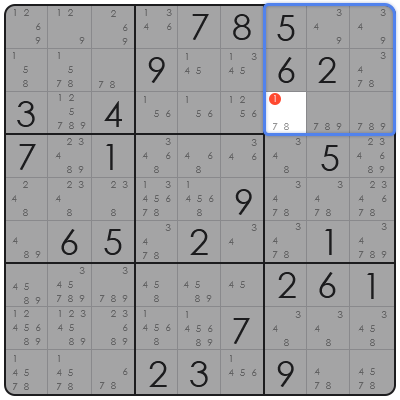
To play Sudoku is to engage in a fascinating number-placement puzzle that challenges logical deduction without requiring any arithmetic. The objective is elegantly simple yet profoundly complex: fill a 9×9 grid with digits so that each column, each row, and each of the nine 3×3 subgrids that compose the larger grid contains all of the digits from 1 to 9. For speed-solvers, understanding how to play Sudoku efficiently transcends mere number placement; it involves a sophisticated blend of pattern recognition, rapid candidate elimination, and the seamless application of advanced logical deductions. Mastery provides not only the thrill of completion but also the satisfaction of an optimized, ‘logic-first’ approach. Even for casual players, learning how to play Sudoku offers significant cognitive benefits, enhancing concentration, memory, and analytical skills. It serves as an accessible yet potent mental exercise, proving that logical puzzles can be both relaxing and intellectually stimulating for individuals of all skill levels. This article delves into the core mechanics and advanced strategies for true Sudoku proficiency.
Understanding the Core Mechanics: How Does Sudoku Work?
Sudoku works by leveraging the unique structural necessity of placing digits 1 through 9 exactly once within three interdependent types of regions: rows, columns, and 3×3 blocks. The game begins with a partially filled 9×9 grid, where some cells contain ‘given’ numbers acting as initial constraints.
The fundamental logic behind how to play Sudoku hinges on the principle of elimination and unique placement. Based on logic-chain analysis, if a number is present in a specific row, it cannot appear again in any other cell within that row. The same rule applies to columns and the nine distinct 3×3 subgrids, which form the grid topology.
This interconnected network of constraints means that every cell’s value is determined not by calculation, but by the absence of other numbers in its associated units. Recognizing these `cell constraints` and applying `logical deduction` are paramount to systematically narrowing down possible candidates for each empty square.
Initial Techniques for Solving Sudoku: How to Play Sudoku by Identifying Early Opportunities?
To play Sudoku effectively, identifying initial opportunities involves two primary techniques: Naked Singles and Hidden Singles, both critical for efficient candidate elimination. Naked Singles are the most straightforward, occurring when a cell has only one possible digit remaining after considering all existing numbers in its row, column, and 3×3 block.
Hidden Singles, while slightly more nuanced, are equally vital. These occur when a specific digit can only be placed in one particular cell within a given row, column, or 3×3 block, even if that cell has other potential candidates. Finding these requires scanning each unit for numbers that appear only once in the remaining `pencil marks` for that unit.
For competitive solvers, mastering these basic `candidate elimination` strategies forms the bedrock of speed. Diligent use of `pencil marks`—lightly noting all possible candidates in each empty cell—is indispensable for systematically uncovering both Naked and Hidden Singles, preventing errors and streamlining the solving process.
Advanced Logical Deduction in Sudoku: How to Play Sudoku with Sophisticated Strategies?
Advanced logical deduction in Sudoku moves beyond single-cell eliminations to pattern recognition across multiple cells and units, significantly enhancing how to play Sudoku on harder puzzles. Techniques like Naked Pairs, Hidden Pairs, and X-Wings are fundamental for professional-level play.
Naked Pairs involve identifying two cells within a row, column, or block that share the exact same two candidates and no others. These two candidates can then be eliminated from all other cells in that unit, as they must occupy those two specific cells. Similarly, Hidden Pairs involve two candidates that can only appear in two specific cells within a unit, even if those cells have other `pencil marks`.
The X-Wing is a more complex `logic-chain analysis` technique where a number can only appear in two cells in one row, and those same two cells align with only two cells in another row for that same number. This creates a rectangular pattern allowing the candidate to be eliminated from other cells in the two involved columns, demonstrating sophisticated `grid topology` understanding.
Practical Application: How to Play Sudoku Step-by-Step?
Playing Sudoku step-by-step involves a systematic, iterative process that maximizes efficiency and minimizes errors. Begin with an initial scan of the entire 9×9 grid, focusing on rows, columns, and 3×3 blocks that are heavily populated, as these often reveal immediate Naked Singles.
Following the initial scan, the crucial next step is comprehensive `pencil marking`. For every empty cell, lightly note all possible digits (candidates) by checking its row, column, and 3×3 block. This creates a detailed map of potential placements, making subsequent `candidate elimination` much clearer.
With pencil marks in place, systematically apply basic techniques like Naked and Hidden Singles, Pairs, and Triples. Each time a number is confidently placed, or candidates are eliminated, update your pencil marks and re-scan for new opportunities. This iterative refinement is the heart of effective Sudoku solving.
Finally, for more challenging grids, transition to advanced pattern recognition techniques such as X-Wing, Swordfish, and chaining methods. Regularly verify your progress and `cell constraints`; if a contradiction arises, retrace your steps to identify the incorrect placement, reinforcing the ‘logic-first’ approach.
Comparative Analysis of Sudoku Techniques: How Does One Technique Differ from Another?
When learning how to play Sudoku, understanding the distinctions between various techniques is key to applying the right strategy at the right time. Basic methods like Naked Singles are characterized by low logical complexity and high frequency of use, especially in easier puzzles, directly addressing single-cell `candidate elimination`.
Intermediate techniques such as Naked Pairs or Hidden Pairs represent a step up in logical complexity. While their frequency of use is moderate across various difficulty levels, they require identifying relationships between two or three cells rather than just one. This demands a broader view of the `grid topology` within a unit.
Advanced strategies like the X-Wing or Swordfish are marked by high logical complexity and lower frequency, typically appearing in expert-level puzzles. These require intricate `logic-chain analysis` across multiple units and a deep understanding of `cell constraints` to eliminate candidates that are not immediately obvious, offering powerful breakthroughs in stalled puzzles.
Common Pitfalls and Solutions in Sudoku: What Are the Pitfalls When Learning How to Play Sudoku?
A common pitfall when learning how to play Sudoku is rushing entries, which often leads to incorrect placements and cascading errors that invalidate the entire solution. To avoid this, always double-check the three units (row, column, and block) associated with a cell before confidently writing in a number, ensuring all `cell constraints` are met.
Another frequent mistake is incomplete or inconsistent `pencil marking`. Skipping this crucial step, or doing it haphazardly, obscures potential `candidate elimination` opportunities and can force players into guessing. The solution is rigorous, systematic pencil marking for every empty cell, updating continuously as numbers are placed.
Over-reliance on guessing is a critical pitfall that undermines the very essence of how to play Sudoku, which is rooted in pure `logical deduction`. Sudoku is never about trial and error. If you find yourself guessing, it indicates a missed logical step or an unapplied technique; revisit your pencil marks and look for hidden patterns or advanced strategies.
Sudoku FAQs: Quick Answers on How to Play Sudoku Effectively
Q1: What is the primary objective of Sudoku? The primary objective is to fill a 9×9 grid so that each row, column, and 3×3 block contains all digits from 1 to 9 exactly once, using `logical deduction`.
Q2: Are there different difficulty levels in Sudoku? Yes, Sudoku puzzles vary widely in difficulty, determined by the number of initial clues and the complexity of `logic-chain analysis` required to solve them.
Q3: What is the best strategy for beginners? Beginners should focus on `pencil marks` and mastering Naked Singles and Hidden Singles to understand basic `candidate elimination` and `cell constraints`.
Q4: Can Sudoku improve cognitive skills? Yes, regularly playing Sudoku enhances logical reasoning, concentration, pattern recognition, and problem-solving abilities through structured mental exercise.
Q5: Is guessing ever a valid Sudoku strategy? No, true Sudoku is based purely on `logical deduction`; guessing often leads to dead ends and errors, necessitating a restart rather than valid progress.
Mastering how to play Sudoku is a journey of continuous logical refinement and pattern recognition, firmly rooted in a ‘logic-first’ approach. The ultimate satisfaction stems from systematically deconstructing a complex grid through diligent `candidate elimination` and precise `logical deduction`. By embracing thorough `pencil marks`, understanding `grid topology`, and applying techniques from basic singles to advanced X-Wings, any player can achieve proficiency. The consistent application of these expert-level insights ensures not just a solved puzzle, but a testament to the power of structured analytical thought.