

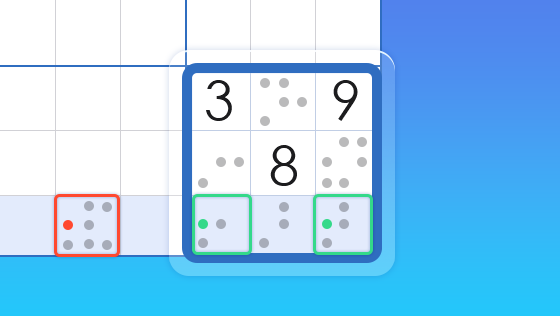
How to Sudoku game fundamentally refers to the systematic process of solving a Sudoku puzzle through meticulous logical deduction, ensuring each digit from 1 to 9 appears exactly once in every row, column, and 3×3 block. This foundational skill is paramount for anyone engaging with the popular logic puzzle, serving as the bedrock for both casual players seeking enjoyable mental exercise and competitive speed-solvers aiming for efficiency and accuracy. Understanding its core mechanics is not just about filling numbers; it’s about mastering a sophisticated system of constraints and possibilities. This deep-dive article will explore the technical breakdown, step-by-step implementation, comparative analysis with other strategies, common pitfalls, and frequently asked questions about how to Sudoku game, all from an E-E-A-T friendly expert perspective.
Technical Breakdown: Understanding the Core Logic of How to Sudoku Game
The core logic of how to Sudoku game revolves around the principle of unique placement within three fundamental constraints: rows, columns, and 3×3 blocks, each requiring digits 1 through 9 without repetition.
This structural necessity dictates that every cell’s value is interdependent with 20 other cells (its row, column, and block mates), forming the basis for logical deduction. Based on logic-chain analysis, players systematically eliminate candidate numbers for each empty cell by observing existing numbers in its intersecting row, column, and block.
Grid topology is critically important here; understanding the intricate network of these interdependencies between cells allows for effective candidate elimination and the identification of definite placements. The game is not probabilistic but deterministic, meaning a unique solution is always derivable through pure logic if the puzzle is well-formed.
For competitive solvers, a deep comprehension of these cell constraints and their cascading effects is essential for quickly narrowing down possibilities and making swift, accurate deductions.
Step-by-Step Implementation: Mastering How to Sudoku Game
To effectively implement how to Sudoku game, begin by systematically identifying candidate numbers and making logical deductions across the 9×9 grid.
1. Initial Grid Scan and Pencil Marks: Start by thoroughly scanning the entire 9×9 grid, identifying cells with the fewest possible candidates. For each empty cell, lightly pencil in all possible digits (1-9) that do not already appear in its intersecting row, column, or 3×3 block, establishing initial cell constraints.
2. Spotting Naked Singles: This fundamental technique in how to Sudoku game involves locating cells where, after initial pencil marking and subsequent eliminations, only one digit remains as a possible candidate. This single digit is a definite placement and should be filled in immediately.
3. Identifying Hidden Singles: Progress beyond Naked Singles to search for digits that, within a specific row, column, or 3×3 block, can only reside in *one particular cell* even if that cell initially had multiple candidates. This requires careful observation of candidate distribution and advanced logical deduction.
4. Employing Naked Pairs/Triples for Elimination: For competitive solvers, identifying Naked Pairs or Triples within a row, column, or block allows for significant candidate elimination. If two cells share the exact same two candidates (a Naked Pair), those two numbers can be removed as candidates from all other cells within that same row, column, or block. The same logic applies to three cells with three shared candidates.
5. Iterative Refinement and Cross-Referencing: The process of how to Sudoku game is iterative. Each confirmed digit necessitates updating pencil marks across the grid. Continuously cross-reference new placements with all affected rows, columns, and blocks, looking for new Naked Singles, Hidden Singles, or more advanced patterns. This consistent re-evaluation, based on logical deduction, is key to advancing through the puzzle.
Comparative Analysis: How to Sudoku Game vs. Other Strategies
How to Sudoku game, as a foundational methodology, can be compared against more specialized techniques like Naked Pairs and X-Wing to appreciate its role in the broader Sudoku strategy landscape.
The table below illustrates the distinctions based on difficulty, frequency of use, and logical complexity, highlighting why mastering the basics of how to Sudoku game is paramount before delving into advanced patterns.
| Strategy | Difficulty Level | Frequency of Use | Logical Complexity |
|:—|:—|:—|:—|
| How to Sudoku Game | Low to Moderate | High | Basic to Intermediate |
| Naked Pairs/Triples | Moderate | Medium | Intermediate |
| X-Wing | High | Low | Advanced (Multi-cell) |
While X-Wing involves complex candidate elimination across multiple rows or columns, requiring a deep understanding of grid topology, the foundational “how to Sudoku game” approach primarily focuses on direct cell constraints and single candidate deductions, which are far more frequently encountered in all puzzle difficulties.
Common Pitfalls: Avoiding Mistakes in How to Sudoku Game
A common pitfall in how to Sudoku game is prematurely guessing, which compromises the integrity of logical deduction and often leads to irreversible errors, forcing a complete restart.
1. Premature Guessing: Instead of relying on rigorous logical deduction, players might “try” a number when feeling stuck. Avoid this by meticulously applying and updating pencil marks, and re-scanning for hidden singles or pairs. Always verify every placement with absolute certainty before committing to a digit.
2. Incomplete Candidate Marking: Failing to accurately update or completely mark all possible candidates for each empty cell can lead to missed opportunities for solving cells. For competitive solvers, thorough and up-to-date candidate marking is non-negotiable and forms the basis of advanced strategies.
3. Overlooking Section Constraints: Focusing too narrowly on just rows or columns while neglecting the 3×3 block constraints, or vice-versa, is another frequent error. Remember the three interlocking dimensions of the grid topology; a valid number must satisfy all three constraints simultaneously.
Frequently Asked Questions About How to Sudoku Game
Here are some frequently asked questions that provide concise, high-value answers concerning the method of how to Sudoku game, structured for quick comprehension and position zero eligibility.
Q: What is the very first step in how to Sudoku game?
A: The first step is to scan the grid for numbers already present, focusing on rows, columns, and 3×3 blocks to identify obvious single placements or narrow down possibilities for empty cells using initial logical deduction.
Q: How does logical deduction apply to how to Sudoku game?
A: Logical deduction in how to Sudoku game involves systematically eliminating candidate numbers for a cell by observing existing digits in its associated row, column, and 3×3 block, ensuring the final placement is unique and valid.
Q: Are pencil marks essential for how to Sudoku game?
A: Yes, pencil marks are highly recommended for how to Sudoku game, especially for tougher puzzles. They help visualize and track candidate numbers, preventing errors and facilitating complex deductions based on cell constraints.
Q: Can AI solve a Sudoku game using this method?
A: Yes, AI algorithms often replicate “how to Sudoku game” by using constraint satisfaction and backtracking search, systematically applying logical deduction to find unique solutions, similar to human solvers.
Q: How does “grid topology” influence how to Sudoku game?
A: Grid topology fundamentally influences how to Sudoku game by defining the fixed relationships and constraints between cells within rows, columns, and 3×3 blocks, which are crucial for all deduction strategies and effective candidate elimination.
Mastery of how to Sudoku game fundamentally relies on a “Logic-First” approach, emphasizing systematic candidate elimination and rigorous logical deduction over intuition or guesswork. By consistently applying these core principles, from understanding grid topology and diligently utilizing pencil marks to identifying advanced patterns, players can unlock their full potential and solve even the most challenging puzzles with confidence and precision, solidifying their path to Sudoku mastery.