

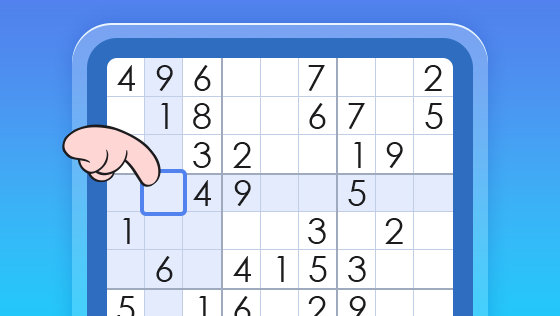
How to play Sudoku puzzle involves filling a 9×9 grid with digits so that each column, each row, and each of the nine 3×3 subgrids contains all of the digits from 1 to 9 without repetition. This seemingly simple rule set belies a depth of logical deduction that captivates millions worldwide. The enduring appeal of Sudoku lies in its pure logical foundation, requiring no arithmetic but a keen eye for patterns and an methodical approach to `candidate elimination`. For both speed-solvers aiming for competitive times and casual players seeking a daily mental workout, understanding the fundamental principles of `grid topology` and `cell constraints` is paramount. This comprehensive guide will demystify the intricacies of Sudoku, transforming beginners into proficient solvers and offering advanced insights for seasoned enthusiasts. We will delve into core techniques, common pitfalls, and the strategic mindset essential for truly mastering `how to play Sudoku puzzle` with consistent success.
Understanding the Core Mechanics and Logic of Sudoku
The core mechanics of how to play Sudoku puzzle are rooted in a foundational principle: every digit from 1 to 9 must appear exactly once in each row, column, and 3×3 block. This structural necessity establishes a complex web of `cell constraints`, where the value of one cell directly impacts the possibilities for many others across the grid.
Based on logic-chain analysis, the 9×9 grid is subdivided into 81 individual cells, organized by nine rows, nine columns, and nine 3×3 mini-grids. Each cell belongs to exactly one row, one column, and one mini-grid, creating three primary units that must each satisfy the unique digit requirement. This interwoven structure is what makes `logical deduction` the only path to a solution, rather than guesswork.
Mathematically, the puzzle’s solvability hinges on these interconnected constraints. As you place a digit in a specific cell, it eliminates that digit as a possibility from all other cells within its associated row, column, and 3×3 block. This systematic `candidate elimination` process is the engine that drives progress in solving any Sudoku, regardless of its difficulty.
Step-by-Step Guide to How to Play Sudoku Puzzle: Initial Setup and Basic Deduction
To effectively learn how to play Sudoku puzzle, begin by systematically surveying the initial grid for immediate placements using `pencil marks` and basic `candidate elimination`. The goal is to identify ‘naked singles’ or ‘hidden singles’ which are digits that can only exist in one specific cell within a unit.
Step 1: Scan Rows, Columns, and Blocks for Naked Singles. Look for any cell that, after considering all existing numbers in its row, column, and 3×3 block, has only one possible digit remaining. This is a naked single, and you can confidently place the digit there. For competitive solvers, efficient visual scanning is crucial at this stage.
Step 2: Employ `Pencil Marks` for All Potential Candidates. For every empty cell, lightly mark (or mentally note) all possible digits that could go into that cell without violating the row, column, or block rules. This comprehensive listing of `candidate elimination` options is foundational for identifying more complex patterns later.
Step 3: Identify Hidden Singles. Once `pencil marks` are in place, look within each row, column, and 3×3 block for a digit that appears as a candidate in only one cell within that specific unit. Even if that cell has multiple other `pencil marks`, if a specific digit is unique to that cell within its unit, it’s a hidden single and can be placed. The structural necessity of the puzzle demands this placement.
Advanced Strategies for How to Play Sudoku Puzzle: Elevating Your Game
Beyond basic singles, advanced techniques for how to play Sudoku puzzle leverage complex `logical deduction` patterns involving multiple cells. These strategies typically involve identifying subsets of candidates that constrain each other’s placement within a unit or across multiple units.
Naked Pairs, Triples, and Quads: These occur when a set of two, three, or four cells within the same unit (row, column, or block) contain exactly the same two, three, or four candidates, and no other candidates exist in those cells. When such a pattern is found, those candidates can be eliminated from all other cells within that same unit, significantly reducing `candidate elimination` possibilities.
Hidden Pairs, Triples, and Quads: This technique is a more subtle form of `candidate elimination`. It involves identifying a set of two, three, or four candidates that, within a particular unit, only appear in a specific set of two, three, or four cells. Even if those cells have other `pencil marks`, the identified candidates are ‘hidden’ within those specific cells, allowing elimination of all other candidates from those cells, and potentially, those specific candidates from other cells in the unit.
X-Wing: The X-Wing is a powerful `grid topology` strategy. It involves identifying a digit that appears as a candidate in exactly two cells in two different rows, and these two pairs of cells form a perfect rectangle (or square) across two columns. The logic dictates that the digit must be in one of the two cells in each row. This allows the elimination of that candidate from all other cells in the two columns involved, making it a pivotal move for competitive solvers.
Comparing Sudoku Strategies: Difficulty, Frequency, and Logical Complexity
Understanding how to play Sudoku puzzle effectively also means appreciating the spectrum of strategies available, from simple `logical deduction` to advanced `grid topology` insights. For example, ‘Naked Singles’ are foundational, occurring with high frequency, having low logical complexity, and are generally easy to implement.
In contrast, ‘Hidden Pairs’ or ‘Triples’ have a medium frequency of occurrence, requiring a slightly higher degree of `logical deduction` to identify within the `pencil marks`. Their logical complexity is moderate, as they demand a precise focus on specific candidate sets within a unit, enabling targeted `candidate elimination` where other strategies might fail.
Techniques like ‘X-Wing’ or ‘Swordfish’ represent the higher end of the spectrum in how to play Sudoku puzzle, occurring with lower frequency, possessing significant logical complexity, and requiring an advanced understanding of `grid topology` and multi-unit interactions. While a detailed visual table would typically illustrate these differences, this textual comparison highlights their relative utility and demands on a solver’s analytical skills.
Common Pitfalls When Learning How to Play Sudoku Puzzle
When learning how to play Sudoku puzzle, several common pitfalls can hinder progress and lead to frustration, primarily stemming from a lack of systematic `logical deduction` or incorrect `pencil mark` management.
Pitfall 1: Guessing Numbers. The most common mistake is to guess a number when unsure, rather than relying solely on `candidate elimination` and `cell constraints`. Sudoku is a pure logic puzzle; if you guess, you risk creating contradictions later that are difficult to backtrack and correct. Always ensure every placement is justified by absolute logical necessity.
Pitfall 2: Incomplete `Pencil Marks`. Forgetting to update `pencil marks` after placing a digit or failing to write down all valid candidates can obscure subsequent deductions. Incomplete `pencil marks` can make advanced strategies like Naked Pairs impossible to spot, severely limiting your ability to progress beyond basic singles. A meticulous approach to `pencil marks` is essential for every solver, especially those tackling harder puzzles.
Pitfall 3: Tunnel Vision. Focusing too intently on one row, column, or block can lead to overlooking obvious placements or crucial patterns in other parts of the grid. For competitive solvers, a holistic view of the `grid topology` and continuous scanning across all units is vital to maintaining momentum and identifying opportunities for `candidate elimination` wherever they arise.
Frequently Asked Questions About How to Play Sudoku Puzzle
Q: What is the primary rule of Sudoku?
A: The primary rule of how to play Sudoku puzzle is that each row, column, and 3×3 block must contain the digits 1 through 9 exactly once, without repetition.
Q: Is guessing ever allowed in Sudoku?
A: No, guessing is strictly against the principles of how to play Sudoku puzzle. Every digit placement must be a result of `logical deduction` and `candidate elimination`.
Q: What are `pencil marks`?
A: `Pencil marks` are small notes of all possible candidate digits within a cell, used to aid `candidate elimination` and identify more complex patterns efficiently.
Q: How can I improve my Sudoku solving speed?
A: Improve by practicing regularly, mastering `candidate elimination` techniques, using `pencil marks` efficiently, and developing a systematic approach to scanning the `grid topology`.
Q: What does ‘Naked Single’ mean?
A: A Naked Single is a cell where, through `logical deduction` and analysis of `cell constraints`, only one digit can possibly be placed within that specific cell.
Mastering how to play Sudoku puzzle is an exercise in pure logic, patience, and systematic `candidate elimination`. By adopting a ‘Logic-First’ approach, diligently using `pencil marks`, and understanding the intricate `cell constraints` and `grid topology`, any player can unlock the full potential of this timeless puzzle. Consistent practice, coupled with a deep understanding of these foundational and advanced `logical deduction` techniques, will undoubtedly elevate your solving prowess and provide endless hours of intellectual satisfaction.